Imagine this: You’re out for coffee, enjoying a conversation, when a sudden gust of wind catches you off guard. Instead of finishing your sentence, your hand instinctively flies to your head. It’s a moment almost every wig wearer fears—the “slip.” But here is the truth that often gets lost in the glossy photos of beautiful styles: true confidence doesn’t come from the hair fiber; it comes from the mechanics hidden underneath.
For many, the world of wig caps feels like engineering. You might see straps, hooks, and loops and wonder, “Do I really need to mess with these?” The answer is a resounding yes. While the style draws you in, it is the innovations in cap construction that determine whether you spend your day adjusting your hair or forgetting you’re even wearing it. Understanding how to utilize adjustable nape straps isn’t just a technical skill—it’s the key to making a piece feel like it was made just for you.
The “Fit Trinity”: Why Tightening Straps Isn’t Enough
Before we start pulling tabs and hooking loops, we need to address a common misconception. Many beginners believe that if a wig feels loose, the immediate solution is to tighten the straps as far as they will go. This often leads to headaches, the wig riding up in the back, and general discomfort.
To achieve a seamless look, you need to understand the “Fit Trinity”:
- Correct Sizing: The foundation. If the cap is too big, straps are a band-aid, not a cure.
- Proper Placement: Where the wig sits on your hairline and nape.
- Precise Adjustment: The final tuning using the straps.
Think of adjustable straps like the seat settings in a luxury car. They are there to fine-tune the experience for your specific measurements, but they can’t turn a compact car into an SUV.
Decoding Your Wig’s Anatomy
To master the fit, you have to speak the language of the cap. While types of wig caps vary—from monofilament to basic open wefts—the adjustment systems usually live in the same neighborhood: the nape.
The Nape
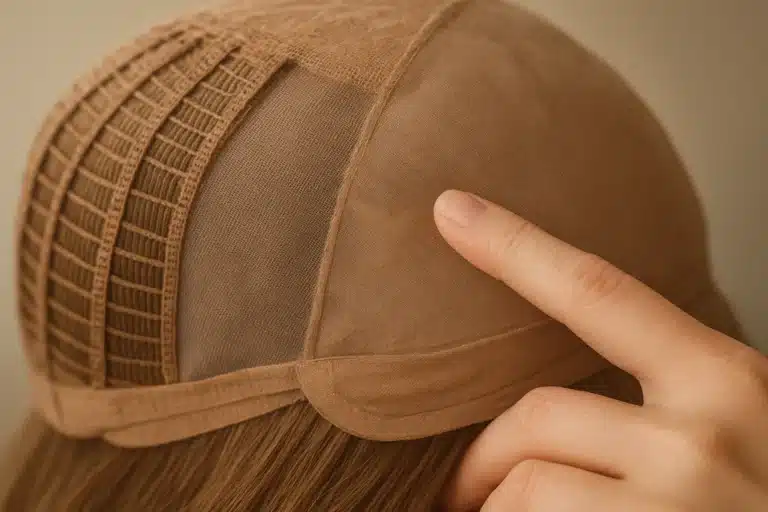
This is the back section of the wig that sits at the base of your skull. A well-fitted nape should hug the contour of your head without gapping. This is where the magic of adjustment happens.
The Ear Tabs
Located on the sides, these often contain metal stays that curve toward your face. They act as anchors. If these aren’t level, no amount of strap adjustment will make the wig feel secure.
The Three Titans of Tension: A Guide to Strap Systems
Not all adjustment systems are created equal. Depending on the brand and the age of the wig, you will likely encounter one of three main systems. Knowing which one you have—and its pros and cons—is essential for security.
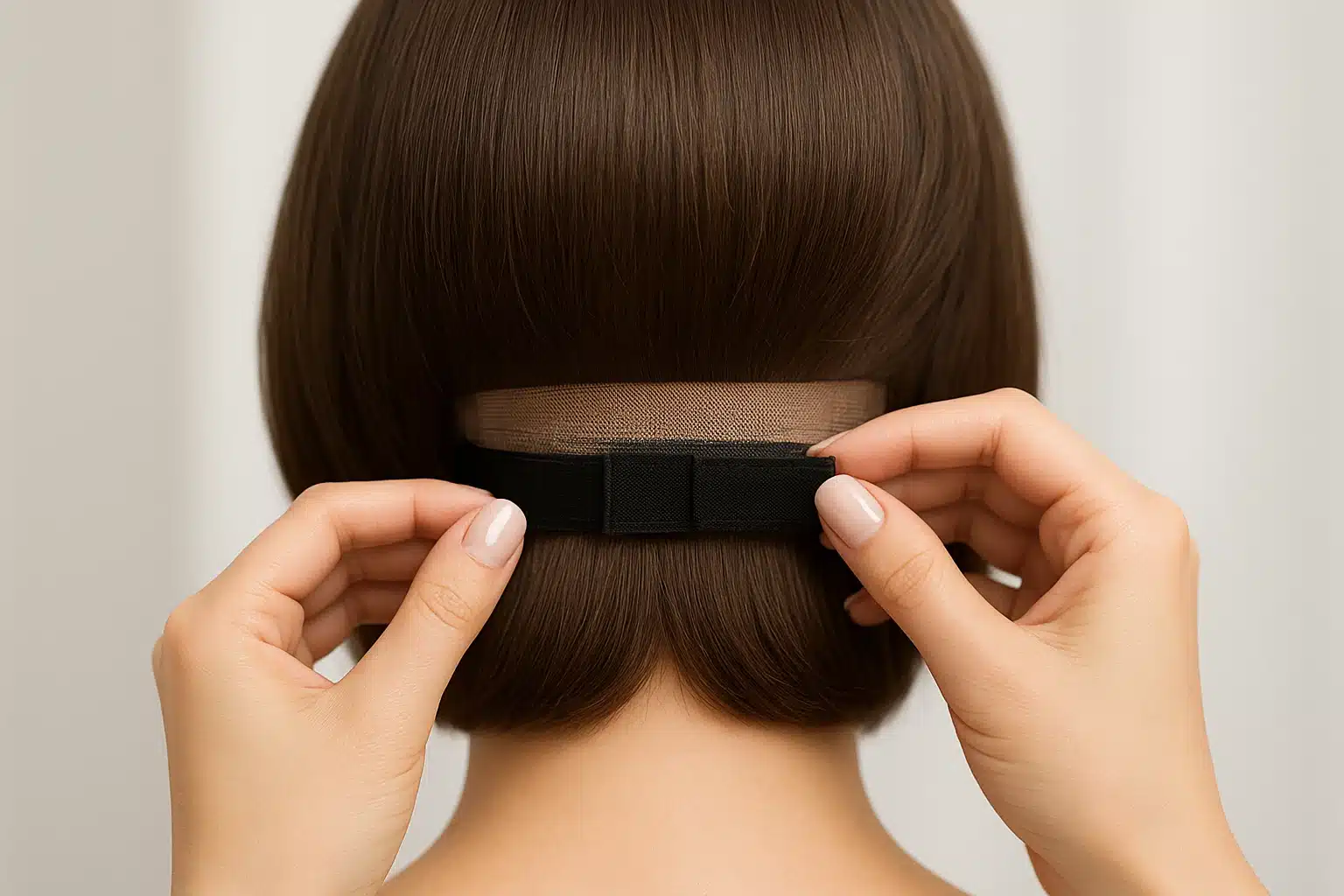
1. The Velcro Strap
This is the most common system in modern synthetic wigs.
- How it works: Two elastic strips extend from the ear tabs toward the nape, adhering to soft fabric landing strips.
- The “Aha” Moment: You can adjust these while the wig is on your head (with practice), allowing for immediate comfort changes.
- Pro Tip: Be careful not to catch the hair fibers in the Velcro, which can cause frizz over time.
2. The Hook-and-Eye (Bra Strap Style)
Often found in higher-end or medical-grade wigs.
- How it works: Similar to a bra strap, it uses a slider or a hook that fits into a series of fabric loops.
- The “Aha” Moment: These are incredibly secure. Once hooked, they rarely slip. However, they lack elasticity, meaning the measurement you set is the measurement you get.
3. The Slider Adjuster
- How it works: A simple buckle slides along an elastic band to shorten or lengthen it.
- The “Aha” Moment: This offers the sleekest profile. If you have a sensitive scalp, this is often the most comfortable option as it reduces bulk at the nape.
The Step-by-Step Fit Method
We see many customers trying to adjust their wig while holding it in their lap. The problem? You’re guessing. Here is the professional method for a perfect wig fitting:
- Reset to Neutral: Before putting the wig on, loosen the straps entirely. It is easier to tighten a loose wig than to struggle with a tight one.
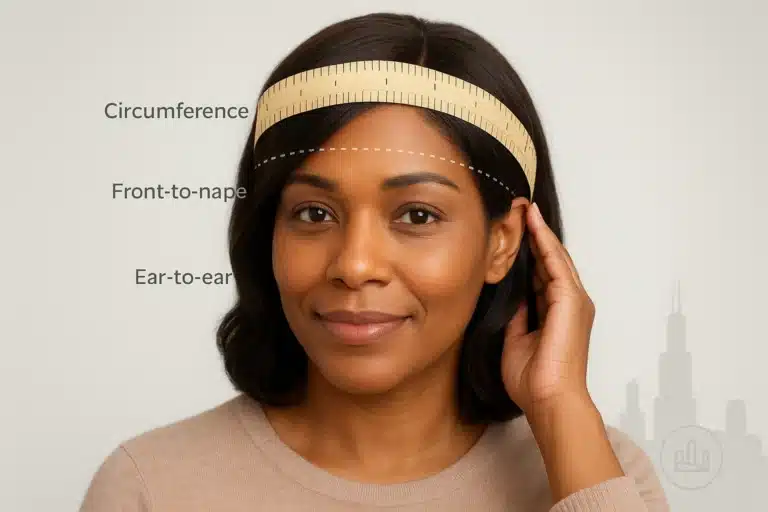
- The Placement Check: Put the wig on. Align the ear tabs so they are level. Place four fingers on your forehead; the wig’s hairline should start comfortably above your top finger.
- The Pinch Test: Feel the nape area. Is there loose fabric bunching up? Or does it feel like a tight band causing a dull ache?
- The Adjustment: Take the wig off. Adjust the straps in small increments—usually half an inch at a time.
- The Verification: Put the wig back on. Shake your head gently “no.” If the wig stays put without sliding, you have found your sweet spot.
Troubleshooting: When Straps Aren’t Enough
Sometimes, you adjust and adjust, but something still feels off. Here is how to handle common scenarios.
“My wig keeps riding up the back of my head.”
The Diagnosis: Paradoxically, this usually means your wig is too tight. When the circumference is too small, the wig seeks the path of least resistance, popping up toward the crown.The Fix: Loosen the straps. If that doesn’t work, you may need a larger cap size.
“I have tightened the straps all the way, and it’s still loose.”
The Diagnosis: The cap is likely too large for your head circumference. Straps can typically reduce a cap size by about 1 to 1.5 inches. Beyond that, the material will bunch and look unnatural.The Fix: You may need a Petite size, or you can try wearing a suction silicone wig cap or a specialized wig grip band to take up the extra space and add friction.
“I’m worried about security during exercise.”
The Diagnosis: Sweat and movement can compromise standard friction.The Fix: For workout wigs, standard straps might need backup. The “Criss-Cross” method is a game-changer here: take the two adjustable straps and cross them over each other (forming an X) before securing them. This locks the nape in tighter for high-activity days.
Frequently Asked Questions
Q: Can I cut the adjustable straps if I don’t use them?
A: We advise against this. You may need to adjust the fit later as the elastic stretches over time or if your bio hair changes density. Tucking them away is a safer bet.
Q: Do the elastic straps stretch out over time?
A: Yes, just like any elastic garment. This is why it’s important not to store your wig on a block head that is larger than your own head size, as it can permanently stretch the tension system.
Q: Can I add adjustable straps to a wig that doesn’t have them?
A: While possible, it requires advanced sewing skills. It is usually easier and more effective to use a wig grip band underneath for added security.
Your Path to Confidence
Mastering the mechanics of your wig transforms it from an accessory into an extension of yourself. When you aren’t worrying about a slip or a headache, you have the freedom to focus on what matters—living your life with confidence.
Remember, comfort is personal. Don’t be afraid to experiment with the tension until it feels right. If you are still unsure about the basics of putting on your piece before adjusting it, reviewing how to use a wig cap properly is a great next step in your educational journey.