Imagine the feeling of buying a new pair of shoes. When you first slip them on, they might feel slightly stiff, but within a day or two, they mold perfectly to the contours of your feet. Now, imagine if you could do the same for your hair. For many experiencing hair loss, the greatest anxiety isn’t about style or color—it’s the fear of the unknown: Will it stay on? Will it look like a wig? What if my head size is “in between”?
The Rene of Revlon collection (encompassing the Rene of Paris and Revlon lines) has become a staple in the industry not just for its aesthetic, but for its “Fit Engineering.” Unlike rigid hats, these caps are designed as dynamic, adjustable structures. Whether you are exploring the classic lines or looking for a Your Complete Guide to Revlon Wigs: A Deep Dive into the Orchid Collection, understanding the mechanics of these caps turns a stock wig into a piece that feels custom-made for you.
The Psychology of “Fit Engineering”
There is a common misconception that a wig fits primarily based on a single circumference measurement. While size matters, security comes from how the cap interacts with your specific head shape. This is what we call Fit Engineering.
Most beginners experience an “anxiety gap”—the worry that a wig will slip at the back or bulge at the crown. Rene of Revlon caps address this by utilizing materials that offer “memory.” Much like high-quality denim or footwear, the cap construction is designed to conform to your scalp’s unique warmth and shape over the first 48 hours of wear. This phenomenon, often called “Shoe Logic,” means that a wig that feels slightly snug initially will often relax into a perfect “second skin.”
The Anatomy of a Secure Fit
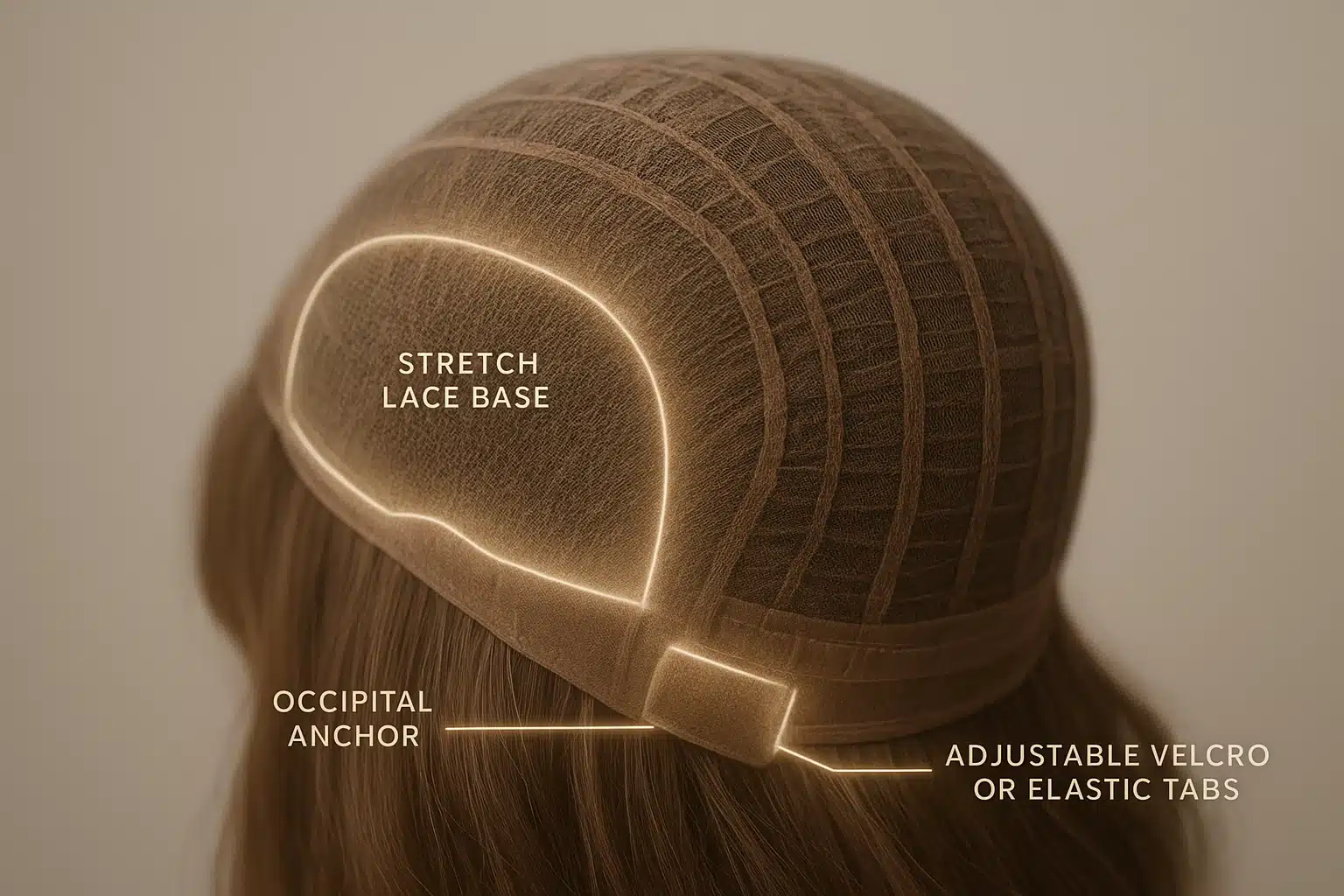
To understand why your wig stays on, you have to look under the hood. The structural integrity of a Rene of Paris or Revlon wig relies on three critical components working in harmony:
- The Stretch Lace Base: This provides the tension required to grip the head without causing headaches.
- The Occipital Anchor: The back of the cap is designed to sit beneath the occipital bone (the ridge at the base of your skull), preventing the wig from riding up.
- The Adjustment Tabs: Located at the nape, these allow for micro-adjustments that standard sizing charts often ignore.
Understanding these components is the first step in a successful wig fitting. It’s not just about placing the wig on your head; it’s about aligning these engineering points with your anatomy.
The 3-Step Measurement Protocol
Many online guides simply ask for the circumference of your head. However, to ensure the cap lays flat without buckling, you need to triangulate your size.
1. The Circumference (The Anchor)
Using a flexible measuring tape, trace the hairline. Start at the front hairline, guide the tape behind the ear, down to the nape of the neck, and back up to the starting point.
- Pro Tip: Ensure the tape sits under the occipital bone at the back. If you measure too high, you risk buying a wig that will slide up.
2. Ear to Ear (The Crown)
Measure from the top of one ear, over the crown of your head, to the top of the other ear. This measurement ensures the ear tabs will sit flush against your temples rather than digging into your ears or hovering above them.
3. Front to Back (The Depth)
Measure from your natural front hairline over the top to the nape of your neck. This determines the depth of the cap and prevents that “pointy head” look at the crown.
Decoding Adjustment Features: The 1.5-Inch Secret
Here is the “aha moment” for most new wearers: You are not stuck with a static size.
Rene of Paris and Revlon caps are designed with a built-in flexibility range of approximately 1.5 inches. This means an “Average” size cap isn’t just 21.5 inches; it is a range that can often accommodate anywhere from 21 inches to 22.5 inches comfortably.
Velcro vs. Elastic Adjusters
- Velcro Tabs (Common in Rene of Paris): These allow for precise, static positioning. You can tighten the circumference by pulling the tabs toward the center of the nape. This effectively turns an Average cap into a Petite-Average instantly.
- Elastic Slides (Common in Classic Revlon): These function like bra straps, offering a dynamic tension that moves with you. This is excellent for active wearers as the elastic expands and contracts slightly with facial movements.
Troubleshooting Common Fit Issues
Even with the correct measurements, you may encounter unique challenges. Here is how to use the cap’s features to solve them.
The “Bulge” at the Nape
If the wig feels loose or creates a small pocket of air at the back of your neck, the cap is sitting too high or is too wide at the bottom.
- The Fix: Locate the adjustable tabs at the nape. Tighten them by half an inch on each side. Ensure you are pulling the wig down so the bottom edge sits below the occipital bone.
Ear Tabs Hiding or Hurting
The triangular pieces of fabric at the temples are called ear tabs. They contain a small, flexible metal stay.
- The Fix: If the tabs flare out, the wig will look unnatural. Use your thumbs to gently bend the metal stays inward so they curve against your temple. If you wear glasses, create a small channel or “dent” in the tab to allow your glasses frames to sit comfortably without lifting the wig.
Sensitive Scalp or Slippage
For those with total hair loss, the direct contact of the cap against the skin can sometimes feel slippery or irritating.
- The Fix: Introducing a wig liner can act as a friction barrier. A bamboo or cotton liner not only absorbs sweat but provides a texture for the wig to grip onto, enhancing security.
The Placement Masterclass: The Four-Finger Rule
You can have the perfect measurements and the perfect adjustments, but if the placement is wrong, the wig will never look right.
The “Four-Finger Rule” is the industry standard for natural placement:
- Place your four fingers horizontally across your forehead, with your pinky resting on your eyebrows.
- Your index finger now indicates where your natural hairline should be.
- Align the front of the wig with this point.
If the wig sits lower than this, it shortens your forehead and looks obvious. If it sits higher, it risks slipping backward. Once aligned, verify that the ear tabs are level. If one is higher than the other, your wig is crooked.
Frequently Asked Questions
Q: My head measures exactly between Petite and Average. Which should I choose?
A: In the world of Rene of Revlon, it is usually safer to size up to Average. Remember the 1.5-inch rule: you can always use the adjustment tabs to tighten a slightly larger wig, but you cannot stretch a wig that is too small without damaging the structural integrity of the cap.
Q: Should I wear a wig cap underneath?
A: This depends on your biological hair. If you have biological hair, a wig cap helps contain it and flatten it out. If you have total hair loss, many people prefer the cooling sensation of the wig directly on the scalp, though others learn how to use a wig cap specifically to prevent oil buildup on the wig base.
Q: Can I permanently alter the size of my wig?
A: While it is possible to tuck and sew the wefts for a smaller fit, we recommend exhausting the built-in adjustment options first. Sewing alters the shape of the cap and can void return policies. The velcro or elastic adjusters are usually sufficient for 90% of wearers.
Moving Forward in Your Journey
Finding the perfect fit is a journey of small adjustments. By understanding the engineering behind Rene of Revlon caps, you move from simply wearing a wig to owning your look. These adjustment features are there to serve you, ensuring that your hair is the last thing you need to worry about during your day.
As you become more comfortable with the mechanics of your wig, you’ll find the confidence to experiment with different styles and constructions, knowing exactly how to make each one feel like it was made just for you.