Imagine opening your closet to find your favorite hairpiece—one you’ve been saving for a special occasion—looking dull, frizzy, and lifeless. It’s a sinking feeling that many wig wearers know all too well. We often assume that once a wig is off our head, it’s safe. But the reality is that improper storage is the silent culprit behind what we call “wig death”—the slow accumulation of oxidation, tangling, and dust that ruins fiber integrity.
The good news? Keeping your hairpieces in pristine condition doesn’t require a professional salon setup; it requires a shift in mindset. We need to move away from simply “putting a wig away” and start thinking about “preservation architecture.” As detailed in our Definitive Guide to Wig Storage: From Everyday Stands to Travel-Proof Cases, understanding the balance between breathability and environmental shielding is the secret to extending the lifespan of your investment by years.
The Science of Preservation: Why “Just Putting It Down” Isn’t Enough
To understand how to store wigs, we first have to understand what hurts them. Even when sitting perfectly still, your wig is fighting three invisible enemies:
- Gravity: Over time, gravity pulls on the fibers and the cap. If a wig is hung incorrectly, the cap can stretch, permanently altering the fit.
- Oxidation (UV Damage): Just like a photograph left in the sun, hair color fades. Research in cosmetic trichology shows that even indoor lighting contributes to the breakdown of pigments in both human and synthetic hair.
- Friction: Dust isn’t just dirty; it’s abrasive. When dust settles on fibers, it creates microscopic friction that leads to tangling and matting the next time you brush it.
Step 1: The “Clean Before You Keep” Rule
Before we discuss containers or stands, there is one non-negotiable rule: Never store a dirty wig for the long term.
Oils from your skin, leftover styling products, and environmental pollutants are magnets for dust. If you store a wig with product buildup, those chemicals can harden over time, degrading the fibers and making them brittle.
- For Human Hair: Ensure it is washed and conditioned to prevent dryness (hygral fatigue).
- For Synthetic Hair: A gentle wash removes static-causing buildup, which is the enemy of synthetic longevity.
Step 2: The “Inside-Out” Technique (The Aha Moment)
If you are short on space and cannot keep every wig on a mannequin head, you might feel stuck. However, there is a professional technique that actually protects the hair better than a stand for long-term storage: The Inside-Out Fold.
Most beginners instinctively fold the wig so the hair is on the outside. This leaves the delicate fibers exposed to the zipper of the bag or the sides of the box. Instead, try this:
- Hold the wig by the ear tabs.
- Gently flip the wig inside out, so the cap is facing you and the hair is tucked safely inside the “bowl” of the cap.
- This protects the fibers from friction and keeps the hair in a gentle curve rather than a hard crease.
The Breathability Paradox: Why Plastic is the Enemy
One of the most common mistakes is storing wigs in standard plastic zip-lock bags. It seems logical—plastic seals out dust, right?
However, this creates a “greenhouse effect.”
- For Human Hair: Plastic traps moisture, which can lead to the growth of microscopic mold hyphae or mildew.
- For Synthetic Hair: Plastic generates static electricity. When you pull the wig out, the friction causes the fibers to snap and frizz immediately.
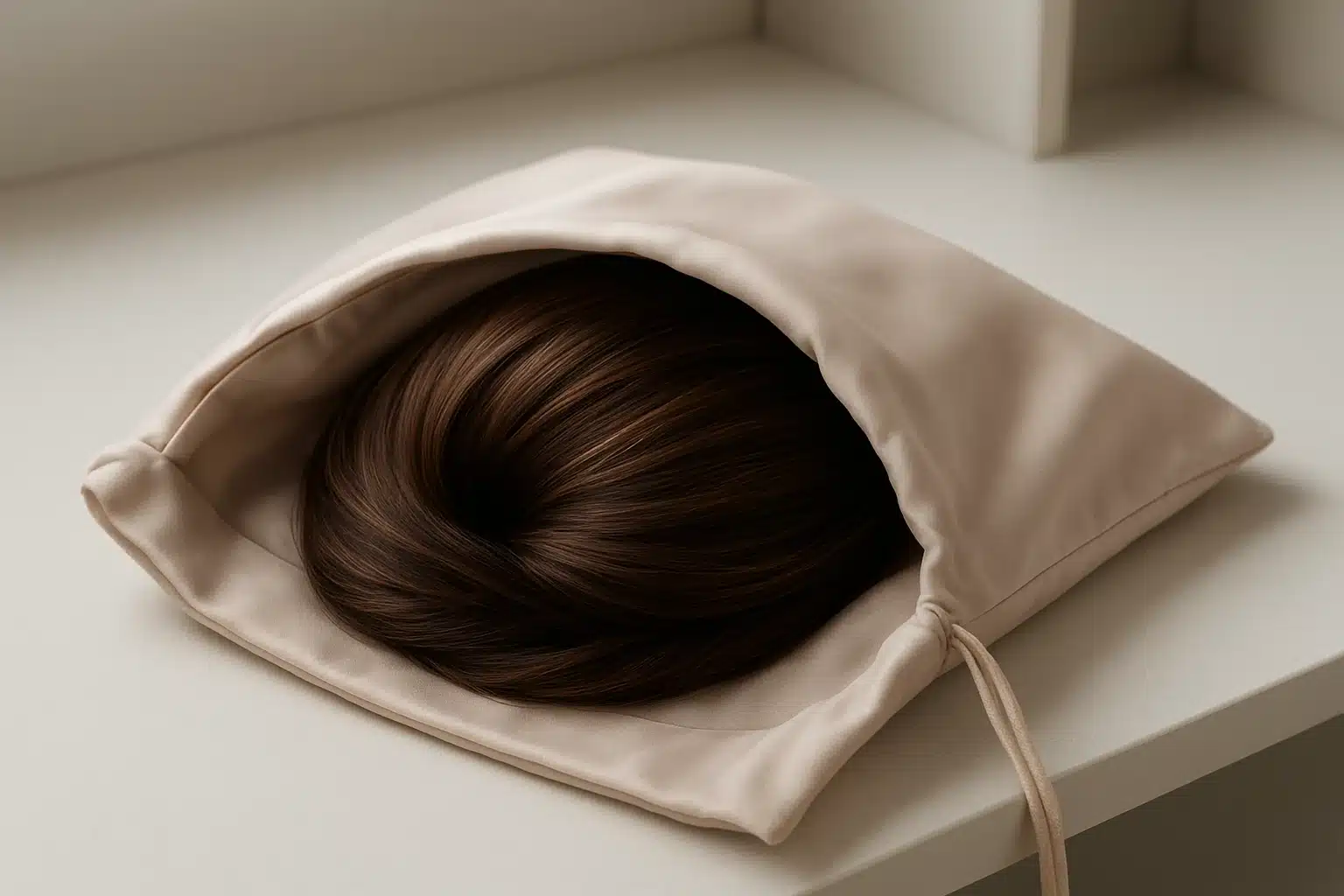
The Solution: Opt for breathability. Silk or satin bags are the gold standard. They block dust particles but allow air to circulate, preventing moisture buildup and reducing static friction.
Solving Specific Storage Puzzles
Different styles require different “homes.” Here is how to handle the tricky ones.
The Volume Challenge: Styled Wigs
If you have a wig that is heavily styled with volume or curls, folding it will crush the look. In this case, gravity is your friend.
- The “Upside Down” Trick: For long-term storage of voluminous wigs, storing them upside down in a hard-shell box (resting the nape on a designated rise) can help maintain lift at the roots.
- The Mannequin Requirement: If space permits, a styrofoam head is best here. Just be sure to cover it with a light silk scarf to keep the dust off.
Managing Length: Long & Braided Wigs
Long wigs suffer from “floor drag.” If you place a long wig on a shelf-top mannequin, the ends often pool on the shelf, gathering dust and tangling.
- The Loop Method: Gently coil the lengths of the hair and secure them loosely with a silk scrunchie before storing. This prevents the ends from rubbing against rough surfaces.
Frequently Asked Questions
Can I just use the box the wig came in?
Usually, yes! Original packaging is often designed to hold the wig safely. However, discard any tissue paper that has become tattered or dusty, and ensure the box isn’t crushed.
How to store a wig without a head?
This is a common concern for those with large collections or limited space. You do not need a mannequin for every piece. The best method for how to store a wig without a head involves the “Inside-Out” technique mentioned above, placed inside a satin bag or a shoebox lined with acid-free tissue paper. This saves space while keeping the fibers safe.
How often should I check on stored wigs?
We recommend the “6-Month Check.” Twice a year, take your stored wigs out, give them a gentle shake to re-introduce air to the fibers, and inspect for any scent of mustiness or permanent creasing.
The Final Touch
Treating your wigs with care when they aren’t on your head is the best way to ensure they look beautiful when they are. By shielding them from light, dust, and friction, you aren’t just storing hair; you are preserving your confidence for the next time you’re ready to shine.
Ready to upgrade your storage setup? Whether you need travel cases or space-saving solutions, exploring the right tools is the next step in your preservation journey.