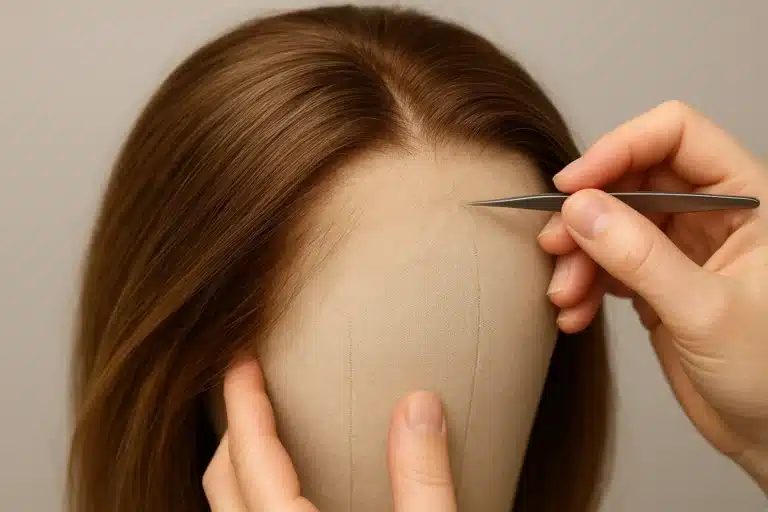
We all have that one box in the back of the closet. Inside rests a beautiful hairpiece—perhaps a style that didn’t quite match your face shape, or a color that felt daring in the salon but too bold for the office. It sits there, perfectly good but unworn, gathering dust instead of compliments.
If you view your hairpieces strictly as consumable items, that box represents lost money. But if you shift your perspective to view high-quality wigs as assets, that box represents potential capital. The secondary market for hairpieces is thriving, yet many sellers leave money on the table simply because they don’t know how to present their pieces correctly. By understanding how to appraise, prep, and list your pre-owned hair, you can recover a significant portion of your initial investment. To help you navigate this process, we’ve developed the smart investor’s guide to wig ROI, a resource designed to help you understand the lifecycle of your investment.
The Investment Mindset: Understanding the Depreciation Curve
The first step in selling a pre-owned wig is understanding its true market value. Just like driving a new car off the lot, a wig experiences depreciation the moment the lace is cut or the tags are removed. However, the rate of that depreciation varies wildly depending on the “make and model” of your hairpiece.
Synthetic vs. Human Hair
Synthetic wigs generally follow a steep depreciation curve. Because the fibers have a finite lifespan (typically 4–6 months with daily wear), the resale market assumes a synthetic piece has a limited future utility. Unless a synthetic wig is “New In Box” (NIB), you can generally expect to recoup 30% to 50% of the retail price, provided it is a reputable brand.
Conversely, 100% human hair and Remy human hair wigs are viewed as long-term assets. Because these fibers can be revived, deep conditioned, and restyled, they hold their value significantly better. A well-maintained human hair piece from a top-tier brand can often retain 60% to 70% of its value, even after being worn, because the fiber integrity remains high.
The Appraisal Matrix: Establishing the “Usage Tier”
One of the biggest mistakes sellers make is vague descriptions. Terms like “gently used” are subjective and often make buyers nervous. To maximize your resale price, you need to speak the language of the “Usage Tier.”
Be honest when categorizing your wig into one of these tiers:
- New In Box (NIB): Never worn, lace intact, tags attached. (Highest Value)
- Try-On Only: Lace may be cut, but worn for less than an hour. No product applied.
- Lightly Loved: Worn a handful of times (under 10 hours). No heat damage or friction frizz.
- The Weekender: Worn occasionally over a few months. Minor styling adjustments made.
- The Workhorse: Daily wear. Shows signs of friction at the nape or relaxed elasticity in the cap. (Lowest Value)
Bridging the “Hygiene Trust Gap”
The number one reason pre-owned wig sales fail—or sell for pennies on the dollar—is buyer anxiety regarding hygiene. We call this the “Hygiene Trust Gap.” A buyer cannot smell or touch the wig through a screen; they have to trust that you aren’t selling them something unclean.
To bridge this gap and justify a higher price point, you must move beyond a simple wash and perform a “Sanitization Protocol.”
- For Synthetic Fibers: A standard wash isn’t enough. Buyers look for transparency. Explicitly state that the piece was soaked to break down oils (often using a gentle degreaser like Dawn dish soap) and air-dried to preserve the style memory.
- For Human Hair: This requires a professional-grade “refresh.” Deep conditioning is non-negotiable to show the hair still has movement and shine.
Pro-Tip: In your listing, include a “Sanitization Guarantee” line, stating the exact date the piece was last washed and the products used. This technical specificity builds immense trust.
Photography for Profit: The 4-Finger Rule
If your photos are dark, blurry, or only show the wig on a Styrofoam head, you are signaling to buyers that the wig is low-quality. High-ROI listings almost always feature natural lighting and specific angles.
We recommend the “4-Finger Rule” for photographing the hairline, especially for lace fronts. Place four fingers behind the lace (inside the cap) while holding it up to natural light. This demonstrates two critical things:
- Transparency: It proves the lace is not stained or ripped.
- Knot Quality: It allows the buyer to see the density of the knots and the realism of the hairline.
Additionally, always include a photo of the nape of the neck. This is where friction frizz (the “rats nest” effect) happens first. Showing a smooth, tangle-free nape is the ultimate proof of condition.
Where to Sell: Platform Matchmaking
Once your wig is appraised, cleaned, and photographed, you need to choose the right marketplace.
- Community Groups (Facebook/Reddit): Best for “Lightly Loved” synthetic pieces and mid-range human hair. These communities move fast, but you must be wary of scammers. Always use payment protection (like PayPal Goods & Services).
- Specialized Resale Sites (e.g., Silk or Lace): Best for high-end, luxury human hair pieces ($1,000+). These platforms often act as a middleman to authenticate the hair, which helps justify the higher price tag to buyers.
- Poshmark/Mercari: Good for “Workhorse” tier items where the price is the main selling point.
FAQ: Common Questions About Selling Wigs
Q: Can I sell a wig that I have cut or customized?
A: Yes, but it changes the buyer pool. A professionally cut bob or added bangs can actually increase value if done well, as it saves the buyer a trip to the stylist. However, DIY cuts that are uneven will significantly lower the value. Always disclose alterations clearly.
Q: Is it worth selling a synthetic wig that has friction frizz?
A: Generally, no. The cost of shipping and the effort to list it often outweigh the small return you’d get for a damaged synthetic wig. In these cases, consider donating the wig to organizations that support theatre programs or mortuary sciences.
Q: How do I handle shipping?
A: Never ship a wig in a soft envelope where it can be crushed. Turn the wig inside out to protect the fibers, wrap it in tissue paper, and ship it in a sturdy box. If the wig is over $200, always purchase shipping insurance.
Q: What if I don’t know the brand of my wig?
A: Look for a tag inside the nape of the cap. If the tag is removed, check the RN number or post a photo in online wig communities for identification. Selling a “mystery brand” wig usually results in a very low sale price because buyers cannot verify the fiber quality.
The Cycle of Renewal
Selling your pre-owned wigs isn’t just about cleaning out your closet; it’s about closing the loop on your investment. By recovering value from pieces that no longer serve you, you generate the funds to invest in new styles that make you feel confident and beautiful today.
Once you’ve successfully sold your piece, you’ll have a clearer understanding of what retains value and what doesn’t. You can use this knowledge to make smarter purchasing decisions for your next high-quality hairpiece. When you’re ready to reinvest that recovered capital, we’re here to help you find your next perfect style.