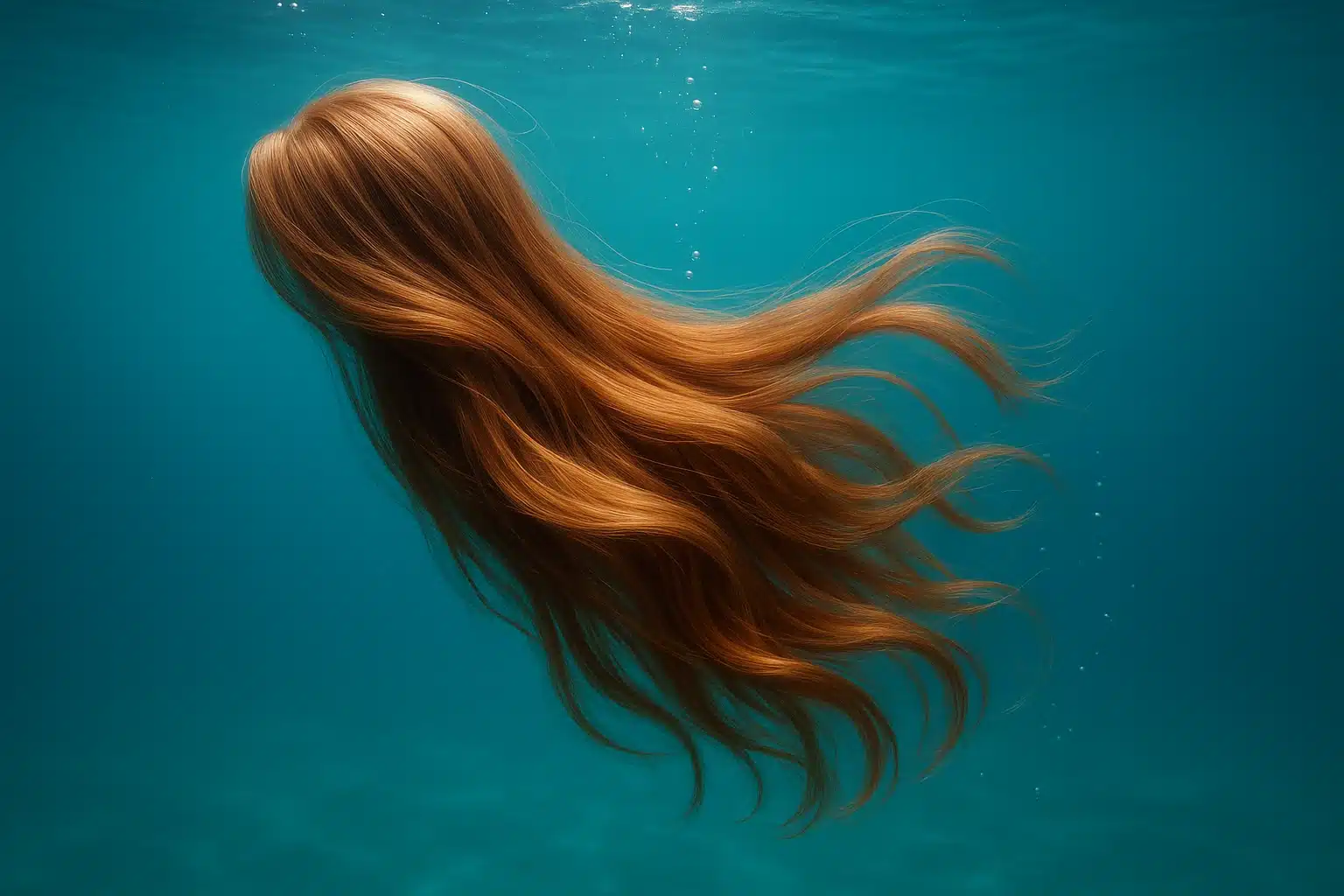
There is an undeniable, ethereal magic to underwater cinematography. When a performer glides beneath the surface, their hair blooming in a halo of weightless choreography, the effect is entirely mesmerizing. But behind that effortless, mermaid-like grace lies a fascinating world of mechanical engineering, fluid dynamics, and advanced material science. If you’ve ever watched a breathtaking aquatic scene and wondered, “How on earth is that hair staying on?”, you are certainly not alone.
The reality is that styling for aquatic environments is one of the most demanding challenges in production. When you explore the broader context of the wig in entertainment: stage, screen, and performance art, you quickly realize that hair is rarely just an accessory—it is highly technical performance equipment. Water fundamentally changes the physics of hair, introducing extreme physical stressors like drag, buoyancy, and chemical degradation. Surviving a six-hour underwater shoot requires moving far beyond everyday styling techniques and entering the realm of professional submersible hair systems.
Let’s dive beneath the surface to explore exactly how industry professionals engineer wigs to withstand the ultimate test of water.
The Aquatic Challenge: Why Water Changes Everything
If you’ve ever worn a wig or hairpiece, you know that wind and gravity are your usual adversaries. But the moment you submerge a wig, the rules of physics flip upside down.
Water is roughly 800 times denser than air. This density creates significant drag, meaning any movement pulls violently against the wig’s foundation. Simultaneously, water creates buoyancy, causing unweighted hair to float upward, often ruining a shot by obscuring a performer’s face. Add in the harsh realities of chlorine, saltwater, and temperature fluctuations, and it becomes clear why a standard wig application will fail within seconds of hitting the water.
Professional underwater wigs must achieve a delicate triad: unwavering durability, hyper-realistic natural movement, and absolute performer safety.
Material Science: Choosing the Right Fibers and Foundations
When building a submersible wig, the first major decision is material selection. You might assume that 100% human hair is always the premium choice, but underwater, synthetic fibers often steal the spotlight.
Synthetic vs. Human Hair in the Deep
- Synthetic Fibers (like Kanekalon or Futura): High-quality synthetic fibers are inherently hydrophobic (water-repellent). They don’t absorb water like a sponge, meaning they remain relatively lightweight even when fully submerged. Most importantly, synthetic hair features “style memory.” A deeply baked curl will hold its shape beautifully in a chlorinated pool, whereas human hair will instantly revert to its natural texture.
- Human Hair: While human hair offers unparalleled realism on dry land, it acts like a sponge underwater. It absorbs weight, increasing drag and strain on the wearer’s neck. If human hair is used for an aquatic scene, it generally requires specialized waterproof coatings to prevent it from becoming a heavy, tangled hazard.
The Foundation: Silicone vs. Traditional Lace
While delicate lace fronts are the gold standard for blending on dry land, they can stretch and warp when subjected to water drag. For high-end submersible work, professionals often turn to medical-grade silicone caps. These specialized caps create a gentle “vacuum fit” against the scalp, significantly reducing the amount of water that can slip beneath the foundation and compromise the adhesive.
The Engineering of Hold: Defying Gravity and Water
So, how do you prevent a wig from floating away during a deep dive? The secret lies in a meticulous, multi-tiered approach to attachment. Professional makeup artists (MUAs) rely on a combination of advanced adhesives and clever mechanical backups.
Skin Preparation is Everything
Even the strongest waterproof glue will fail if applied to oily skin. The scalp must be rigorously prepped with 99% isopropyl alcohol to remove all surface oils. This creates a pristine canvas for the adhesive to bond with the epidermis.
The 3-Layer Rule for Adhesives
Standard water-based adhesives (like acrylics) dissolve quickly in aquatic environments. Submersible wigs require professional-grade, silicone-based adhesives.
The industry standard is the “3-Layer Rule.” MUAs apply three to four micro-thin layers of silicone adhesive to the scalp. The critical trick is patience: each layer must dry completely—turning from cloudy to perfectly transparent—before the next layer is added. This creates a reinforced, flexible, and entirely waterproof barrier capable of withstanding hours of submersion.
Mechanical Backups
Professionals never rely on glue alone. They employ mechanical anchors for peace of mind:
- Silicone Grip Bands: Worn beneath the wig, these bands use the water’s pressure to create a slip-proof friction grip against the head.
- The “Bobby Pin Anchor”: For performers with natural hair braided underneath, heavy-duty pins are woven through the wig’s wefts directly into the foundation braids, providing a physical lock that adhesive alone can’t achieve.
Cinematic Styling: Buoyancy Physics and The “No-Bangs” Rule
Styling a wig for dry land is about fighting gravity. Styling for water is about fighting buoyancy.
Because hair traps microscopic air bubbles, it naturally wants to float toward the surface. This leads us to one of the most critical breakthroughs in underwater styling: The “No-Bangs” Rule.
Fringe or bangs are the number one failure point in underwater cinematography. The moment a performer dives, unsecured bangs will immediately float upward, acting like a curtain that completely covers the eyes. Not only does this ruin the camera shot, but it also creates a dangerous situation by blinding the performer. Instead, aquatic wigs feature hair that is swept back, intricately braided, or anchored with hidden weights sewn into the lower wefts to encourage a graceful, downward drift.
Safety First: The Hidden Risks of Underwater Hair
While aesthetics are important, treating the wig as performance equipment means safety is the absolute highest priority.
A dense, 3-foot-long wet wig can weigh several pounds. When a performer swims at high speeds, the drag created by that hair acts like a parachute, placing severe strain on the cervical spine and neck muscles. Furthermore, loose, floating hair poses a significant entanglement risk with underwater set pieces or pool filtration systems.
This is why professional sets implement strict safety protocols. Performers are trained in drag-management techniques, and a dedicated safety diver—a “buddy”—is always positioned just out of frame, ready with specialized shears in case the wig becomes dangerously tangled.
Post-Submersion Recovery: Saving the Canvas
The stress on a wig doesn’t end when the director yells “cut.” Proper post-submersion care is vital to salvage these expensive pieces for the next day’s shoot.
- The Golden Rule: Never, ever brush synthetic hair while it is wet. Wet synthetic fibers are highly elastic; brushing them will cause the strands to stretch, warp, and snap. The wig must be gently patted dry with microfiber towels and allowed to air-dry completely before detangling begins.
- Chemical Neutralization: Chlorine and salt are highly corrosive. Wigs must be thoroughly rinsed in fresh water immediately after a shoot, often followed by specialized neutralizing shampoos to halt chemical degradation.
- Safe Removal: Ripping off a wig secured by four layers of silicone adhesive can cause severe skin damage. MUAs use specialized, oil-based solvents and soft-bristled brushes to gently break down the glue, protecting the performer’s sensitive skin over multi-day shoots.
Frequently Asked Questions About Submersible Wigs
How long can a wig stay attached underwater?
With proper skin preparation, the 3-Layer Rule of silicone adhesive, and mechanical backups, a professional wig installation can withstand 4 to 6 hours of active, continuous submersion.
Can I use regular wig glue for swimming?
No. Standard water-based or acrylic wig glues will quickly rehydrate and turn white, losing their tackiness within minutes of hitting the water. Only professional-grade, waterproof silicone adhesives are suitable for submersion.
What is the best hairstyle for underwater scenes?
Styles that control buoyancy are best. Tight braids, dreadlocks, or heavy, structured curls behave beautifully underwater. Loose, straight hair—especially bangs—should be avoided as it floats unpredictably and obscures vision.
Does chlorine ruin synthetic wigs?
While synthetic fibers are highly resilient, prolonged exposure to chlorine can cause them to become stiff or brittle over time. Immediate rinsing with fresh water and using leave-in conditioning sprays formulated for synthetic hair will drastically extend the wig’s lifespan.
Continuing Your Journey
Understanding the engineering behind waterproof wigs pulls back the curtain on just how much artistry and science goes into creating the characters we love. The next time you see a flawless underwater performance, you’ll know that the true magic isn’t just in the choreography—it’s in the careful, compassionate engineering that keeps the performer safe and the illusion intact.
Whether you’re exploring hair solutions for a high-intensity performance, or simply looking to regain your confidence for a summer at the beach, knowing the limits and capabilities of your hairpiece is the first step toward true freedom.