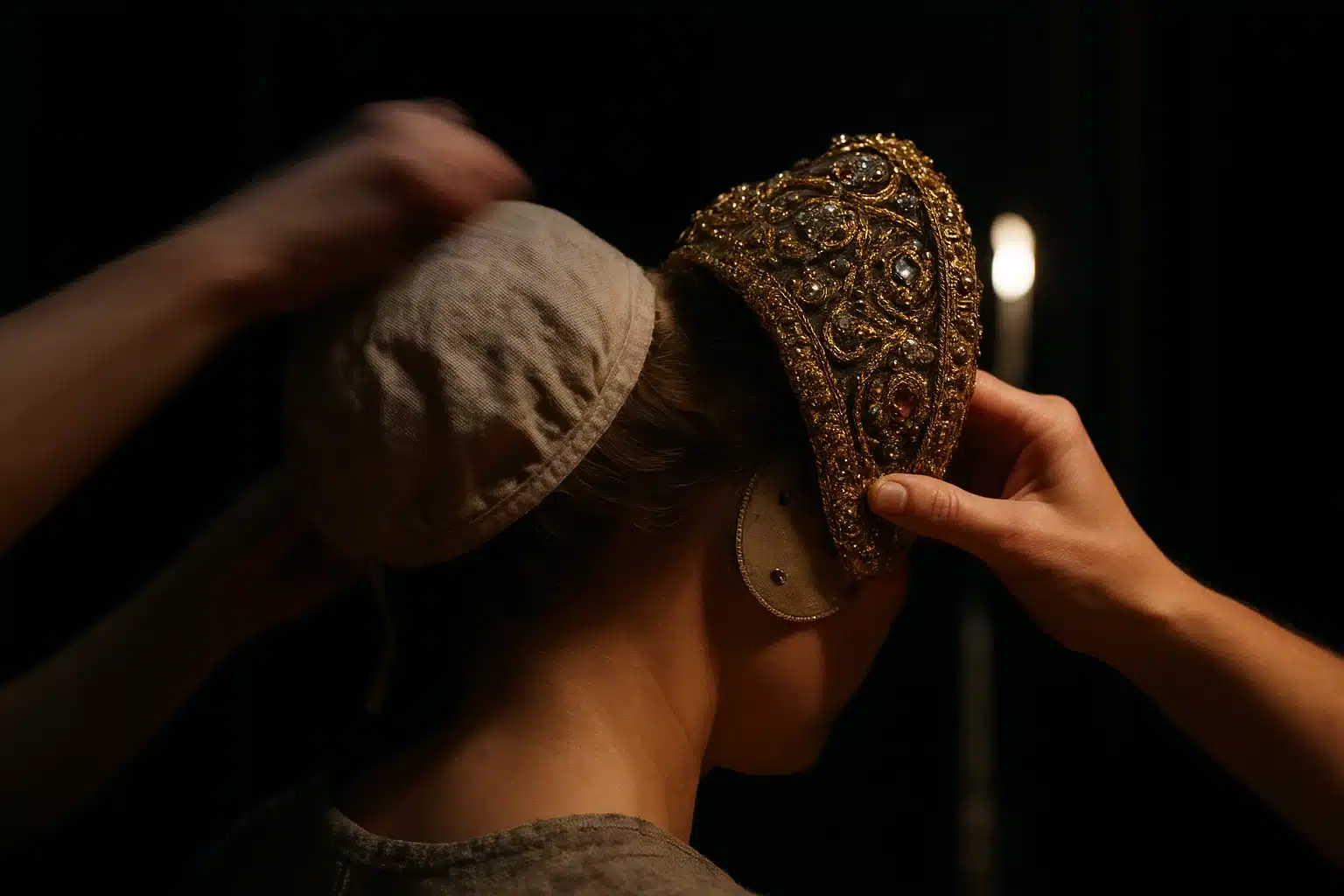
The lights go down, the orchestral music swells, and the crowd eagerly awaits the next scene. In exactly fourteen seconds in the pitch-black wings of the stage, the lead actor must transform from a humble 19th-century peasant into a glittering royal. We all witness the seamless magic on stage, but the real show happens backstage in the dark. As explored in The Wig in Entertainment: Stage, Screen, and Performance Art, the demands placed on performance hairpieces extend far beyond mere aesthetics; they require absolute durability and incredible speed.
When it comes to theatrical transformations, the gap between a standard hairpiece and a specialized quick change wig isn’t just about styling—it’s about engineering. Most educational resources focus heavily on how to pin hair or style a look, but they rarely address the high-stakes mechanics of swapping out an entire persona in the time it takes the orchestra to play a four-bar transition. Today, we are taking a backstage tour to uncover the highly guarded secrets of quick-rigging, magnetic attachments, and the flawless choreography that makes theatrical magic possible.
The Psychology and Physics of the Quick Change
For an actor, a rapid costume and wig transition is one of the most stressful moments in a performance. Speed matters, but security matters more. If an actor steps back under the stage lights doubting whether their wig is secure, their performance suffers.
A standard wig or wigs designed for everyday wear are built for comfort and gradual application. In contrast, a quick change wig is fundamentally rebuilt from the inside out. The focus shifts from standard cosmetology to stagecraft engineering. To achieve a flawless 10-second swap, the hairpiece must rely on tension physics, specialized foundations, and exact backstage choreography.
Foundational Security: Where the Magic Begins
Before a quick change can happen, you need an anchor. Master wig designers know that a successful quick-rig starts with the actor’s natural hair.
Mastering the Pin-Curl and Mic-Wrap
The foundation of any theatrical wig application is the pin-curl prep, covered tightly by a wig cap. However, in modern theatre and opera, the introduction of body microphones complicates everything. One of the biggest hurdles beginners face during a wig quick change is navigating the microphone cable. If the actor’s mic pack is woven through the hair, snagging the wire can ruin the audio for the rest of the scene.
Professional wig runners use a “mic-wrap” technique, threading the microphone cable securely along the nape of the neck or utilizing a halo-wire system that sits independently of the wig’s base. This allows the hairpiece to slide on and off without tangling the delicate audio equipment.
Rigging for Speed: The Engineering Secrets
How do Broadway and elite opera companies secure heavy wigs in mere seconds? They move away from traditional bobby pins and embrace mechanical rigging.
Magnetic Attachments (The “Snap-On” Method)
One of the most profound “aha moments” for local theatre directors and aspiring stagehands is the introduction of sewable magnet tape. By sewing small, high-powered neodymium magnets into the perimeter of the wig and attaching corresponding magnets to a customized, tight-fitting foundational cap worn by the actor, the wig practically jumps into place.
Common Mistake Callout: The Magnet Trap. While magnets are incredibly efficient, wig designers must be highly strategic about placement. Placing magnets too close to the forehead or ear where the microphone transmitter sits can cause audio interference.
Elasticized Perimeters and Fosshape
For the classic “Pull-and-Go” method, designers often reconstruct the perimeter of the wig with heavy-duty elastic. Additionally, materials like Fosshape (a unique, heat-activated fabric that hardens into a rigid shape) are often used to create a custom-molded skullcap inside the wig. This ensures the wig maintains its exact shape and drops onto the actor’s head like a well-fitted helmet.
Snaps vs. Velcro
When magnets aren’t an option, clear plastic snaps or theatrical-grade Velcro can be sewn into the wig lace. Snaps provide a satisfying, audible “click” that reassures the actor the wig is locked in place, while Velcro is excellent for attaching quick hairpieces or accessories to the base of an existing wig.
The Choreography of the Swap: Actor and Wig Runner
A successful quick change is a heavily rehearsed dance. The “Wig Runner” (the specialized backstage technician responsible for the hair) and the actor must move in perfect unison.
During “Tech Week,” professional crews run the 30-Second Drill. Every movement is blocked:
- The actor hits their backstage mark and drops their head slightly.
- The Wig Runner releases the internal rigging (unclasping snaps or breaking the magnetic seal).
- The first wig is lifted up and away, completely avoiding the mic wire.
- The second wig is guided down, locking into the foundational anchors.
It requires immense trust. In this fast-paced environment, “quick” does not mean “loose.” The rigging does the heavy lifting so the hands can move fast.
Choosing the Right Materials: Maintenance for Speed
The materials you choose dictate how well a wig survives the grueling demands of an eight-show week. While human hair is prized for its natural movement, synthetic wigs are often the superior “workhorse” for rapid changes.
Synthetic hair has “style memory.” Whether an actor is swapping into a sleek, modern bob or highly stylized white afro wig costume wigs for a fantasy sequence, a synthetic fiber will retain its shape despite being grabbed, pulled, and exposed to intense heat and sweat.
Handling Logistics During Tech Week
Tech week is notorious for last-minute character changes. Directors may suddenly realize a specific wig type isn’t reading well under the stage lights, or an elaborate big wig is simply too heavy for the required choreography. This is where logistical agility becomes critical. Sourcing quick ship wigs or utilizing quick shipping wigs can save a production from disaster. Many theater companies keep a roster of reliable, ready-to-wear wig-it wigs (pre-styled, easily modifiable pieces) on hand specifically for these crunch-time emergencies.
Building Your Backstage Toolkit
To replicate professional-level quick changes, you need the right tools. A standard “Quick-Change Kit” should always include:
- Sewable Neodymium Magnets: For creating snap-on magnetic anchors.
- Clear Theatrical Snaps: For securing heavy, unbalanced period pieces.
- Specialized Heavy-Duty Elastic: To customize the perimeter of the wig base.
- Top-Stick (Toupee Tape): For quick lace-front tacking when liquid adhesives take too long to dry.
- Canvas Block & T-Pins: For holding the wig securely between scenes to prevent matting.
Frequently Asked Questions (FAQ)
How do Broadway wigs stay on during a 10-second change without using pins?
Professional theatre wigs rely on mechanical rigging rather than traditional hairpins. By sewing clear snaps, hook-and-loop fasteners, or high-powered magnet tape into the wig’s foundation, and attaching the corresponding pieces to a secure cap on the actor’s head, the wig locks into place instantly.
What is a “reveal wig” and how does it work?
A reveal wig is essentially two wigs in one, engineered for an instant, on-stage transformation. It usually consists of a base wig with a second, larger wig lightly tacked over it. A concealed string or specialized release thread is pulled by the actor, allowing the top wig to seamlessly fall away into a costume or prop, revealing the style underneath.
How do I handle a microphone pack during a wig quick change?
The key is to keep the mic wire completely separate from the wig’s foundational rigging. Technicians use a “mic-wrap” technique, running the cable flat against the nape of the neck or over the ear, often securing it with medical tape or a specialized mic-belt. The wig is designed to sit slightly above or around the wire, never weaving through it.
Why do costume designers prefer synthetic hair for quick changes?
Synthetic wigs feature “style memory,” meaning the fibers are baked into their shape. During a quick change, wigs are often grabbed firmly and tossed onto wig blocks. Synthetic hair will bounce right back into its styled shape, whereas human hair would quickly lose its curl, mat, or frizz under the stress and sweat of a live performance.
***
The magic of the stage doesn’t happen by accident. By understanding the physics, engineering, and choreography behind a seamless quick change, you can elevate your production from amateur to professional. Whether you are prepping for your first local musical or refining your backstage toolkit, mastering the art of the quick-rig ensures that when the spotlight hits, your actors feel nothing but confident.