We’ve all been there: you’re brushing out your absolute favorite wig, the one that makes you feel instantly confident and beautifully yourself, when you spot it—a small tear in the lace, or a patch where the hair has unexpectedly thinned. Panic sets in. For those of us navigating hair loss, a high-quality wig isn’t just an accessory; it’s a daily companion and a significant investment.
Before you assume it’s a total loss and start searching for the best wig shops in Dallas to buy a brand-new replacement, take a deep breath. The Dallas-Fort Worth metroplex is home to specialized artisans who can bring your beloved hairpiece back to life. Let’s explore the fascinating world of wig restoration, helping you bridge the gap between simple at-home fixes and professional repair services.
The Diagnosis: Repair vs. Replace
When a wig gets damaged, the first step is determining if it’s a candidate for restoration. Whether you’re dealing with an everyday staple, a fun synthetic pink half wig you wore to a Dallas festival, or a premium human hair magic lace wig, almost any unit can benefit from a little TLC.
To make the right call, you need to calculate the “Repair vs. Replace” factor. Consider the original cost of the wig against the estimated repair effort. Minor shedding, stretched caps, and small lace tears are highly repairable. However, extensive balding across the entire cap or severely compromised foundation materials might mean it’s time to retire the piece.
Understanding Your Wig’s Foundation
You can’t fix what you don’t understand. A clear lace front wig definition is essential here: these wigs feature a sheer lace panel at the front where hairs are hand-tied to create the illusion of a natural hairline.
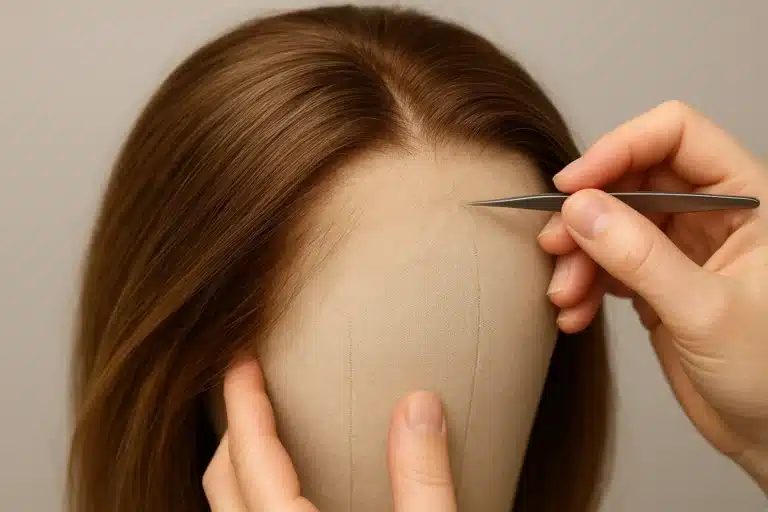
When you examine wigs with natural hairline construction, you’ll notice how delicate that front lace truly is. This is why lace tears are so common—and why specific repairs like ventilation (the art of hand-tying new hair into the lace) are entirely possible.
DIY Emergency Repairs: What You Can Fix at Home
Not every problem requires a trip to a Dallas professional. With the right knowledge, you can handle minor emergencies right at your vanity.
1. The Sizing Solution
Over time, wig caps lose their elasticity. If you suddenly find yourself thinking, “this lace wig is too big for my head,” you don’t necessarily need structural cap alterations right away.
First, try a velvet headband wig grip. These incredibly comfortable bands create friction, locking your unit in place without tension clips. Alternatively, you can easily sew an adjustable elastic band from ear to ear across the nape of the wig. To prevent this issue in the future, it’s always wise to consult a wig size guide before your next purchase. (And if you are ever wondering, “do rene of paris wigs run small?”, knowing brand-specific sizing can save you from premature stretching!)
2. The “Scaraway” Hack for Torn Lace
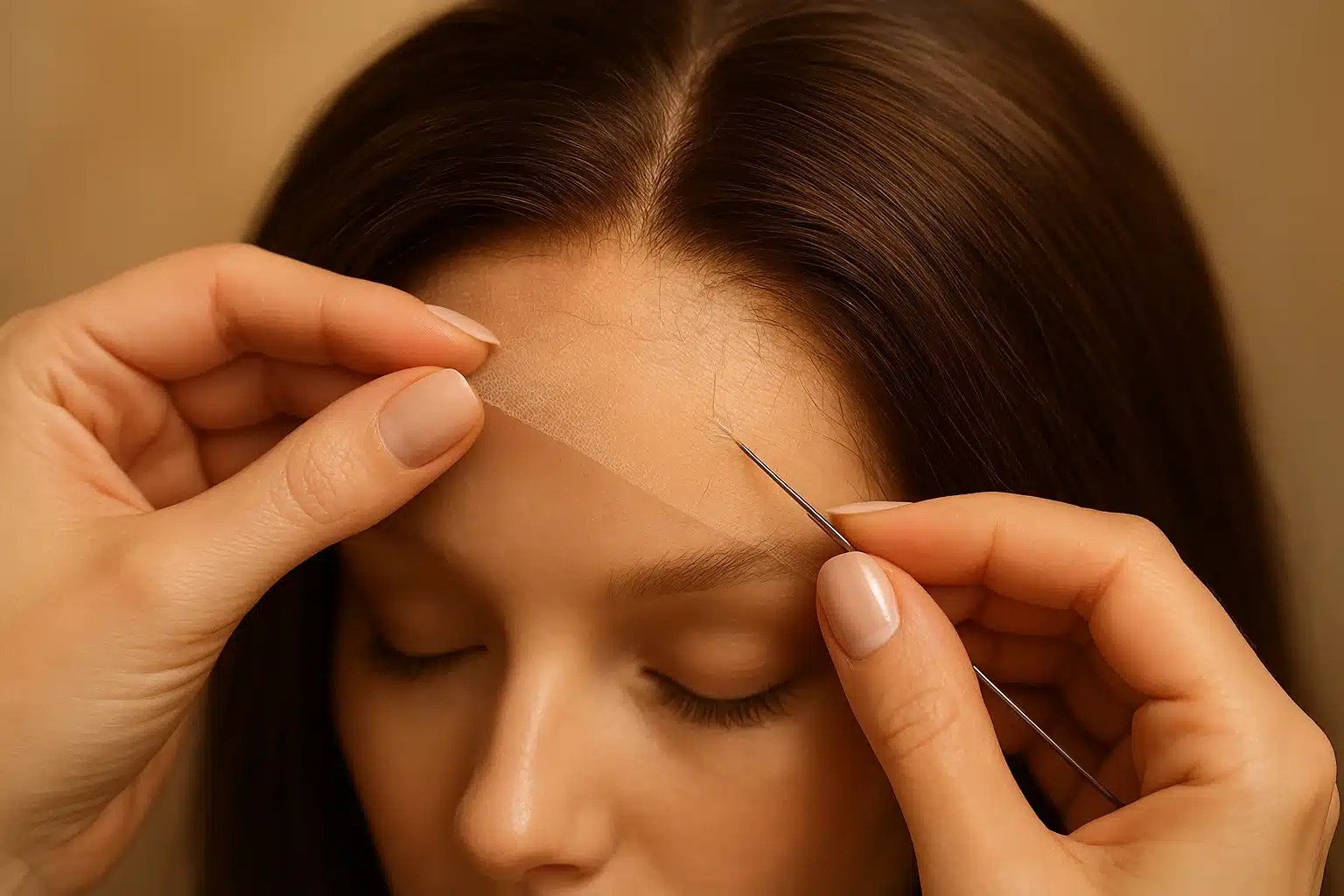
If you have a tiny tear in your lace, standard sewing thread will look bulky and unnatural. Instead, many wig wearers use clear, invisible nylon thread for a seamless stitch. But the real insider secret is the scaraway lace wig hack. By applying a piece of flesh-toned silicone scar tape underneath a slightly damaged or over-plucked lace area, you instantly create a highly realistic “scalp” that camouflages minor imperfections and stops small tears from spreading.
3. Hiding Thinning Hairlines
Sometimes, enthusiastically plucking lace front wig hairlines to make them look natural results in accidental bald patches. At home, you can easily camouflage this by changing your wig’s part, adding strategic baby hairs, or using a little bit of root touch-up powder to fill in the gaps until you can get professional help.
Advanced Restoration: When to Call in Dallas Professionals
While DIY fixes are fantastic, certain damages require the precision of a professional. Knowing when to hand your wig over to an expert is key to extending its lifespan.
The Art of Ventilation
If your wig is shedding heavily or has significant bald spots, a professional can perform “ventilation.” Using a tiny, specialized needle, an artisan will carefully knot individual strands of hair back into the lace foundation, flawlessly matching the density and color of your piece.
Thermal Damage and The “Melted” Misconception
There is a massive point of confusion in the wig community between “melting your lace” (a popular installation technique using adhesive to make the lace disappear into the skin) and a literal melted lace wig (irreversible heat damage to synthetic fibers or the lace matrix itself).
If you accidentally apply a curling iron that’s too hot to a synthetic wig, the plastic fibers will singe and fuse. A professional can sometimes salvage this by carefully trimming the damaged ends and using steam to reset the style, but severe melting usually requires replacing those specific tracks.
The Boiling Technique for Synthetic Rejuvenation
Many people mistakenly search for boiling lace wig cleaning methods. You should never boil a wig just to wash it! However, professionals use a controlled boiling water technique—specifically on heat-friendly synthetic styles like the highly popular sensationnel cloud 9 what lace collections—to shock the synthetic fibers back to their factory-smooth texture, removing the stiff, frizzy “frictions frizz” that accumulates at the nape of the neck.
Navigating Dallas Wig Repair Services
The DFW area boasts incredible talent when it comes to hair restoration. When looking for a local specialist to handle your wig maintenance, ask specifically about their experience with your wig type. Do they specialize in human hair color correction? Are they experienced in delicate lace patching?
A reputable repair specialist will always offer an honest consultation, letting you know upfront if the structural integrity of your wig is strong enough to withstand the restoration process.
Frequently Asked Questions About Wig Restoration
Can a torn lace wig be fixed?
Yes! Minor tears can be stitched at home using invisible nylon thread. Larger tears or holes require a professional to apply a “lace patch” and ventilate new hair into the repaired area.
Why is my wig shedding so much?
Shedding is often caused by puncturing the lace with styling pins, aggressive brushing while the hair is wet, or simply the natural breakdown of the knots over time. Using knot sealer sprays after washing can drastically reduce shedding.
How do I properly care for my unit to prevent damage?
Prevention is the best cure. Mastering proper lace front wig care involves washing your unit gently in a basin (never scrubbing), using sulfate-free products, and allowing the wig to air dry on a canvas block head to maintain its cap shape.
Breathing New Life Into Your Hair
Experiencing hair loss is a vulnerable journey, and the wigs we choose become an intimate part of our daily armor. You don’t have to say goodbye to your favorite piece just because it’s showing signs of love and wear. By understanding the basics of wig anatomy, keeping a few DIY tricks up your sleeve, and knowing exactly when to call on Dallas’s local restoration experts, you can keep your favorite wig looking flawless for years to come.