Navigating the world of alternative hair can feel overwhelming, especially when you are suddenly faced with boutique price tags that rival a car payment. If you’ve been looking for ways to explore new styles or manage hair loss without spending a fortune, you aren’t alone. It is a common misconception that you need to empty your savings to feel beautiful and confident in a wig.
Many beginners assume they have to spend upwards of $500 for natural-looking human hair, but that simply isn’t true. If you are exploring the best wig stores across Massachusetts, you’ll discover a thriving local market for high-quality synthetic options that beautifully bridge the gap between luxury and affordability. Let’s explore how you can find gorgeous, budget-friendly styles under $150 right here in Boston, and how to make them look like custom, high-end pieces.
The Boston Budget Reality: Why $150 is the Sweet Spot
When shopping for wigs, it’s easy to get caught up in the “human hair is always better” myth. But there is a fascinating concept in the alternative hair world known as the Price-to-Realism Curve.
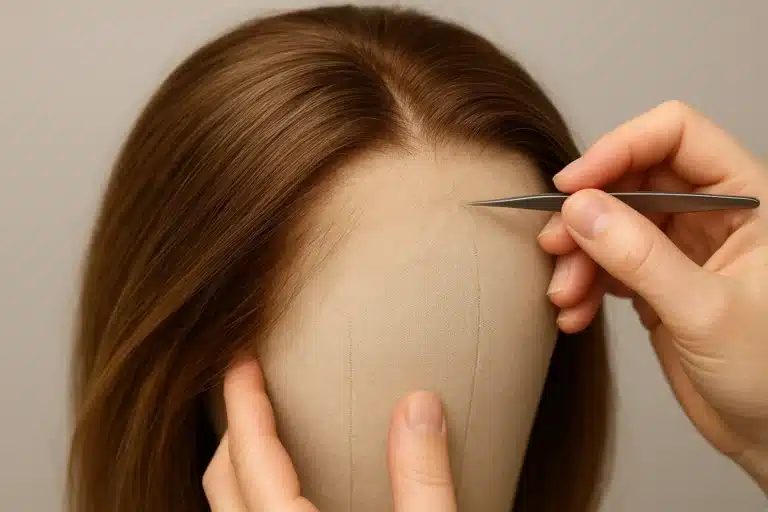
Here is the secret many premium salons won’t tell you: A well-made $130 synthetic wig with a “lace front” (where individual hairs are hand-tied into a sheer lace material at the hairline) will almost always look more realistic than a $300 human hair wig with a “basic cap.” At the $150 price point, manufacturers can afford to include these premium features—like lace fronts and monofilament parts that mimic a natural scalp—without the premium cost of human hair sourcing.
Synthetic Fiber Science: What Beginners Need to Know
Before you map out your shopping trip, it helps to understand exactly what you are buying. Not all synthetic fibers are created equal.
Traditional Synthetic (Kanekalon)
This is the gold standard for budget-friendly, low-maintenance wigs. Traditional synthetic fibers are celebrated because they have “style memory.” Whether it’s baked into bouncy curls or a sleek bob, the wig returns to its original style after washing. It is virtually weather-proof, meaning Boston’s humid summers and damp winters won’t cause frizz.
Heat-Friendly Synthetic
Many online guides push heat-friendly (HF) fibers as the “better” option because you can use curling irons and flat irons on them. However, here is a crucial reality check for beginners: heat-friendly fibers tangle significantly faster than regular synthetic fibers. Because the fibers are textured to withstand heat, they create more friction when rubbing against your clothes or shoulders. If longevity is your goal, traditional synthetic is often the smarter, more durable choice.
Navigating Boston’s Retail Landscape for Budget Wigs
Boston’s wig landscape is heavily polarized. You have high-end salons in Back Bay and Newbury Street offering bespoke services, but they often require consultation fees that can cost more than a budget wig itself. On the flip side, navigating pure e-commerce sites can leave you guessing about color and fit.
If you want the boutique try-on experience without the luxury markup, you need to know where to look:
- Downtown Crossing & Roxbury: These neighborhoods are excellent for “walk-in friendly” beauty supply stores. They frequently stock budget-friendly synthetic lines and fashion wigs. While the customer service might be more hands-off than a boutique, the price points are highly competitive.
- The North Shore (Saugus and Beyond): Taking a short drive out of the city center for a “Wig Run” is a favorite tactic of local bargain hunters. Retailers in these areas often have larger showrooms, free parking, and carry mid-range synthetic brands like Wig Pro or Jon Renau’s synthetic collections, sitting right in that $120–$150 sweet spot.
The “Make it Real” Workshop: 3 Steps to Customize Your Wig
The biggest giveaway of an inexpensive synthetic wig is the out-of-the-box factory shine. Fortunately, the alternative hair community has perfected the art of making a $100 synthetic wig look like a $1,000 custom piece. Here are three simple hacks you can do at home:
1. The Dry Shampoo De-Shine
Synthetic hair is essentially finely spun plastic, which reflects light unnaturally. To fix this, generously spray the wig with a standard aerosol dry shampoo. The powdery texture of the dry shampoo immediately absorbs the plastic sheen, leaving behind a soft, natural-looking matte finish.
2. Thinning the Density
Budget wigs often compensate for lower price points by adding too much hair. If your new wig feels unnaturally bulky or “helmet-like,” inexpensive thinning shears (available at any local drugstore) are your best friend. Carefully snipping a few tracks near the nape of the neck and the sides removes excess volume, allowing the hair to lay flat and move naturally.
3. Root Smudging
A wig with a single, uniform color from root to tip can look artificial because biological hair naturally has darker roots due to scalp shadows. You can mimic this by gently dabbing a matte eyeshadow powder (in a shade slightly darker than the wig) along the hair part. This “root smudge” creates an illusion of depth and a natural scalp.
Mastering the Fit: The 4-Finger Rule
Even the most expensive wig will look fake if it isn’t placed correctly on your head. One of the most common beginner mistakes is pulling the wig too far down on the forehead.
The 4-Finger Rule: Place four fingers horizontally across your forehead, with your pinky resting on the bridge of your nose or just above your eyebrows. Your index finger marks where your natural hairline should begin. Align the front edge of your wig’s lace to this exact spot. This placement ensures the proportions of your face remain balanced and natural.
Frequently Asked Questions (FAQ)
How often should I wash my synthetic wig?
A good rule of thumb is to wash your synthetic wig every 6 to 8 wears. Over-washing will degrade the fibers prematurely, while under-washing allows sweat and oils from your scalp to break down the cap materials.
Can I use regular shampoo on a synthetic wig?
No. Standard shampoos contain sulfates and heavy moisturizers designed for the biological structure of human hair. These chemicals will coat synthetic fibers, making them stiff and dull. Always use specially formulated synthetic wig shampoo.
How do I store my wig when I’m not wearing it?
Keep it on a canvas block head or an open-air wig stand. This helps the wig maintain its cap shape and allows airflow to keep the materials fresh. Avoid throwing it in a drawer or storing it near heat sources like radiators or sunny windows.
Taking Your Next Step
Finding the perfect wig doesn’t require a limitless budget—it just requires a little insider knowledge. By understanding the value of lace-front synthetic styles, knowing which Boston neighborhoods to explore, and mastering a few quick customization tricks, you are well on your way to finding hair that makes you feel comfortable, beautiful, and completely yourself.
Ready to continue your journey? Start exploring local retailers and remember that every wig expert started exactly where you are today—looking for answers, options, and a little bit of magic.