As consumers, we are asking more questions than ever before. We want to know if our morning coffee is fair-trade, if our vegetables are locally grown, and if our clothing was manufactured by workers earning a living wage. Yet, when it comes to one of the most intimate and transformative purchases a person can make—a human hair wig—that critical line of questioning often stops. For individuals navigating the deeply personal journey of hair loss, finding a beautiful, natural-looking solution is understandably the first priority. But a new question is beginning to echo through the beauty landscape: where exactly does this hair come from?
The local market is currently saturated with high-volume factory outlets and medical-focused boutiques. If you are on the journey to find the best wig store in Philadelphia, your evaluation criteria should ideally go beyond just price, style, and location. Today’s conscious consumer is looking to bridge the gap between luxury hair enhancement and ethical consumerism.
Welcome to your roadmap for becoming a conscious collector of human hair wigs. Let’s demystify the supply chain, explore what sustainability truly means in this industry, and equip you with the tools to find ethically sourced options right here in the City of Brotherly Love.
The New Standard in the Philly Hair Industry
For decades, the Philadelphia wig market has been neatly divided. On one side, you have transactional, factory-direct beauty supply stores offering budget-friendly options. On the other, you have specialized boutiques providing vital, compassionate care for medical hair loss patients.
However, a cultural shift is happening. Millennials, Gen Z buyers, and medical hair loss patients are merging in their desire for transparency. We are no longer satisfied with broad claims; we want verification. The modern shopper understands that purchasing a human hair wig connects them directly to another human being across the globe. Honoring that connection through ethical sourcing isn’t just an environmental choice—it’s a deeply human one.
The Anatomy of an Ethical Wig
To navigate the market effectively, you first need to understand what makes a wig “ethical” or “sustainable.” It comes down to three main pillars: sourcing, labor, and processing.
Unpacking “Temple Hair” and Voluntary Donation
When you start researching ethically sourced human hair, you will frequently encounter the term “Temple hair.” In India, participating in the tonsure ceremony—the shaving of one’s head—is a deeply rooted religious practice representing ego surrender and devotion.
Ethical sourcing means that temples collect this voluntarily donated hair and auction it to authorized distributors. The proceeds from these auctions are then reinvested directly back into the local community to fund schools, healthcare facilities, and infrastructure. When sourced transparently, Temple hair represents a beautiful cycle of giving, quite contrary to the exploitative practices sometimes found in undocumented supply chains.
The True Cost: Living Wages and Artisan Craftsmanship
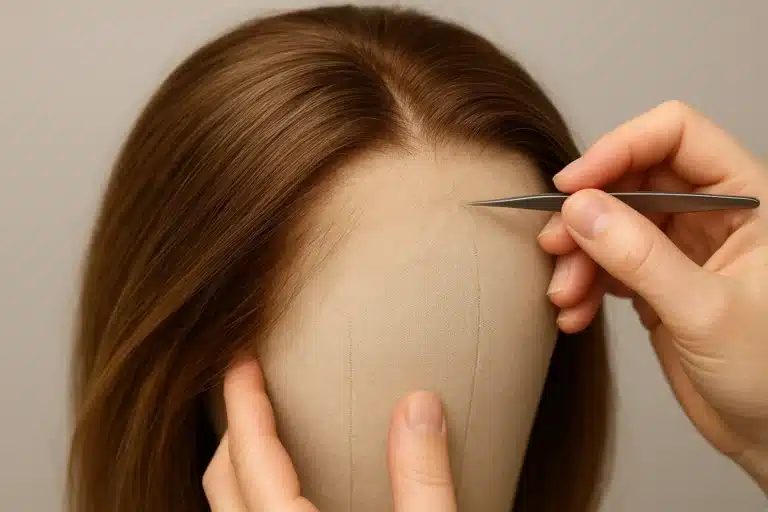
An ethically sourced wig will almost always come with a premium price tag, and for good reason. Creating a high-quality human hair wig is an incredibly labor-intensive art form. A single hand-tied wig can take a skilled artisan anywhere from 40 to 60 hours to ventilate (the process of tying individual hairs to the lace cap). When you purchase a sustainable wig, your investment ensures that the people harvesting, sorting, and crafting the hair are working in safe conditions and receiving fair, living wages.
Non-Toxic Processing vs. The Traditional Supply Chain
Most commercially available human hair goes through an aggressive, toxic chemical acid bath to strip the hair cuticle (the protective outer layer), followed by heavy silicone coatings to make it artificially shiny. This not only introduces harmful chemicals into the environment but also results in hair that tangles and degrades quickly once the silicone washes away.
Ethical manufacturers prioritize eco-certified, gentle processing methods. They preserve the cuticle, avoid toxic dyes, and rely on slow, meticulous treatments that protect both the environment and the longevity of the wig.
The “Greenwashing” Filter: Spotting Industry Buzzwords
As sustainability becomes a selling point, “greenwashing”—the practice of making misleading claims about the environmental or ethical benefits of a product—has crept into local beauty supply stores.
Here are the red flags to watch out for:
- “100% Human Hair” is a quality metric, not an ethical one: Just because hair is human does not mean it was sourced fairly. It simply means no synthetic fibers are mixed in.
- “European Quality” usually means processed Asian hair: This is a common buzzword used in some Philly beauty shops. It often refers to thicker hair that has been chemically stripped and processed to mimic the finer texture of European hair, entirely masking its true origin.
- Confusing “Remy” with “Ethical”: Remy hair means the hair cuticles are all facing the same direction, reducing tangling. While Remy is the gold standard for quality, a wig can be Remy without being ethically sourced.
The Philadelphia Ethical Wig Vetting Protocol
You shouldn’t have to be a supply chain expert to buy a wig. Whether you’re browsing a boutique in Bryn Mawr or a shop along Rising Sun Avenue, you can empower yourself by bringing this “4-Question Ethics Test” to the consultation chair:
- “Can you tell me the exact country and method of origin for this hair?” (Look for specific answers like “Voluntary Temple donation in India,” rather than vague responses like “Imported from overseas.”)
- “Does the manufacturer guarantee fair compensation and safe working conditions for their artisans?”
- “How was this hair processed?” (Listen for terms like “cuticle-intact,” “slow-processed,” or “eco-friendly dyes.”)
- “Are you able to provide traceable certifications or manufacturer transparency statements?”
A reputable store that values compassionate customer care and industry expertise will welcome these questions. They will be proud to share the stories behind their premium products.
Beyond the Hair: Building a Sustainable Ecosystem
Sustainability doesn’t stop at the point of purchase. How you maintain your human hair wig determines its lifespan and environmental footprint.
Philadelphia is home to a growing number of eco-conscious salons. By partnering with a local, sustainable hair stylist to wash, trim, and maintain your piece, you ensure the products used on your wig are free of harsh, environmentally damaging chemicals. Extending the life of your premium wig by years—rather than replacing a cheap, unethically sourced wig every few months—is the ultimate act of sustainable consumerism. Furthermore, some forward-thinking local programs are beginning to explore how to responsibly recycle or upcycle old human hair pieces.
Frequently Asked Questions (FAQ)
Is human hair ever “stolen”?
Unfortunately, in highly unregulated, black-market supply chains, exploitative practices and forced haircuts do occur, particularly targeting vulnerable populations. This is exactly why demanding supply chain transparency, traceability, and ethical sourcing from your wig retailer is so vital.
Does “sustainable” mean the wig cap is biodegradable?
Currently, most high-quality wig caps require a blend of durable materials (like specialized nylons and medical-grade lace) to ensure comfort, breathability, and longevity—especially important for cranial prostheses. While fully biodegradable caps are not yet the industry standard, ethical brands offset this by creating ultra-durable caps that last for years, significantly reducing landfill waste compared to disposable “fast-fashion” wigs.
Why is it so hard to find ethical wigs locally?
The demand for transparency is still relatively new in the broad scope of the wig industry. Many local shops have established, decades-old supply chains that are hard to untangle. However, as consumers ask better questions and demand higher standards, retailers are beginning to stock brands that prioritize ethical practices.
Your Next Steps on the Conscious Journey
Losing your hair is a deeply emotional experience, and finding a wig that helps you feel beautiful and confident shouldn’t require compromising your values.
At Wig Superstore, with nearly two decades of experience, we understand the immense trust it takes to choose a hair replacement solution. We believe that compassionate customer care extends beyond our fitting rooms; it extends to the very origins of the products we provide. By focusing on the highest quality wigs from reputable manufacturers who share our dedication to empathy and integrity, we strive to make your purchasing experience not just enjoyable, but socially responsible.
The next time you evaluate your options, remember that your purchasing power is a vote for the kind of world you want to see. Ask the hard questions, demand transparency, and wear your ethically sourced hair with the ultimate confidence.