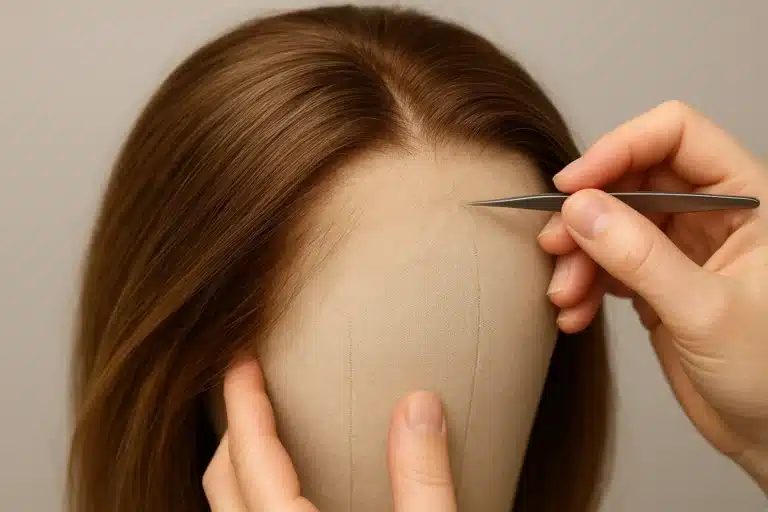
If you’ve spent any time exploring the world of hair replacement online, you’ve likely stumbled into what we call the “DIY Fix” culture. Your feeds are probably filled with endless tutorials on how to pluck, bleach, and “melt” lace fronts just to make them look wearable.
But this raises an important question: if you are investing in a premium hairpiece, why should you have to spend hours playing kitchen-chemist just to make it look real?
At Wig Superstore, we believe that restoring your confidence shouldn’t require a masterclass in DIY alterations. True, professional-grade realism isn’t created in a bathroom mirror with a pair of tweezers—it is engineered at the factory level.
Today, we are taking a deep dive into the science of an undetectable front hairline, using Follea’s industry-leading knotting techniques as our blueprint. We’re moving past the “how-to-fix-it” hacks and exploring how true craftsmanship creates a natural scalp appearance right out of the box.
The Anatomy of a Realistic Hairline: Why Your “Melted” Lace Still Looks Fake
A common frustration for many wig wearers is spending significant time applying a piece, only to feel like it looks like a hat sitting on their forehead. Even with the best adhesives and makeup blending, something feels “off.”
Usually, the culprit is the “straight-line problem.”
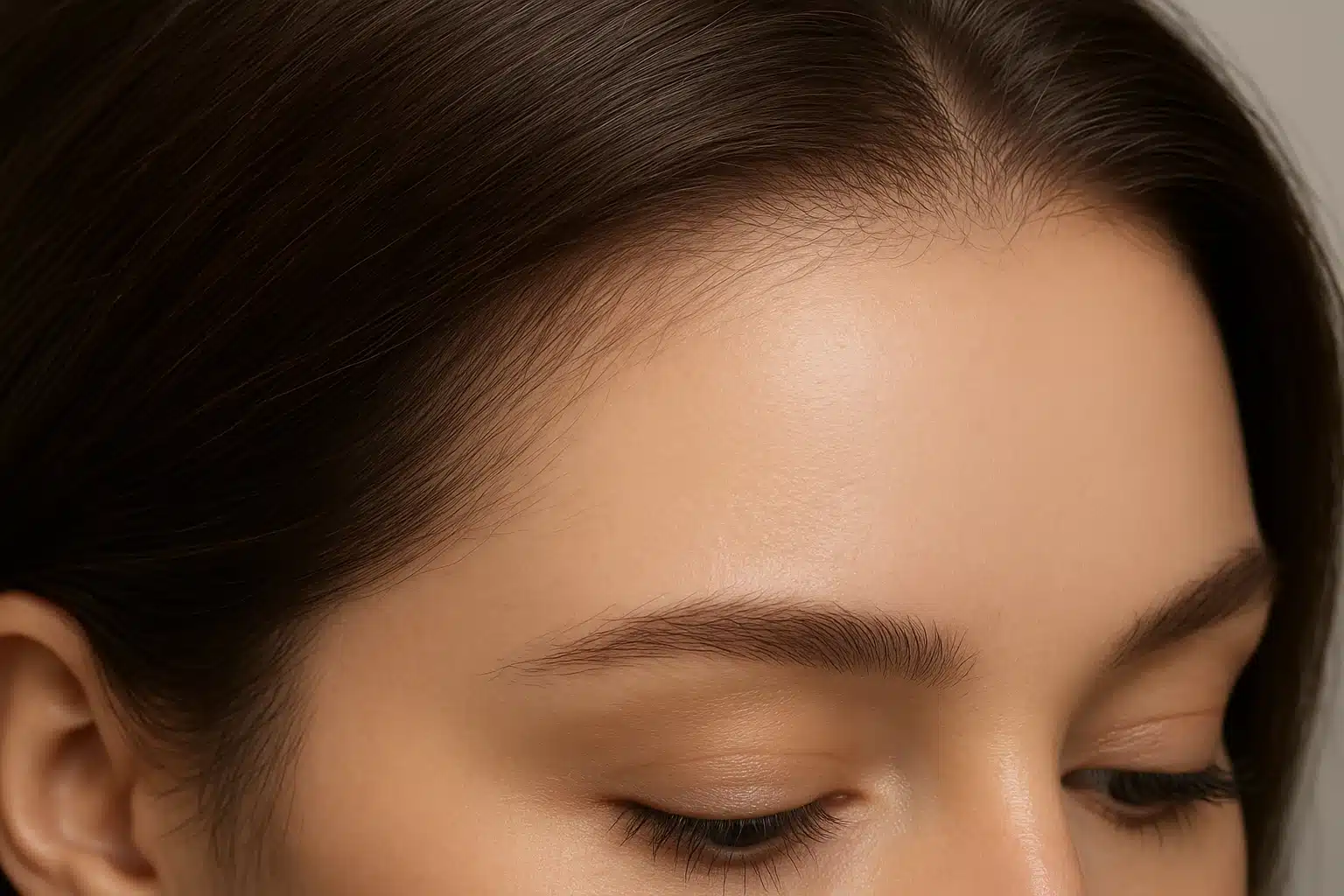
In standard wig manufacturing, hairs are often tied to the lace in a rigid, grid-like pattern. But if you look closely at a biological hairline, it isn’t a straight, solid wall of hair. It is beautifully irregular. It dips, it staggers, and it gradually builds in density. When manufacturers try to hide a straight, heavy hairline by cutting in thick “baby hairs,” it often creates a bulky, unnatural shadow.
When you are searching for natural looking wigs, the secret isn’t in how well you can hide the lace—it’s in how the hair is attached to it in the first place.
The Follea Triple-Threat: Engineering an Undetectable Front Hairline
Follea wigs are widely recognized for their hyper-realistic hairlines. This isn’t magic; it is the result of meticulous, physics-based engineering. They utilize three specific techniques to mimic natural hair growth flawlessly.
1. Staggered Single-Knotting: The End of the “Plucking” Era
In the wig industry, “ventilation” is the term used for tying hair to the lace base. Many mass-produced wigs use double knots or tie multiple hairs in a single loop to save time. This creates large, dark dots at the root.
Follea employs Staggered Single-Knotting. A skilled artisan ties a single strand of hair to the lace at a time, intentionally varying the placement to avoid any grid-like uniformity. Because these knots are so microscopic and organically placed, the illusion of hair growing directly from your scalp is completely preserved. This renders the need to pluck your piece entirely unnecessary, saving your delicate lace from unintentional tearing.
2. Under-Venting: Erasing the Lace “Ledge”
This is perhaps the most poorly understood, yet brilliantly effective, technique in high-end wig construction.
Have you ever noticed a faint, shiny line or a tiny shadow right where a wig’s lace ends on the forehead? That is the lace “ledge.” To eliminate this, Follea uses Under-Venting.
Instead of just tying hair on top of the lace, artisans actually tie a very fine layer of hair underneath the very front edge of the lace. These hairs wrap around the front rim, effectively blurring the transition from lace to skin. Even when viewed from a side profile, the base remains invisible because the under-vented hair lifts the lace slightly off the skin, masking the harsh edge entirely.
3. Density Graduation: The Crucial First 1/4 Inch
A biologically accurate hairline starts sparse and builds thickness as it moves back toward the crown. Follea meticulously graduates the hair density in the first quarter-inch of the front hairline. By ensuring the very front is delicate and airy, they prevent the dreaded “helmet” look, seamlessly integrating your piece with your natural facial framing.
The Truth About “Return Hairs” (Hint: It’s Not Breakage)
When examining the top or part of a premium piece, you might notice short, flyaway hairs standing up near the roots. A common beginner mistake is assuming this is breakage or a sign of poor quality. In reality, these are Return Hairs, and they are vital for realism.
When a single strand of hair is tied to the lace, it is folded over the loop. One side of the fold is the long hair you style, and the other side is the short “return.” Instead of trimming these off, professional manufacturers leave them intact. These short returns act as an invisible support system, lifting the longer hairs at the root to create natural, bouncy volume. They also mimic the varying lengths of natural hair growth cycles, breaking up the flat, overly-smooth look often seen in lower-quality pieces or standard synthetic wigs.
The DIY Trap: The Hidden Cost of Bleaching and Plucking
Social media has popularized bleaching wig knots to hide the dark dots of hair at the root. While this might seem like a great quick fix, it comes with a severe long-term cost.
Bleach is a harsh chemical that weakens the structural integrity of both the hair and the delicate lace it is tied to. Over time, bleached knots become brittle, snap, and lead to premature shedding and permanent bald spots on your investment piece. Plucking is equally dangerous, as forcefully yanking hair from the lace can stretch or tear the microscopic honeycomb structure.
Proper wig care means preserving the integrity of your piece. Factory single-knotting outlasts DIY bleached knots by years because the hair’s cuticle and the lace base remain entirely undamaged.
The Hairline Realism Checklist: How to Inspect Like a Pro
Before you commit to your next hairpiece, evaluate its construction using this professional checklist:
- The Straight-Line Test: Does the hairline look like a perfect grid, or does it have an organic, staggering dip and rise?
- The Root Dot Test: Are the knots at the very front large and dark (double-knotted), or are they virtually invisible single strands?
- The Density Test: Does the hair build thickness gradually, or is it a heavy wall of hair right at the front?
- The Ledge Test: When looking from the side, is the edge of the lace clearly visible, or is it softened by under-venting?
- The Fit Check: A natural look relies on how the piece sits on your head, ensuring the ear tabs lay flat and checking the proper wig fitting sideburns gap for seamless blending.
Frequently Asked Questions (FAQ)
Do I need to bleach the knots on a Follea wig?
No! Because Follea uses single-knotting techniques, the knots are incredibly tiny. Bleaching is not only unnecessary, but it is highly discouraged as it will weaken the hair and the lace base.
What is the difference between single and double knots?
Single knots involve tying one strand of hair at a time, resulting in a tiny, almost invisible root. Double knots involve tying multiple hairs together in one loop, which creates a bulkier, darker dot at the lace base, but is faster and cheaper to manufacture.
Does plucking void a high-end wig’s warranty?
In most cases, yes. Plucking physically alters the lace and can cause irreversible tearing. High-end pieces with staggered knotting are designed to look natural without any physical manipulation of the natural wig hairline.
Why does my part have short flyaway hairs?
These are “Return Hairs.” They are the short end of the tied hair strand and are completely normal. They provide root lift, natural volume, and mimic biological hair growth. A little water or light styling cream can easily tame them if they are too energetic!
Taking the Next Step in Your Journey
Understanding the engineering behind a wig transforms the way you shop for hair. When you know the difference between a DIY hack and professional-grade craftsmanship, you shift your focus from constantly “fixing” your hair to simply enjoying it.
At Wig Superstore, we know that hair loss is deeply personal, and finding a solution that makes you feel beautiful and confident is paramount. You deserve a piece that works for you, not one that requires a daily battle to look natural. Armed with this knowledge of under-venting, single-knotting, and return hairs, you are now equipped to choose a piece that offers true, effortless realism.