You remember the feeling of unboxing your new wig. The hair was impeccably soft, the style fell perfectly into place, and when you put it on, the mirror reflected a renewed sense of confidence. You didn’t just buy a hairpiece; you invested in how you show up in the world.
But fast forward a few months, and a common sense of dread begins to creep in: Wig wash day.
If you’ve found yourself scrolling through social media looking for cheap DIY hacks—maybe eyeing that bottle of Dawn dish soap under your sink or wondering if laundry fabric softener really works as a conditioner—you are entirely normal. When you’ve just spent hundreds or even thousands of dollars on a beautiful piece, the instinct to save money on upkeep is incredibly strong.
However, managing your wig budget isn’t just about the initial purchase price. To truly get the most out of your investment, we need to shift our mindset from simple “how-to” cleaning to Financial Lifecycle Management. Today, we’re going to break down the real cost of maintaining your wig, debunk some expensive internet myths, and help you build a care strategy that protects your wallet just as much as your hair.
The Math of Confidence: Understanding Cost Per Wear (CPW)
When budgeting for a premium wig, the most critical number isn’t the price tag—it’s the Cost Per Wear (CPW). CPW is a simple calculation: you divide the total cost of the wig (plus maintenance) by the number of days you actually wear it.
Let’s look at a realistic scenario for a $1,200 premium human hair wig.
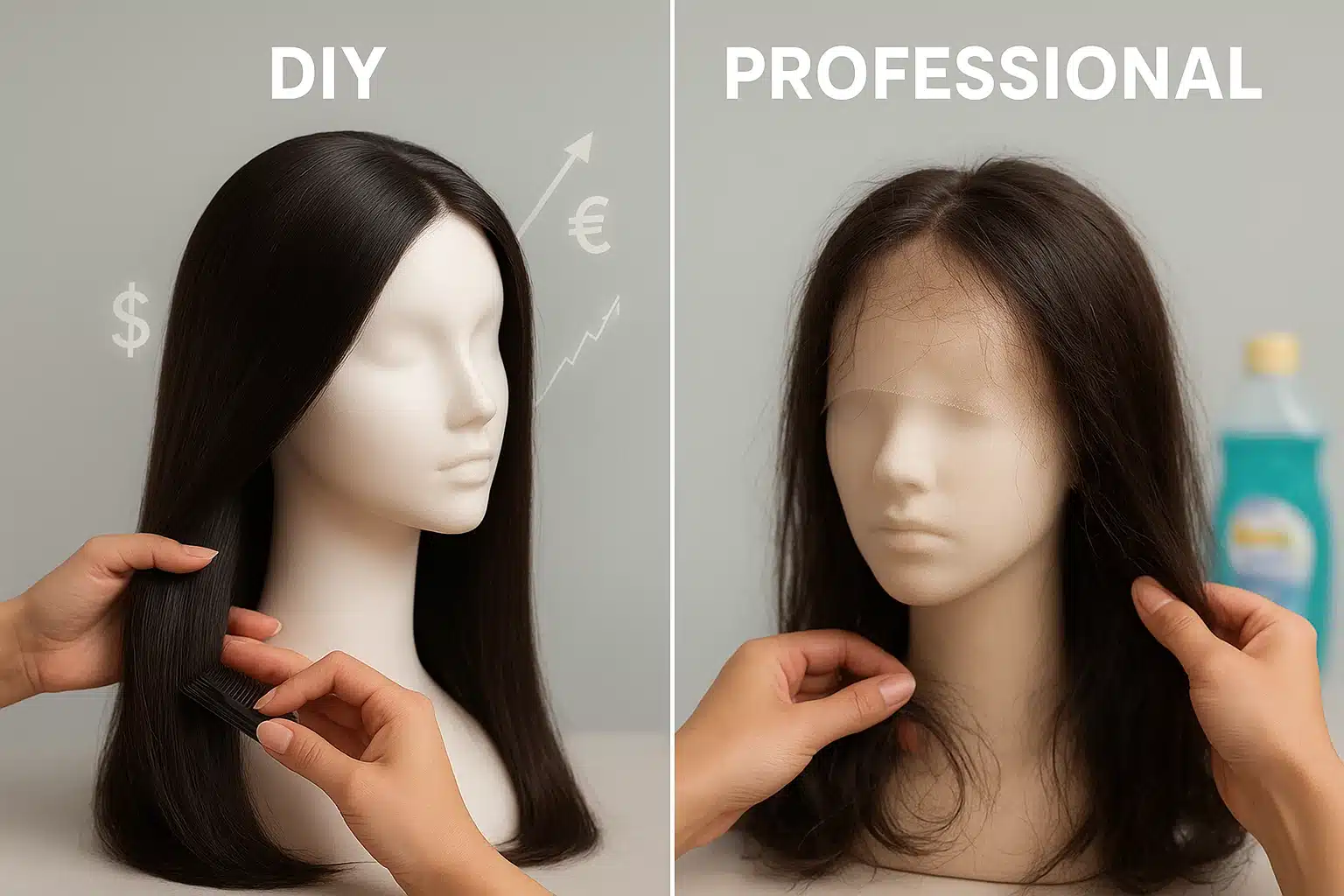
If you rely strictly on aggressive DIY cleaning methods that inadvertently damage the hair, that wig might only maintain its quality for 10 months (about 300 wears). $1,200 ÷ 300 days = $4.00 per wear.
However, if you utilize a professional wig maintenance strategy, you can comfortably extend that exact same wig’s lifespan to 24 months (about 730 wears). Even if you spend an additional $400 on professional styling and repairs over those two years, your math changes beautifully. $1,600 ÷ 730 days = $2.19 per wear.
By spending a little more on proper care, you nearly cut your daily cost in half. The cheapest cleaning method in the short term is almost always the most expensive over a 12-month period.
The DIY Danger Zone: Where Good Intentions Meet Bad Chemistry
We all love a good life hack, but the internet is full of wig care advice that causes invisible depreciation. Every time you make a minor chemical error at home, you strip dozens of “wears” from your wig’s lifespan.
Here are the most common traps budget-conscious owners fall into:
The “Dawn Soap” Fallacy
Many viral videos show creators “revamping” old wigs using dish soap. While dish soap is excellent at cutting kitchen grease, it is highly alkaline. Synthetic fibers are manufactured with a delicate silicone coating that gives them their realistic movement and shine. The harsh surfactants in dish detergents strip this coating entirely, resulting in that dreaded “crunchy” texture and causing the hair to mat at the nape of your neck prematurely. Mastering proper synthetic wig care means using pH-balanced products designed specifically for alternative hair.
The Physical Science of Lace
Not all bases are created equal. Swiss lace, Silk bases, and HD (High Definition) lace all react differently to tension and chemicals. Particularly delicate lace front wigs demand extreme care. When beginners forcefully scrub lace to remove old adhesive, they often warp the delicate honeycomb structure or accidentally pluck hairs out of the hand-tied knots.
Chemical Cheat Sheet: What to Avoid
If you are maintaining your wig at home, always read your product labels. Avoid these lifespan-killers at all costs:
- Sulfates: Strips color and moisture from human hair.
- High-pH soaps: Causes excessive friction and tangling in synthetic fibers.
- Heavy Silicones in Root Areas: Can loosen hand-tied knots, leading to massive shedding.
The Professional Advantage: Asset Preservation for Your Hair
When you hand your piece over to a certified professional, you aren’t just paying for a wash and blow-dry. You are paying for asset preservation.
In a professional “Wig Laundry” setting, experts use tools and techniques that are incredibly difficult to replicate at home. They utilize ultrasonic cleaning to gently vibrate adhesive out of delicate HD lace without stretching it. They perform deep steam treatments that penetrate human hair cuticles to restore moisture elasticity. Most importantly, professionals routinely perform knot sealing—applying specialized, medical-grade sealants to the inside of the cap to lock the hair fibers in place, drastically reducing daily shedding.
When you’re figuring out how to care for human hair wig investments, understanding the difference between a basic wash and structural resuscitation is key to protecting your purchase.
The Side-by-Side Financial Reality
Let’s look at a 24-month financial comparison between a 100% DIY approach and a Professional Care strategy for a premium wig.
| Care Strategy | Upfront Wig Cost | 24-Month Maintenance Cost | Lifespan Achieved | Total Cost Per Month | The Outcome |
|---|---|---|---|---|---|
| Strictly DIY | $1,000 | $150 (Drugstore supplies, internet hacks) | 10 Months (requires replacing the wig twice in 2 years) | $215 / month | Hair feels dry quickly; lace frays; frequent shedding. |
| Professional Care | $1,000 | $400 (Quarterly salon revamps + quality daily products) | 24 Months | $58 / month | Hair retains movement and shine; lace stays intact; shedding is minimized. |
As the numbers show, investing in professional wig maintenance isn’t a luxury expense—it is a powerful budget optimization tool.
The Hybrid Strategy: The Ultimate Budget-Optimized Schedule
You don’t need to take your wig to a professional every time it needs a refresh. The smartest, most budget-conscious wig owners utilize a “Hybrid Strategy.”
1. The Weekly DIY RefreshHandle your day-to-day maintenance at home. Use a wide-tooth comb starting from the ends and working your way up. Wash every 6-8 wears using only manufacturer-approved, pH-balanced shampoos and conditioners. Store your wig on a proper stand away from direct sunlight and heat vents.
2. The Quarterly Professional Deep RestorationEvery three to four months, book a professional service. Let the experts deep-clean the lace, seal the knots, perform a steam hydration treatment, and trim any frayed ends.
The “When to Call a Pro” Checklist
Not sure if it’s time to hand your wig over to an expert? Look for these 5 signs of “wig fatigue”:
- The Nape Snarl: The hair at the back of your neck tangles within an hour of brushing.
- Lace Curling: The front hairline lace is rolling up or fraying at the edges.
- Chronic Dryness: Human hair feels brittle and straw-like, even after a deep conditioning mask.
- Noticeable Thinning: You can easily see the wefts or the cap material through the hair.
- Adhesive Buildup: There is a stubborn, sticky white residue on the lace that gentle washing won’t remove.
Frequently Asked Questions (FAQ)
Can I use fabric softener to condition my synthetic wig?
No. This is a persistent internet myth. While fabric softener makes laundry feel soft, it leaves a heavy, dulling film on synthetic hair fibers. Over time, this buildup attracts dust and causes severe matting. Stick to leave-in conditioners formulated explicitly for synthetic hair.
How much does professional cleaning usually cost?
While prices vary depending on your location and the condition of the wig, a professional wash, deep condition, and restyle typically ranges from $45 to $85. Advanced services like lace repair or knot sealing will add to that cost, but remember our Cost Per Wear math: this periodic investment saves you hundreds in early replacement costs.
How long does a wig last with exclusively DIY care?
It depends heavily on the quality of the hair and your skill level. A premium synthetic wig might last 4-6 months with daily wear and DIY care, while a human hair wig might last 9-12 months. With professional intervention, those lifespans can easily double.
Next Steps in Your Hair Journey
Navigating hair loss or simply finding a new look should be a journey of empowerment, not financial stress. By treating your wig like a valuable asset rather than a disposable accessory, you grant yourself the freedom to enjoy your hair without worrying about what happens on wash day.
Armed with an understanding of Cost Per Wear and the chemistry of proper care, you are now equipped to make strategic, budget-friendly decisions that will keep you looking—and feeling—beautiful for years to come. Explore our resources to continue learning about which hair types and cap constructions best fit your newly optimized lifestyle budget.