There is a distinct “honeymoon phase” when you first bring a new wig home. The fiber moves perfectly, the cap feels secure, and the shine is indistinguishable from biological hair. However, as weeks turn into months, every wig wearer faces the inevitable question of maintenance. For many, the default reaction is to handle everything at home to save money. But is the DIY route actually cheaper in the long run, or are there hidden costs that shorten the lifespan of your favorite piece?
To answer this, we have to look beyond the price tag of a bottle of shampoo. We need to view your wig as a financial asset rather than just an accessory. Truly understanding The Total Cost of Wig Ownership: A Long-Term Financial Guide involves calculating how your maintenance choices impact the longevity of the piece. While washing a wig in your bathroom sink might seem cost-effective today, it could be the very thing that forces you to replace a $1,500 unit months earlier than necessary.
The Hidden Economics of DIY Care
When we think about DIY wig care, we usually calculate the cost of consumables: shampoo, conditioner, and detangler. However, a true cost-benefit analysis reveals a much broader picture. Effective home maintenance requires an initial capital investment in the right tools.
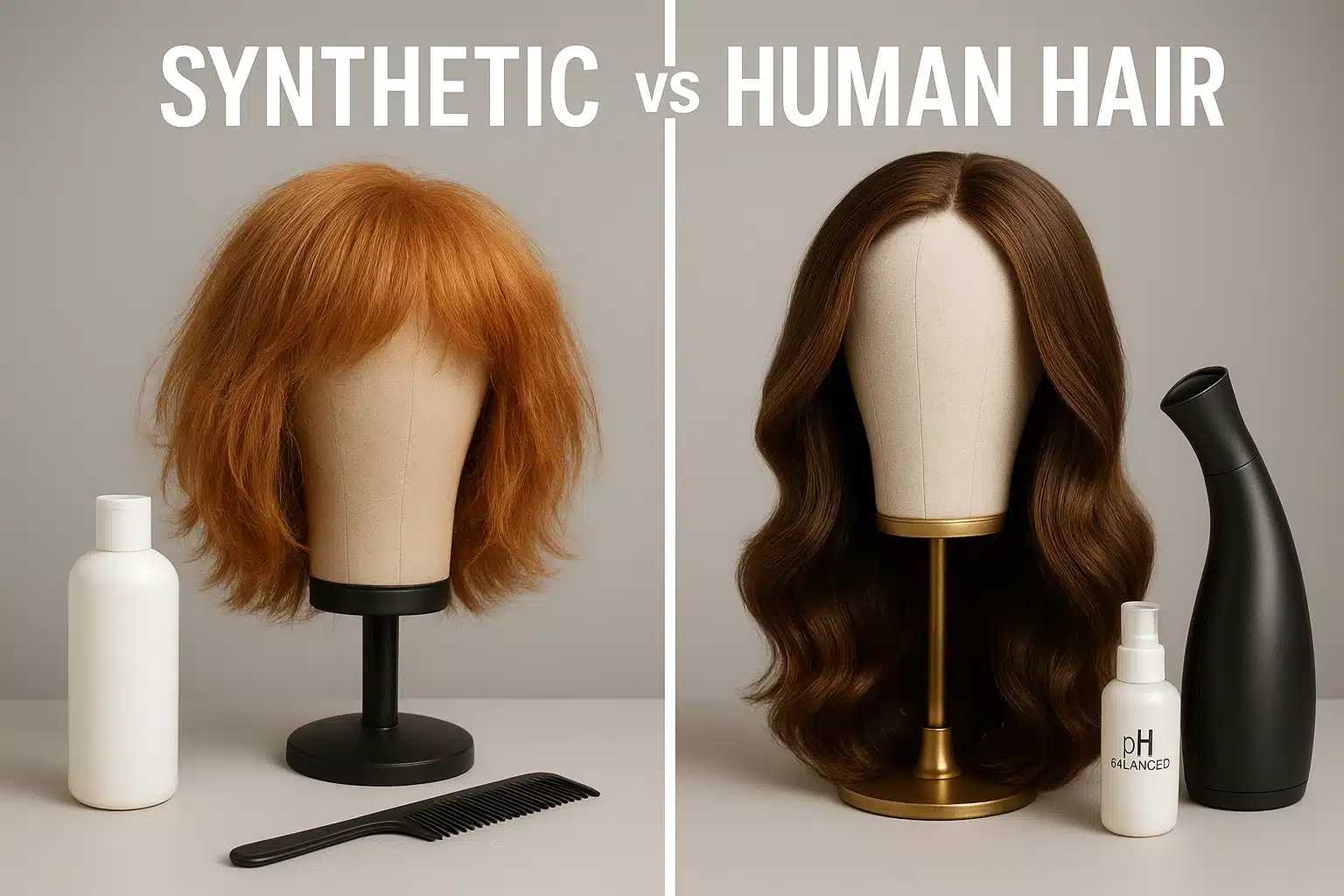
To maintain a wig properly—without causing damage—you generally need a specific “starter kit” that often includes:
- A Canvas Block Head: To hold the shape of the cap during drying ($30–$60).
- A Wig Stand or Tripod: For stability while styling ($20–$50).
- Specialized Steamers: Essential for removing “friction frizz” from synthetic fibers ($30–$80).
- pH-Balanced Products: Regular hair products are too harsh for processed wig hair.
The Risk of “Invisible Depreciation”
Beyond the equipment costs, the biggest financial risk of DIY care is what experts call “invisible depreciation.” This often happens during the drying process. If a wet wig is placed on a head form that is slightly too large, or if it is hung incorrectly, the internal cap materials can stretch permanently.
Once a cap stretches, the fit is compromised. A loose wig feels insecure, leading to over-tightening of adjustment straps, which further distorts the shape. This cycle can ruin a wig’s wearability long before the hair fiber itself degrades. In this scenario, saving $50 on a professional service might cost you the replacement value of the entire wig.
The Professional Advantage: What Are You Paying For?
If you visit a wig specialist, the service menu often includes washing, deep conditioning, and styling. But the “value add” that justifies the cost usually lies in preventative maintenance that is difficult to replicate at home.
1. The Friction-Frizz Trim
Synthetic wigs, regardless of quality, eventually develop friction frizz at the nape of the neck where the fiber rubs against collars and skin. A professional stylist can perform a “micro-trim” or steam treatment that removes these damaged ends before the frizz travels up the hair shaft. Research suggests that regular professional maintenance of this type can extend the wearable life of a synthetic unit by 3-4 months.
2. Structural Triage and Repair
A professional isn’t just cleaning; they are inspecting. They look for loose wefts, thinning areas that need “ventilating” (the process of hand-tying individual hairs back into the lace), and lace fraying. Catching a small tear in a lace front early allows for a minor repair (approx. $50–$75) rather than a total replacement later.
3. Proper Heat Management
For human hair wigs and heat-friendly synthetics, moisture balance is critical. Professionals use industrial-grade steamers and deep conditioning treatments that penetrate the cuticle more effectively than home methods. Data indicates that professional servicing can extend the life of a human hair wig by 25-40% compared to average DIY care, primarily through superior heat management that prevents the hair from becoming brittle.
The “Threshold of Professionalism”: A Decision Matrix
So, when should you wash it yourself, and when should you call a pro? It rarely makes financial sense to spend $80 servicing a $150 wig, just as it is risky to treat a $2,500 European human hair wig with drugstore products.
Use this Wig Maintenance Decision Matrix to guide your choices:
| Wig Type & Cost | Routine Wash & Condition | Deep Condition & Styling | Structural Repair (Lace/Cap) |
|---|---|---|---|
| Synthetic (<$200) | DIY: Use wig-safe products and air dry. | DIY: Use a low-heat steamer for frizz. | Replace: Repair costs usually exceed value. |
| High-End Synthetic ($300-$600) | DIY: With strict adherence to instructions. | Hybrid: Professional “refresh” every 4-6 months to remove friction frizz. | Pro: Minor repairs are worth the investment. |
| Human Hair ($800-$3,000+) | Hybrid: DIY for gentle refreshes; Pro for deep cleans. | Pro: Quarterly professional styling ensures correct moisture retention. | Pro: Always professional. A $150 repair is better than a $3,000 replacement. |
The “Salvageable vs. Ruined” Reality
One of the most common mistakes beginners make is throwing away a wig that looks “wrecked” but is actually just thirsty or frizzy. This is where the ROI (Return on Investment) of professional care shines.
Imagine your favorite synthetic wig has become a tangled, matted mess at the nape. You might be tempted to toss it and buy a new one for $350. However, a professional “steam and restore” service might cost $65. If that service brings the wig back to 90% of its original condition, you have effectively “earned” $285 by choosing maintenance over replacement.
Conversely, knowing when not to spend is equally important. If heat damage has “singed” synthetic fibers (causing them to crimp and break), no amount of professional care can fix it. Recognizing the difference between dryness (fixable) and fiber fatigue (fatal) is a skill that saves money.
Frequently Asked Questions
Can I use regular shampoo if I dilute it?
No. Biological hair produces natural oils (sebum) that protect it. Regular shampoos are formulated to strip away these oils. Since wig hair does not receive oils from your scalp, using regular shampoo—even diluted—will dry out the fiber rapidly, leading to brittleness and tangling. Always use products specifically formulated for wigs.
How often does a wig actually need washing?
Over-washing is a leading cause of premature aging in wigs. Unlike growing hair, wigs do not need to be washed daily. A general rule of thumb is every 6-8 wears, or when the hair feels heavy and lifeless. Washing too frequently adds unnecessary mechanical stress to the fibers.
Is a lace repair really worth the money?
It depends on the remaining quality of the hair. If the hair fiber is still soft and bouncy, paying $100 to repair a torn lace front is a smart financial move to save a high-value unit. If the hair is already shedding heavily or feels like straw, it is likely better to put that money toward a new purchase.
Making the Right Choice for Your Budget
Maintaining a wig isn’t just about keeping it clean; it’s about protecting your investment. By adopting a “hybrid” approach—handling simple washes at home while budgeting for periodic professional “tune-ups”—you get the best of both worlds. You minimize daily costs while ensuring that a professional eye is keeping your cap structure and fiber health in check.
As you build your wig wardrobe, start tracking not just the purchase price, but the “cost per wear.” You may find that spending a little more on professional maintenance significantly lowers your daily cost by keeping your favorite pieces in rotation for months, or even years, longer.