We’ve all experienced that sinking feeling. You go to put on your favorite, reliable wig—the one that makes you feel effortlessly beautiful and confident—only to find the ends are frayed, the back is a tangled nest, and the brilliant shine has been replaced by a dull, lifeless matte.
Your first instinct might be to reach for your wallet. After all, if a wig looks ruined, it’s time to replace it, right?
Not necessarily.
Before you begin shopping for a replacement, it’s crucial to understand a well-kept industry secret: most “ruined” wigs aren’t actually dead. They are simply fatigued. By understanding the science behind your wig’s fibers, you can revive your current piece, extend its lifespan by months, and drastically alter the long-term math of your wig budget.
Let’s step into the restoration lab and explore how you can protect your investment through the power of budget-friendly, science-backed wig revival.
The Crisis Assessment: Is Your Wig “Dead” or Just Dehydrated?
When your wig starts acting up, the culprit usually depends on what it’s made of. The biggest mistake wig wearers make is treating all hair exactly the same.
If your human hair wig is stiff and tangling, it is likely dehydrated. Because the hair is no longer attached to a scalp, it isn’t receiving natural oils (sebum) to keep the hair cuticles smooth.
If your synthetic wig is turning into a frizzy, matted mess, especially at the nape of the neck, it is experiencing friction damage. Synthetic hair doesn’t “dry out” because it doesn’t drink water. Instead, the continuous rubbing against your collars and shoulders creates micro-abrasions on the fibers.
Understanding this difference is your first step toward smart budgeting. You can’t fix friction damage with a moisturizing conditioner, and you can’t fix a dehydrated human hair cuticle with high heat.
Fiber 101: The Science of Your Strands
To truly master cost-effective wig care, we need a quick lesson in fiber chemistry.
Human Hair Biology
Human hair is organic. Imagine each strand of human hair under a microscope; it looks like a roof covered in overlapping shingles. These “shingles” are the cuticle. When the hair is healthy, the shingles lie flat, reflecting light and feeling silky. When the hair is damaged or dry, these shingles lift and catch on one another, creating severe tangles. Restoration here is about hydration and sealing.
Synthetic Polymers (The Plasticization Principle)
Synthetic fibers (like Kanekalon or Toyokalon) are, fundamentally, finely spun plastics. They do not have a cuticle. When a synthetic wig gets frizzy, the plastic fibers have actually been stretched, bent, and kinked out of shape by friction and body heat.
Because they are plastic, restoration isn’t about “healing” the hair—it’s about re-molding it. This is known as the plasticization principle. Just like you can soften and reshape plastic with controlled heat, you can reset a synthetic wig using temperature.
The “Anti-Hack” Manifesto: Debunking Viral Wig Care Myths
If you’ve searched social media for ways to save your wig, you’ve likely seen viral hacks promising miracle cures. Unfortunately, many of these “quick fixes” will actually destroy your wig’s lifespan, costing you more money in the long run.
- The Fabric Softener Myth: Many tutorials recommend soaking synthetic wigs in fabric softener. Why it fails: Fabric softener is designed for porous cotton and polyester fabrics, not non-porous synthetic hair polymers. It leaves a heavy, waxy residue that feels soft for about two days, but quickly acts as a magnet for dust, sweat, and environmental dirt. Within a month, your wig will be permanently matted.
- The Dish Soap Disaster: Using dish soap to “strip” product buildup. Why it fails: Dish soap is an aggressive degreaser formulated for baked-on food. On human hair wigs, it strips away every ounce of essential moisture, blowing out the cuticle and causing irreversible brittleness. Furthermore, left-behind residue can cause severe scalp irritation and seborrheic dermatitis.
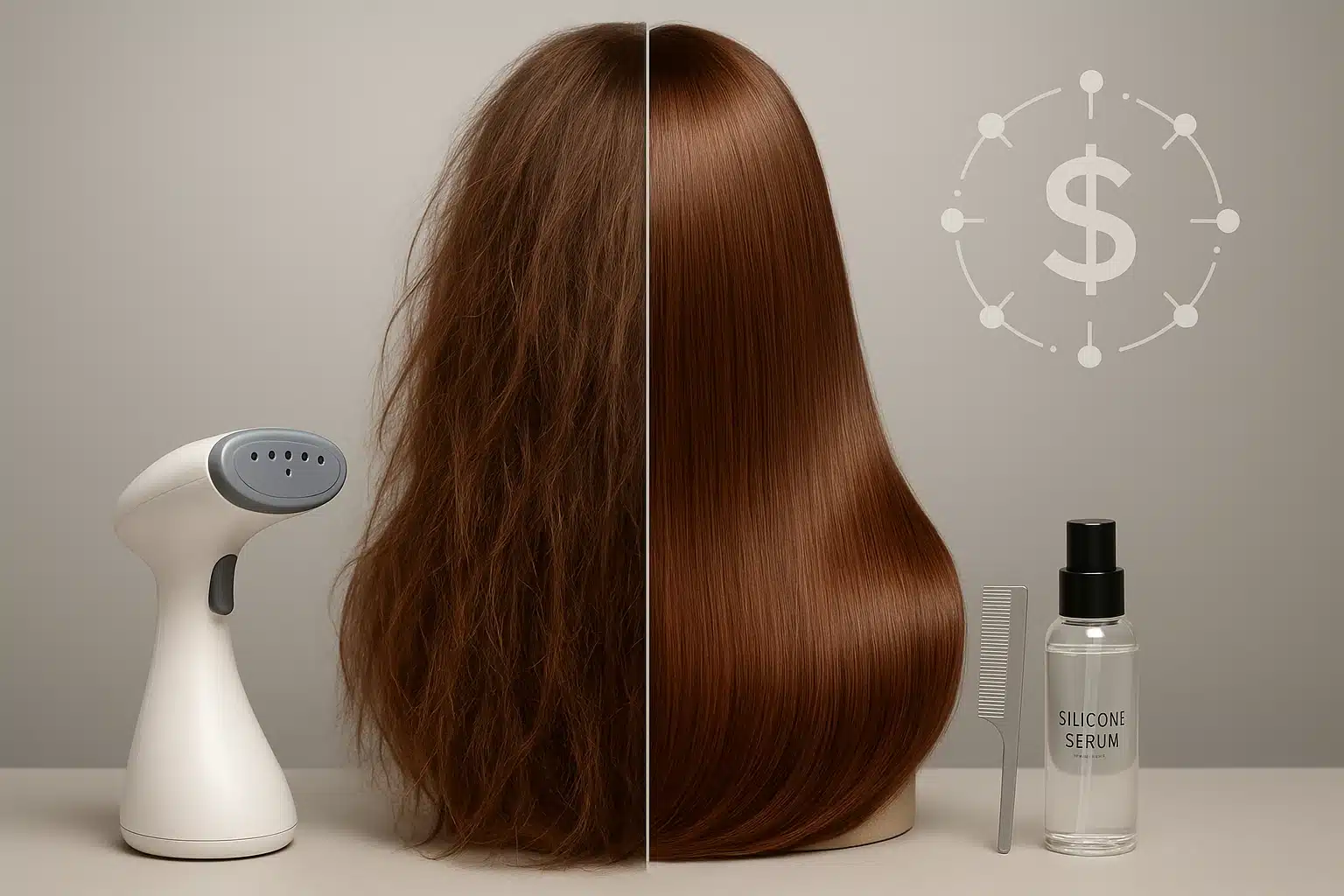
The Expert Alternative: The Silicone SealInstead of kitchen products, your best friend for wig longevity is Dimethicone (a type of water-soluble silicone). For both human and synthetic hair, lightweight silicone sprays provide a protective, frictionless coating that mimics natural scalp oils without building up into a sticky mess.
The Restoration Lab: Step-by-Step Revivals
Ready to rescue your wig and delay that replacement purchase? Here are the three tiers of evidence-based restoration.
Level 1: The Luster Refresh (For Human Hair)
When a human hair wig loses its bounce and shine, it needs a cuticle reset.
- Gently detangle the dry wig from ends to roots using a wide-tooth comb.
- Wash with a sulfate-free, hydrating shampoo in cool water. Never rub or agitate; gently squeeze the soapy water through the hair.
- Deep Condition: Apply an argan-oil or silicone-based intensive mask. Avoid the hand-tied knots at the lace base, as conditioner can cause shedding.
- Air Dry & Seal: Let the wig air dry on a canvas block head. Once dry, apply a lightweight heat-protectant serum before styling to smooth the cuticle back down.
Level 2: The Steam Reset (For Synthetic Frizz)
A simple $10 handheld garment steamer is the most powerful tool in your wig-saving arsenal. Steam provides the exact temperature needed to soften synthetic fibers without melting them.
- Pin your wig securely to a canvas block head.
- Taking small, one-inch sections, run a fine-tooth metal comb through the frizzy ends.
- Follow the comb closely with the nozzle of your handheld steamer. The steam breaks the thermal chain of the bent plastic, while the comb pulls it straight.
- Let the section cool completely before moving it. Cooling is what locks the newly smoothed fiber into place.
Level 3: The Boiling Water Dip (Extreme Matting for Synthetics)
If your synthetic wig is matted beyond recognition, the boiling water method acts as a factory reset. (Note: Only use this on heat-friendly synthetic or standard synthetic fibers you’ve patch-tested. Do not use on human hair).
- Boil a pot of water and remove it from the heat source. Add a few drops of synthetic-safe silicone serum to the water.
- Using tongs, gently dip the matted lengths of the wig into the water for 3 to 5 seconds. Keep the lace cap out of the water!
- Lift the hair out and gently comb through the hot fibers with a wide-tooth metal comb. The extreme heat will shock the fibers back into a smooth, straight state.
- Allow to dry completely. If your wig was originally curly, you will need to reset the curls using foam rollers and steam, as boiling water removes all “curl memory.”
The Math of Maintenance: Understanding Cost-Per-Wear
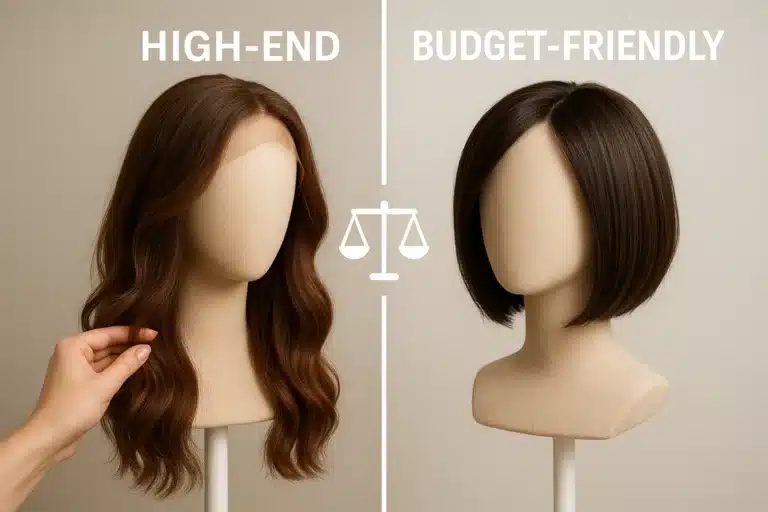
Why go through this effort? It comes down to understanding the true cost of your wigs. For comprehensive insights into framing your wig purchases, you can bookmark this resource on budgeting for your perfect wig.
Let’s look at the “Cost-Per-Wear” formula.
If you purchase a beautiful $300 wig and it lasts for 3 months (90 days) before becoming unwearable, your cost-per-wear is $3.33 per day.
If you invest in a $10 steamer, a $15 wide-tooth comb, and spend 30 minutes a month doing a steam reset, you can easily extend that same wig’s life to 6 months (180 days). Your new cost-per-wear? $1.66 per day.
By investing a tiny amount of time in science-backed maintenance, you effectively cut your annual wig budget in half.
The 5-Minute Daily Prevention Protocol
The easiest way to restore a wig is to prevent the damage from happening in the first place. Add this 5-minute routine to your evening unwinding process:
- The Take-Off: Never pull your wig off by the delicate lace front. Gently lift from the ear tabs.
- The Finger Detangle: Mist the nape of the neck with a lightweight detangling spray. Gently separate any developing tangles with your fingers.
- The Cool Down: Place the wig on a breathable wig stand (not in a dark box) so the cap can air out and any trapped sweat can evaporate overnight.
Frequently Asked Questions (FAQ)
Can I use a regular flat iron to smooth my synthetic wig?
Unless your wig is specifically labeled as “Heat-Friendly Synthetic,” do not use a flat iron! Standard synthetic fibers (like Kanekalon) melt at high temperatures. A garment steamer is much safer because steam caps out at 212°F (100°C), which is hot enough to reshape the fiber but not hot enough to melt it.
How do I restore curly synthetic wigs without losing the curl?
Curly wigs are tricky because heat-smoothing them will flatten the curl. To revive curls, pin the wig to a block head. Take a frizzy curl, wrap it neatly around your finger to reform the ringlet, and pin it flat against the head. Hit the pinned curl with a burst of steam, then let it cool completely. Once unpinned, the curl will bounce back perfectly.
Why does my wig tangle almost exclusively at the nape of the neck?
This is a classic case of friction damage. The hair at the nape of your neck constantly rubs against your body heat, collars, scarves, and jewelry. To delay this, try spraying a tiny amount of silicone-based protectant spray specifically at the nape before wearing it out.
Investing in Your Next Chapter
Extending the life of your current wig doesn’t just save you money today—it empowers you to make smarter, less rushed decisions tomorrow. When you aren’t forced to urgently replace a ruined wig, you have the luxury of taking your time to research, budget, and select a piece that truly elevates your confidence.
Your wig is an investment in how you present yourself to the world. By treating it with the right mix of care and science, it will continue to beautifully serve you, day after day.