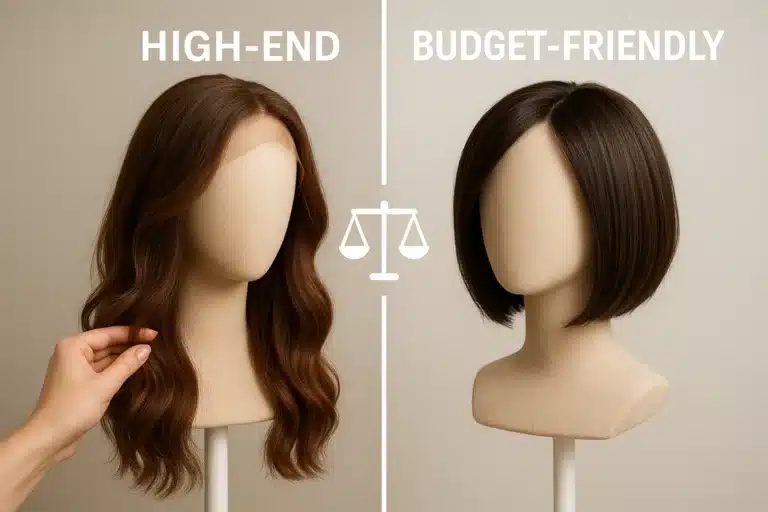
We’ve all been there: an event is coming up, or you’re simply ready for a fresh look, and you spot a gorgeous, inexpensive wig online. You buy it, wear it for a week, and then… the tangling begins. The luster fades. Before you know it, that “bargain” purchase is sitting at the bottom of your closet, and you’re pulling out your credit card to buy another one.
If you are navigating hair loss, medical treatments, or simply love the versatility of protective styling, treating wigs as a series of impulsive, one-off purchases is a fast track to frustration—and an empty wallet.
It’s time to shift our perspective. What if, instead of constantly buying single replacement wigs, you thoughtfully curated a Capsule Wig Wardrobe?
Borrowing a concept from the fashion world, a capsule collection allows you to strategically plan your purchases, maximize versatility, and ultimately save money. Let’s explore how to budget for your hair journey like a true investment.
The Investment Mindset: Doing the Real Math
The biggest trap in the hair industry is looking exclusively at the sticker price. To truly understand your budget, you need to learn the golden rule of smart shopping: Cost-Per-Wear (CPW).
Here is the formula savvy shoppers use:(Upfront Cost + Styling + Routine wig maintenance) ÷ Estimated Days Worn = Your Cost-Per-Wear
Let’s look at a real-world scenario. Is a $600 human hair wig actually cheaper than a $50 mass-market synthetic wig?
If you buy a $50 low-quality wig that tangles unwearably after 10 wears, your CPW is $5.00 per day. If you invest in a $600 high-quality wig, spend $50 on care products, and wear it for 300 days over a year, your CPW is just $2.16 per day.
By looking at the lifecycle of the hair rather than just the checkout price, you empower yourself to make financial decisions that pay off in both longevity and daily confidence.
The “Rule of Three”: Building Your Starter Capsule Collection
You don’t need a closet full of twenty wigs to have a versatile wardrobe. Beginners and seasoned wearers alike can build a perfect foundation using the “Rule of Three.” By budgeting for these specific roles, you avoid buying overlapping styles while leaving gaps in your routine.
1. The Daily Driver
This is your workhorse. Whether you are running errands, heading to the office, or dropping kids at school, this piece needs to be durable and, most importantly, comfortable. For individuals with alopecia or medical-related hair loss, comfort is non-negotiable. When budgeting for your daily driver, prioritize a specialized wig cap construction designed to protect sensitive scalps and provide all-day breathability.
2. The Reliable Backup
Life happens. Your daily driver needs to be washed, or perhaps you get caught in an unexpected downpour. Your backup wig steps in to save the day. High-quality synthetic wigs are brilliant for this category. They offer incredible “style memory” (meaning they bounce right back to their original shape after washing) and are highly budget-friendly, making them the perfect stress-free alternative.
3. The Special Occasion Piece
This is your confidence-booster for weddings, date nights, or days when you just want to feel unstoppable. You might allocate a larger portion of your budget here for premium features, like hand-tied lace front wigs that offer an undetectable, natural-looking hairline, or a luxurious human hair piece that can be heat-styled to match your mood.
The Hidden Budget: Planning for Lifecycle Costs
A common mistake when budgeting for a wig wardrobe is spending 100% of your funds on the hair itself, leaving nothing for the tools required to protect your investment. You wouldn’t buy a silk dress and throw it in a harsh washing machine—your hairpieces require the same thoughtful maintenance.
To map out your true annual budget, include a line item for these essential lifecycle costs:
- Proper Storage: Canvas block heads, velvet-lined stands, or silk storage bags prevent structural stretching and fiber friction.
- Specialized Cleansers: The products you use on biological hair can permanently strip moisture from wigs. Budgeting for the best wig care products is an insurance policy for your hairpiece.
- Routine Care: Knowing how to care for human hair wig textures versus synthetic fibers is crucial. Proper wig care routines extend the life of your piece by months, or even years, delaying the need for your next big purchase.
Specialized Investments: Medical Necessities and Salon Savings
The Medical Capsule
If you are experiencing medical hair loss, your budgeting strategy has a unique advantage: insurance. Many insurance companies do not cover “wigs,” but they do cover “Cranial Prosthetics.”
When budgeting, always check with your insurance provider first. Ask your dermatologist or oncologist to write a prescription specifically for a cranial prosthesis. Additionally, you can often use your Health Savings Account (HSA) or Flexible Spending Account (FSA) to purchase medical-grade hairpieces, turning a daunting out-of-pocket expense into a manageable, tax-advantaged medical investment.
The Braided Wig Value Proposition
For our style chameleons who love protective styles, a high-quality braided wig is a masterclass in ROI (Return on Investment). A premium braided wig might require a larger upfront budget, but consider the alternative: sitting in a salon chair for 6 hours and paying $200 to $400 every six weeks. A single braided wig can entirely replace those salon visits, paying for itself in less than two months while saving you countless hours of time.
Your 12-Month Action Plan
You do not have to buy your entire capsule wardrobe today. In fact, you shouldn’t. Here is how to map your investments over a year:
- Month 1: Invest in your “Daily Driver” and a starter kit of maintenance products.
- Month 4: Once you are comfortable with your routine, add your “Reliable Backup.”
- Month 8: Plan ahead for holidays or events and invest in your “Special Occasion” piece.
By spreading out your purchases, you protect your monthly cash flow, allow yourself time to learn what styles you truly love, and naturally build a rotation that extends the life of every piece in your collection.
Frequently Asked Questions (FAQ)
Are human hair wigs always a better financial value?
Not always. While human hair lasts longer (often 1-2 years with daily wear), it requires more styling time and expensive maintenance products. High-end synthetic wigs cost significantly less upfront and require less maintenance, making them an excellent value for busy lifestyles, even if they need replacing every 4-6 months.
Can I deduct wigs for alopecia on my taxes?
In the United States, if your hair loss is due to a medical condition (like alopecia or chemotherapy), the IRS may allow you to include the cost of a wig as a deductible medical expense if your doctor recommends it as a cranial prosthesis. Always consult a tax professional to see if you meet the threshold for medical deductions.
How do I store multiple wigs without ruining my budget or my living space?
You don’t need a room full of expensive mannequin heads. While one good canvas block is great for styling, you can store clean, dry backup wigs safely in silk or satin bags. This protects them from dust and friction while taking up minimal closet space.
Next Steps in Your Hair Journey
Transforming your mindset from “buying a wig” to “investing in a wardrobe” is the single best thing you can do for your confidence and your bank account. Take an inventory of your current lifestyle needs. Do you need a breathable cap for long work hours? Are you looking for a heat-friendly synthetic backup?
Start by defining what your “Daily Driver” looks like, set your budget using the Cost-Per-Wear formula, and take your first step toward a beautifully curated, financially smart hair collection.