There is a distinct feeling of joy that comes with opening a fresh wig box—the silkiness of the fibers, the bounce of the style, and the confidence that comes with a perfect hair day. But for many, there is also a lingering anxiety: the clock starts ticking the moment you put it on. We know that hair replacement isn’t a one-time purchase; it is an ongoing relationship with your self-image.
Many wearers find themselves in a cycle of “wear, tear, and panic,” realizing their favorite piece needs replacing right when finances are tight. This creates unnecessary stress in a journey that should be empowering. By understanding the total cost of wig ownership, you can step off the rollercoaster of sudden expenses and move toward a sustainable model of wardrobe management. With a few strategic adjustments to how you plan, you can ensure that you never have to choose between your budget and feeling beautiful.
Shifting Your Mindset: From “Purchase Price” to “Lifecycle Management”
When you first start browsing for hair, it is natural to focus entirely on the price tag listed on the screen. However, seasoned wig enthusiasts know that the purchase price is only the tip of the iceberg. To truly budget for a wig wardrobe, we have to shift our thinking from buying a product to managing a lifecycle.
Think of your wig collection less like buying a t-shirt and more like owning a car. You wouldn’t buy a car without expecting to pay for gas, oil changes, and eventual tires. Similarly, a wig requires specific products, potential professional styling, and eventual replacement. When you view your collection as a “portfolio” of styles rather than individual items, you can begin to make financial decisions that actually save you money in the long run.
The Mathematics of Value: Calculating Cost-Per-Wear (CPW)
One of the most powerful tools in your financial toolkit is the concept of Cost-Per-Wear (CPW). This simple formula can completely change how you view wig price range options. A lower upfront cost doesn’t always equal a better deal, especially if the wig has a short lifespan or requires frequent replacement.
The formula is simple:(Purchase Price + Maintenance Costs) ÷ Number of Times Worn = Cost Per Wear
Let’s look at a practical example. Imagine you purchase a budget-friendly synthetic wig for $150. It looks great, but with daily wear, the fibers at the nape begin to friction-frizz after three months (approx. 90 wears).$150 ÷ 90 wears = $1.66 per day.
Now, consider a higher-quality synthetic or heat-friendly option that costs $350 but, with proper rotation and care, lasts for six months (180 wears).$350 ÷ 180 wears = $1.94 per day.
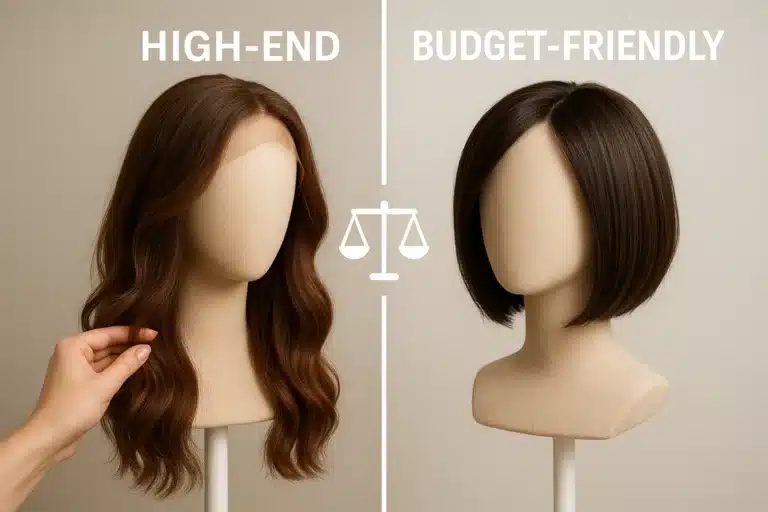
While the second wig costs more upfront, the daily difference is negligible for a likely significant jump in realism and comfort. When you apply this to human hair wigs, which can last over a year, the daily cost often drops even further, proving that higher quality can sometimes be the more budget-conscious choice over time.
The “Financial Cliff” and How to Avoid It
The most common budgeting mistake wig wearers make is buying multiple wigs at the same time. While it is exciting to overhaul your look, this sets you up for what we call the “Financial Cliff.”
If you buy three synthetic wigs in January, and they all have a lifespan of roughly 4-6 months, they will all begin to lose their luster around May or June. Suddenly, you are faced with the need to replace your entire wardrobe simultaneously, resulting in a massive, unexpected expense.
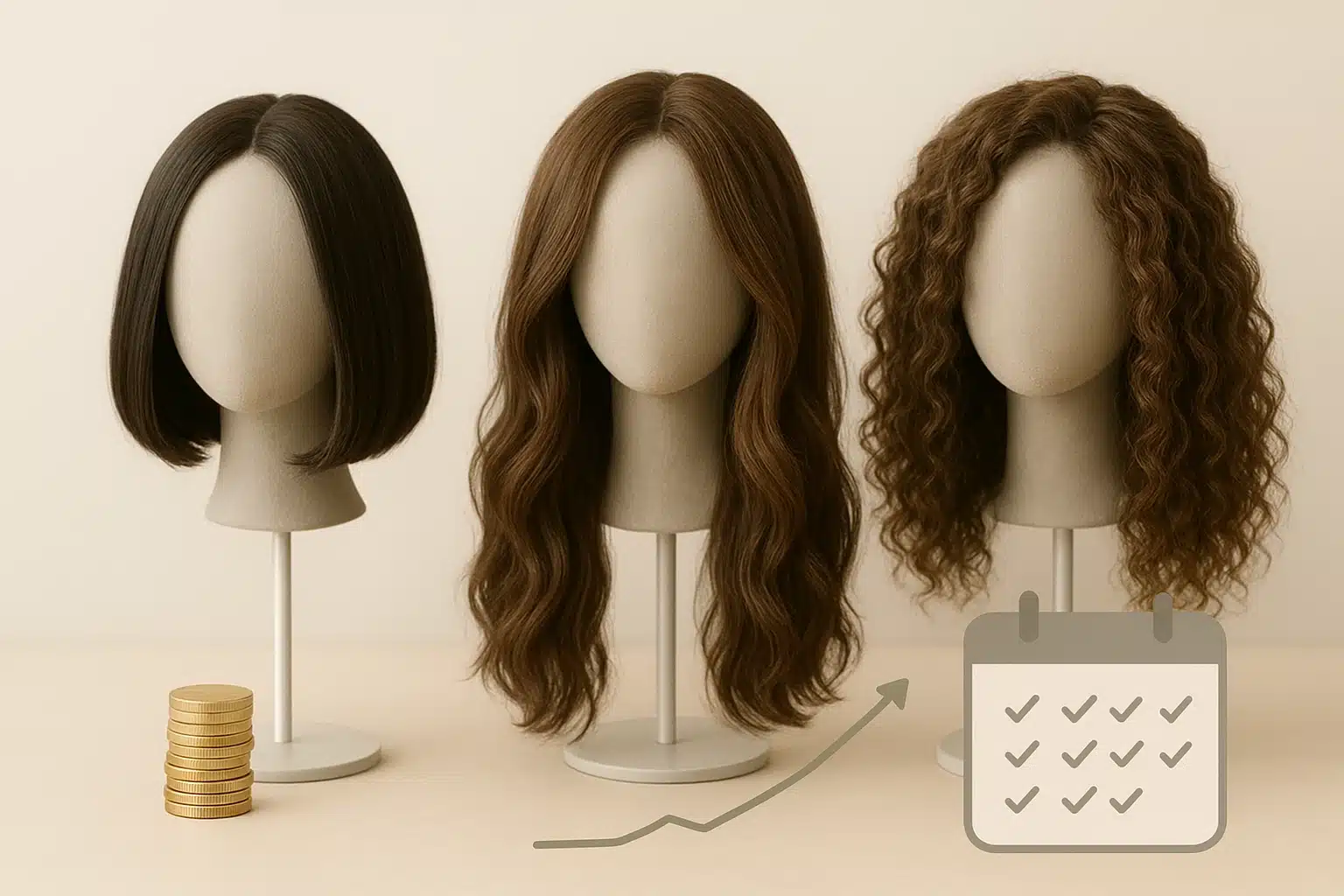
To avoid the cliff, we recommend “staggering” your acquisitions. If you are building a collection, try to space your purchases out by 2-3 months. This ensures that your wigs enter their “retirement phase” at different times, smoothing out your cash flow and ensuring you always have a fresh piece ready to wear.
Strategy 1: The “Sinking Fund” Approach
Once you understand that wigs are a recurring need, you can stop treating replacements as emergencies and start treating them like utility bills. This is where the “Sinking Fund” comes in. A sinking fund is simply a small amount of money you set aside every month specifically for future hair needs.
To do this effectively, you need to know how long do human hair wigs last compared to synthetic ones.
- Daily Wear Synthetic: typically lasts 3–6 months.
- Daily Wear Human Hair: typically lasts 1–2 years with care.
If you know your $400 favorite synthetic style usually needs replacing every 6 months, you can reverse-engineer your budget. You need to save roughly $67 a month. By auto-transferring this amount into a digital “Wig Jar” or savings account, the money is ready and waiting when it’s time for a new unit. This turns a stressful $400 purchase into a manageable $16 weekly commitment.
Strategy 2: The Rotation Method (Your Style Insurance Policy)
One of the most effective ways to delay spending money is to make your current wigs last longer. This is best achieved through a “Rotation Strategy.” Many wearers make the mistake of wearing one wig into the ground before starting the next. However, alternating between two or more wigs can extend the life of both units significantly—often by more than just double.
This happens for two reasons:
- Fiber Recovery: Synthetic fibers and cap constructions benefit from “resting.” It allows the elasticity in the cap to recover, ensuring a snug fit for longer.
- Reduced Washing: The primary cause of wear and tear is washing and styling. By rotating wigs, you perform
wig maintenanceand washing less frequently on each individual unit, reducing the mechanical stress on the fibers.
Think of a secondary, lower-cost wig not just as a backup, but as an insurance policy for your primary investment.
Extending ROI Through Proactive Care
The final piece of the budgeting puzzle is maintenance. Every extra month you can get out of a wig is money that stays in your pocket. This requires a proactive approach to wig repairs and care.
Neglect is expensive. Skipping a detangling session or using standard drugstore shampoos can destroy a wig in weeks. Conversely, learning simple skills—like how to steam-defrizz synthetic fibers or how to rehydrate human hair—can revive a wig that you thought was ready for the trash.
If you are unsure whether a piece is salvageable, compare the cost of a professional “refresh” service against the price of a new unit. Often, professional deep conditioning or a re-style can grant you another 3-4 months of wear for a fraction of the replacement cost.
Frequently Asked Questions (FAQ)
Q: Is it better to buy one expensive wig or three cheaper ones?
A: It depends on your lifestyle. If you value consistency and high realism, one high-quality piece (lower Cost-Per-Wear) is usually better. If you enjoy changing your style or color frequently, three cheaper units offer variety, though they may need replacing sooner.
Q: How much should I budget for wig care products?
A: Plan to spend about 10-15% of your wig’s cost on care products annually. Quality shampoos, conditioners, and stands are non-negotiable for protecting your investment.
Q: Can I really revive a frizzy synthetic wig to save money?
A: Yes! For heat-friendly synthetic wigs, using a steamer and a wide-tooth comb can smooth out friction frizz, potentially extending the wig’s life by weeks or months.
Q: Does insurance cover cranial prosthetics?
A: In some cases, yes. If your hair loss is due to a medical condition, check your policy for “cranial prosthesis” coverage. This can significantly offset your out-of-pocket costs.
Conclusion
Building a wig wardrobe shouldn’t feel like a financial burden. By shifting your perspective from one-time purchases to long-term lifecycle management, you gain control over your budget and your look. whether you implement a sinking fund, start a rotation schedule, or calculate your cost-per-wear, the goal remains the same: ensuring that you always have access to the hair that makes you feel like your best self.
Ready to start planning your rotation? Explore our collections to find the perfect durable pieces to anchor your new wardrobe strategy.