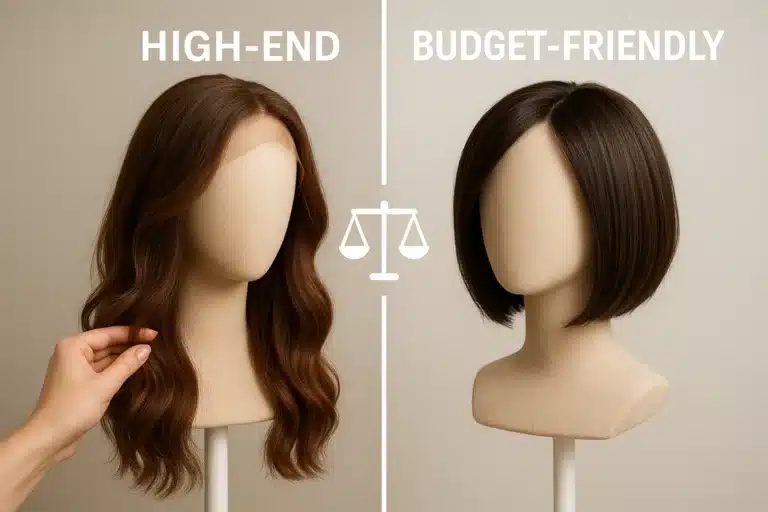
When you first invest in a high-quality wig, the focus is naturally on the initial price tag. It feels like a singular purchase—a one-time exchange for confidence and style. However, seasoned wig wearers know that a beautiful hairpiece is less like a hat and more like a luxury vehicle; to keep it performing beautifully, it requires regular maintenance. There comes a moment in every wig owner’s journey where you face a choice: attempt a risky DIY fix to save money, or invest in professional help.
Understanding the landscape of professional services is crucial, not just for styling, but for protecting your investment. While a $150 service might seem steep at a glance, it often serves as a life-extension strategy that can add years to a unit worth thousands. To truly understand the financial commitment of wearing premium hair, you have to look beyond the “add to cart” price. For a comprehensive breakdown of what to expect over the lifespan of your piece, you can explore our guide on The Total Cost of Wig Ownership: A Long-Term Financial Guide, which helps you plan for these essential care moments.
The ROI of Restoration: Why “Service” Isn’t Just a Luxury
There is a common misconception that professional wig services are reserved for special occasions or the ultra-wealthy. In reality, professional maintenance is often the most frugal choice you can make.
Consider the “Cost per Wear” calculation. If you purchase a premium human hair wig for $2,000 and neglect it, it may lose its luster, tangle, or shed within 6-8 months. However, with quarterly professional “detox” treatments and structural maintenance, that same wig could last 2-3 years.
We often see customers worry that a matted wig is destined for the trash can. In many cases, what looks like a total loss is actually just a need for a deep steam treatment and professional detangling—services that cost a fraction of a replacement unit.
Standard Maintenance: The Foundation of Longevity
Before we look at major repairs, let’s look at the baseline services that keep a wig looking fresh. These are the “oil changes” of the wig world.
Professional Wash & Deep Conditioning ($45 – $85)
While you certainly can and should wash your wig at home, a professional “wash and reset” is different. Professionals use industrial steamers and specific hydration treatments that penetrate the cuticle more deeply than standard bathroom conditioning.
- Why pay for it? It resets the fiber memory (especially in heat-friendly synthetics) and removes buildup that causes dullness.
- The DIY Risk: Using the wrong drugstore products can strip the silicone coating off synthetic wigs or dry out human hair. Finding the best wig care products is essential for home care, but a pro service hits the “reset” button.
Cutting and Face-Framing ($50 – $150)
A wig right out of the box often has too much density. It’s designed that way intentionally so it can be customized. A “density reduction” or “debulking” service removes weight so the hair moves naturally.
- The 4-Finger Rule: Professional stylists use placement techniques (like measuring four fingers from the brow) to ensure bangs and layers sit exactly where they should on your unique face shape, not just the mannequin’s.
The “Risky” Business: Color Correction and Chemistry
This is where the skill gap between a general hairstylist and a wig specialist becomes a chasm. The chemistry of wig hair—which has often been processed, textile-dyed, and sealed—is fundamentally different from growing hair.
Color Services & Correction ($150 – $500+)
One of the most expensive lessons a wig wearer can learn involves box dye. We frequently see clients who attempted to darken a blonde wig with a $10 drugstore kit, resulting in a muddy, patchy nightmare.
- The Complexity: Correcting color on a wig requires a master’s understanding of textile dyes versus hair pigments. A professional colorist might charge $100–$150 per hour for correction because they have to gently strip the mistake without melting the lace or destroying the hair cuticle.
- The Lesson: If you are wondering how to restore a human hair wig after a chemical mishap, be prepared for a higher price point. The goal here isn’t just color; it’s saving the integrity of the hair.
Knot Toning vs. Bleaching ($120 – $200)
To make a wig look like it’s growing from your scalp, the knots (where the hair is tied to the lace) need to be invisible.
- The Expert Difference: Amateurs often bleach the knots, which can weaken them and cause shedding. Professionals use “Knot Toning”—a gentle chemical process that neutralizes the dark knot without compromising the structural integrity of the tie. It costs more than a quick bleach job because it requires precision application to ensure no bleach touches the hair shaft.
The “Salvage Yard”: Structural Repairs
When a wig begins to physically fall apart, many assume it’s the end of the road. However, structural repair services can salvage a favorite piece.
Re-Ventilation ($150+ per square inch)
This is the most labor-intensive service available. If your part line is balding or you’ve over-plucked the hairline, a specialist can hand-tie new hairs into the lace one by one.
- Why the high cost? Ventilation is an art form that takes hours of microscopic work. You are paying for skilled manual labor, not just materials.
Lace Repair and Replacement ($100 – $350)
If the lace front frays or tears, it can sometimes be trimmed back or patched. In severe cases, a “cap replacement” might be suggested, where the hair wefts are transferred to a brand new cap. This is essentially building a new wig using your existing hair.
Synthetic vs. Human Hair: Different Fibers, Different Costs
It is vital to note that service menus often differ based on fiber type.
- Synthetic Refresh: You generally cannot dye synthetic hair, but it often requires “steaming” to smooth out friction frizz caused by rubbing against collars. This heat-setting service restores the smooth texture of the fiber.
- Human Hair Care: This requires moisture balancing and protein treatments similar to biological hair, but with more frequency since the hair receives no oils from the scalp.
When looking for a site:wigsuperstore.com service provider, always clarify if they specialize in your specific fiber type. A stylist who is excellent with human hair may inadvertently melt a synthetic wig if they use standard hot tools.
The “Is It Worth It?” Decision Matrix
Not every wig needs a $300 overhaul. How do you decide when to spend and when to replace?
- The Investment Ratio: If the repair costs more than 50% of the replacement price, it’s usually better to buy new—unless the wig has sentimental value or is a rare custom color.
- The Lace Condition: If the lace is dry, brittle, and ripping in multiple places, structural repairs may only be a temporary bandage.
- The DIY Factor: Are you confident in your skills? While we encourage learning, some wig customization diy attempts result in accidental cuts to the lace or uneven layers that cost double to fix professionally.
FAQ: Navigating Professional Services
Q: Can I take my wig to my regular hairstylist?
A: Proceed with caution. Unless your stylist has specific certification in alternative hair, they may cut the wig as if it were growing hair. Wigs do not grow back, and the density is distributed differently. Always ask if they have specific experience with wigs.
Q: How often should I get my wig professionally cleaned?
A: For a daily wearer, a professional “deep clean and reset” every 3 to 4 months is ideal to remove stubborn buildup and check for structural issues.
Q: Can a professional make a synthetic wig last longer?
A: Yes. Professional steaming can remove the “crispy” ends that develop on synthetic wigs over time, significantly extending the life of the unit.
The Long Game
Viewing wig ownership through the lens of wig maintenance changes how you budget and care for your hair. Professional services are not penalties for wear and tear; they are investments in your image. By mixing good home care habits with targeted professional interventions, you ensure that every day is a good hair day.
If you are unsure whether your current wig needs a slight refresh or a major rescue, start by consulting with a specialist. Transparency is key—a reputable provider will always tell you when a wig has reached the end of its life, and when a little TLC can bring it back to glory.