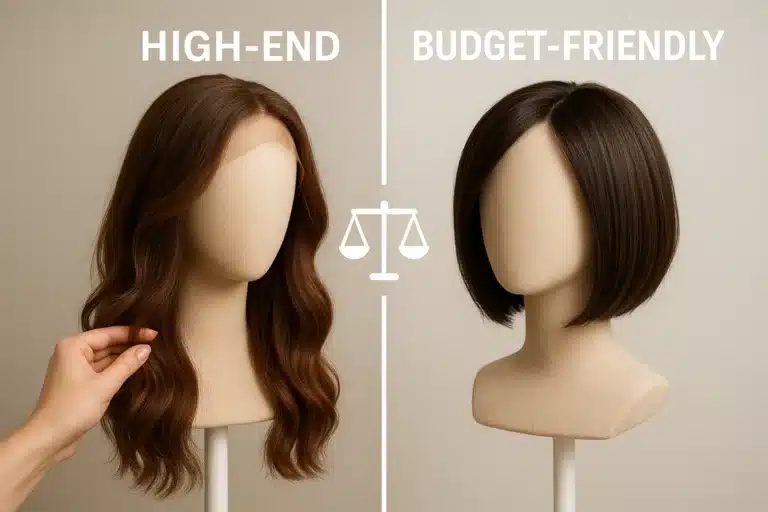
Imagine standing in front of two wigs that, at first glance, look remarkably similar. Both have beautiful, cascading waves and a natural shine. Yet, one is priced at $400, and the other is an investment of $2,500. For anyone beginning their journey into wearable hair, this price disparity can be baffling, and frankly, frustrating.
The secret to this difference isn’t just about brand names or cap construction—it lies in the biological geography of the hair itself. Just as the origin of a coffee bean dictates its flavor profile and market value, the geographical source of human hair is the single most significant variable in determining quality, longevity, and cost. Understanding these nuances is a critical component of decoding wig pricing: a granular analysis of cost factors, as the origin of the raw material serves as the baseline for all subsequent value.
The “Marketing Mirage” vs. Supply Chain Reality
To navigate the world of human hair wigs, you first have to look past the marketing labels and understand the supply chain. The hair industry is vast, and terminology is often used loosely to describe a “look” rather than a provenance.
When we talk about cost, we are really talking about three factors:
- Rarity: How difficult is it to source this specific hair type?
- Processing: How much chemical work was required to make the hair usable?
- Integrity: Is the hair cuticle intact and healthy?
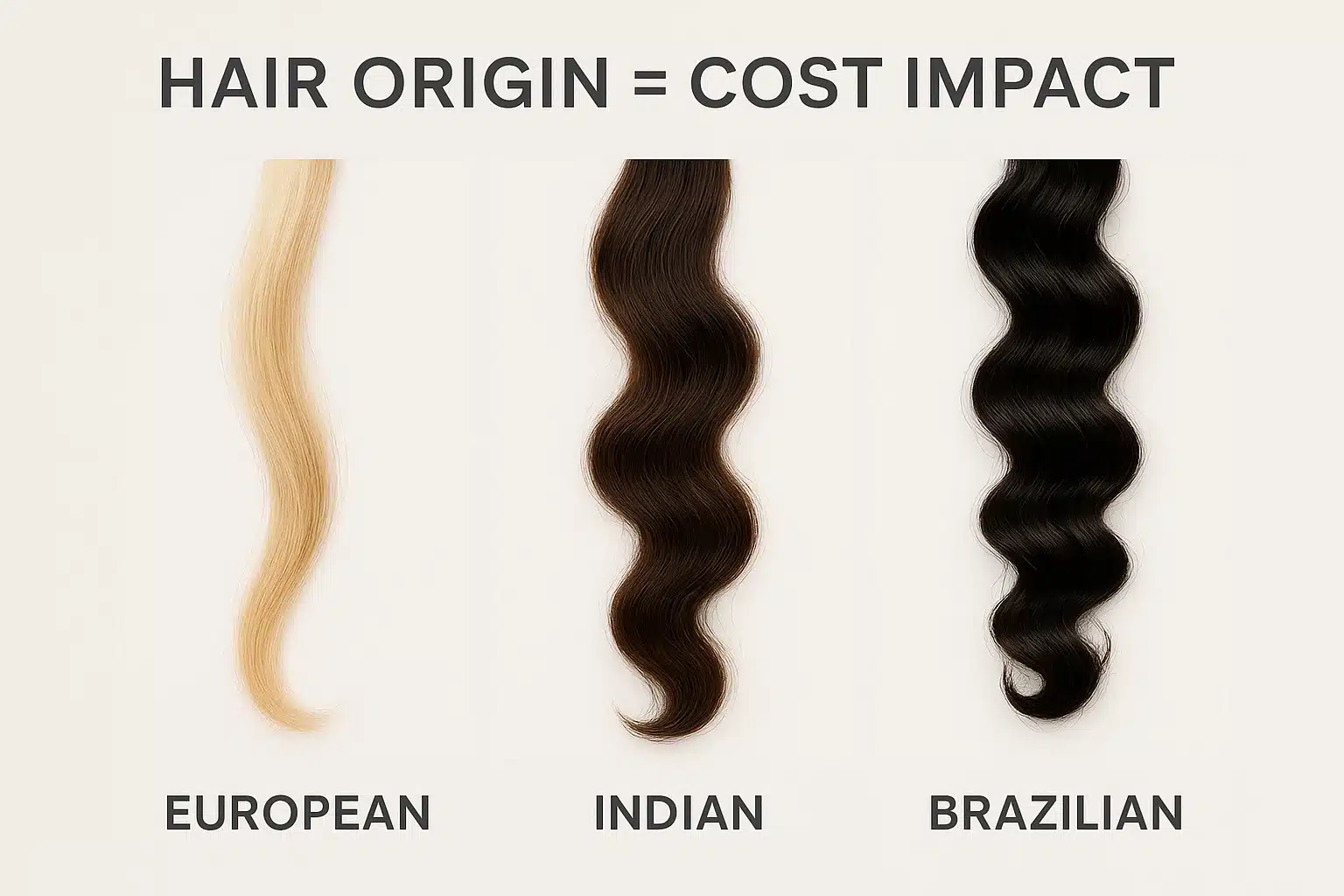
European Hair: The “Slavic” Gold Standard
For many, European hair represents the pinnacle of wig luxury, and it commands the highest price point in the market. But why is it so expensive?
The answer is simple economics: Extreme Scarcity.
True European hair, often sourced from Eastern Europe (Slavic regions), is exceptionally rare. Over the last two decades, as economic conditions in these regions have improved, the number of women willing to sell their long hair has plummeted.
Why it commands a premium:
- Texture Match: It naturally possesses a fine denier (thickness) that closely mimics the biological structure of Western hair. This means it moves, bounces, and settles exactly like bio-hair for many wearers.
- Minimal Processing: Because the hair comes in lighter natural shades (blondes and light browns) and fine textures, it doesn’t require harsh bleaching or chemical thinning “acid baths” to look natural.
- The “Virgin” Factor: Much of this hair is sourced from donors who have never chemically treated their hair, preserving its structural integrity for years.
If you are looking for the best European human hair wigs, be prepared for an investment that reflects this scarcity. It is the closest you can get to natural, fine biological hair.
Indian Hair: The Ethical and Versatile Powerhouse
If European hair is the “diamond” of the industry due to rarity, Indian hair is the “gold”—highly valuable, widely available, and incredibly reliable.
The Temple ConnectionUnlike other markets where sourcing can be opaque, the Indian hair market is largely built on a religious tradition known as “tonsuring.” Millions of devotees voluntarily donate their hair at temples as a sign of devotion. The proceeds from these auctions often go back into the community to fund schools and hospitals.
Why it offers great value:
- Texture: Indian hair is thicker than European hair but finer than Chinese hair. It has a natural wave and body that makes it incredibly versatile for styling.
- The “Remy” Distinction: Because the hair is shaved and collected carefully (rather than swept off a floor), the cuticles remain aligned in the same direction. This prevents tangling and creates that coveted smooth finish.
- Durability: The slightly thicker follicle means Indian hair is robust and holds up well to heat styling and daily wear.
For the majority of wig wearers, Indian Remy hair offers the perfect balance of luxury performance and accessible pricing.
The “Brazilian” Hair Myth
Here is where the “Aha” moment happens for many new buyers. You will see thousands of wigs labeled as “Brazilian,” “Peruvian,” or “Malaysian” hair.
The Reality Check:In 90% of cases, “Brazilian” is a marketing term, not a geographical origin.
Brazil simply does not have a culture of hair donation large enough to supply the massive global demand. Instead, “Brazilian Hair” is an industry trade name used to describe a specific texture—usually thick, lustrous, and wavy.
Where does it actually come from?This hair is typically high-quality Asian hair (often from China or India) that has been steam-processed to achieve a specific curl pattern or texture.
The Cost implication:Because this hair is more readily available and undergoes processing to achieve its look, it is generally more affordable than Virgin European or Premium Indian hair. However, buyers should be aware that if the hair has been heavily processed to alter its texture, its lifespan may be shorter than that of hair in its natural state.
The Hidden Cost of “Acid Baths” and Processing
When evaluating price, you must look at what happened to the hair after it left the donor.
Cheaper human hair wigs often utilize “fallen hair” (collected from brushes or floors) where cuticles face different directions. To prevent this hair from locking up like Velcro, manufacturers dip it in an aggressive acid bath to strip away the cuticle entirely. They then coat the hair in silicone to simulate shine.
The Problem: The silicone washes off after a few weeks, leaving you with dry, brittle hair that tangles incessantly.
The Investment Perspective:Higher-priced wigs retain the cuticle (Remy hair). While the upfront cost is higher, the cost-per-wear is significantly lower because the wig lasts longer and stays healthy. Learning how to care for human hair wig structures correctly is vital, but no amount of conditioner can fix hair that was chemically compromised during manufacturing.
![Visual: A side-by-side illustration of a healthy hair strand with intact cuticles (shingles on a roof) versus a “stripped” strand that has been acid-washed.]
Summary: Which Origin is Right for You?
Choosing the right hair origin isn’t just about budget—it’s about matching the hair to your lifestyle and biological needs.
| Hair Origin | Best For… | Price Tier | Key Characteristic |
|---|---|---|---|
| European | Fine/Thin biological hair match; lighter natural colors. | High ($$$$) | Rare, fine denier, minimal processing. |
| Indian | Versatile styling; those wanting body and natural movement. | Mid-High ($$$) | Ethical sourcing, durable, natural wave. |
| “Brazilian” (Processed) | Specific textures (deep wave, curl); budget-conscious buyers. | Mid ($$) | Styled texture, thicker feel, accessible. |
Frequently Asked Questions
Is European hair always better than Indian hair?
Not necessarily. “Better” is subjective. European hair is finer, which makes it ideal if you are trying to replicate fine, Caucasian hair. However, if you want volume, body, and hair that holds a curl easily, Indian hair might actually be the superior performance choice for you, regardless of price.
Why is blonde human hair so much more expensive?
Dark hair is abundant globally; naturally blonde hair is biologically rare. To get a blonde wig, manufacturers either need to source rare virgin blonde hair (extremely expensive) or take high-quality dark hair and slowly, gently lift the color over days (labor-intensive). Both methods drive up the cost.
How can I tell if “Brazilian” hair is high quality?
Since “Brazilian” is a texture term, focus on the “Remy” label. Ensure the hair is “Double Drawn” (meaning thick from root to tip) and ask about the processing method. Avoid hair that has a suspiciously high, artificial shine, as this often indicates a heavy silicone coating hiding damage.
Does the origin affect how long the wig lasts?
Yes. Virgin (unprocessed) European and Indian hair typically lasts the longest because the internal structure hasn’t been compromised by chemical dyes or texturizers. Heavily processed hair will generally have a shorter lifespan and require more hydration.
***
Ready to explore further?Now that you understand the “Coffee Bean” logic of hair pricing, you are equipped to make a choice that balances budget with biology. Remember, the goal isn’t always to buy the most expensive wig—it’s to buy the wig that offers the best value for your specific needs.