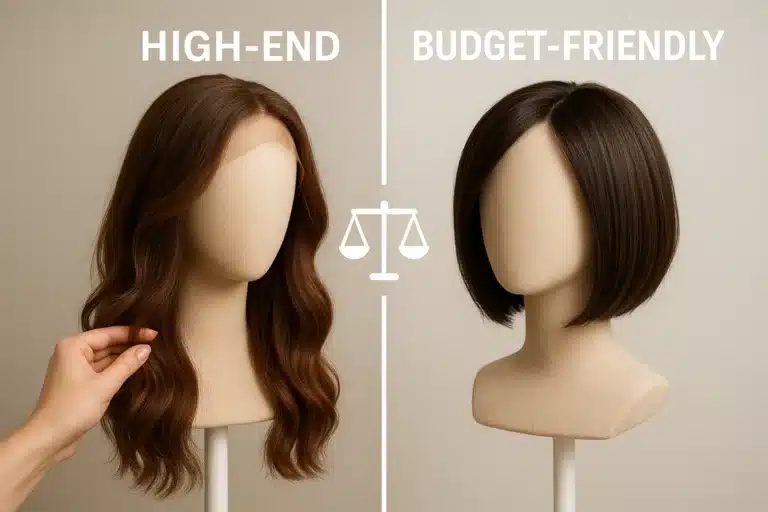
There is a distinct moment of magic in the alternative hair journey. It’s the moment you look in the mirror and realize the hair you’re wearing no longer looks like a hairpiece—it looks entirely, undeniably like you. Achieving this level of seamless realism goes far beyond taking a product out of a box. It requires the specialized artistry of custom coloring, precision cutting, and structural styling.
For those just starting this journey, navigating the best wig stores in Detroit MI is the essential first step to securing a high-quality foundation piece. But what happens after you make that purchase? How do you transform a beautiful, standard unit into a bespoke masterpiece featuring custom balayage, a flawlessly plucked hairline, and an undetectable lace melt?
Whether you are exploring luxury hair aesthetics or seeking a customized solution for medical hair loss, Detroit has emerged as a thriving hub for high-end wig customization. Let’s pull back the curtain on the science, the chemistry, and the insider secrets of professional wig customization.
The Natural Hairline Illusion: Demystifying the “Lace Melt”
One of the most common questions beginners ask is: “Do frontals actually look natural?”
The short answer is yes, but the illusion relies heavily on the structural properties of the lace and the skill of your stylist. Creating an undetectable hairline—often referred to in the beauty community as a “lace melt”—is an exercise in optical physics.
To make the lace disappear against your skin, stylists must consider the thickness of the material.
- Standard Swiss Lace (roughly 0.28mm thick) is highly durable and excellent for everyday wear, but it may require slightly more makeup blending to hide the grid.
- HD (High-Definition) Lace (roughly 0.15mm thick) is incredibly fine and fragile. When laid against the skin, it practically vanishes, making it the premier choice for flawless custom styling.
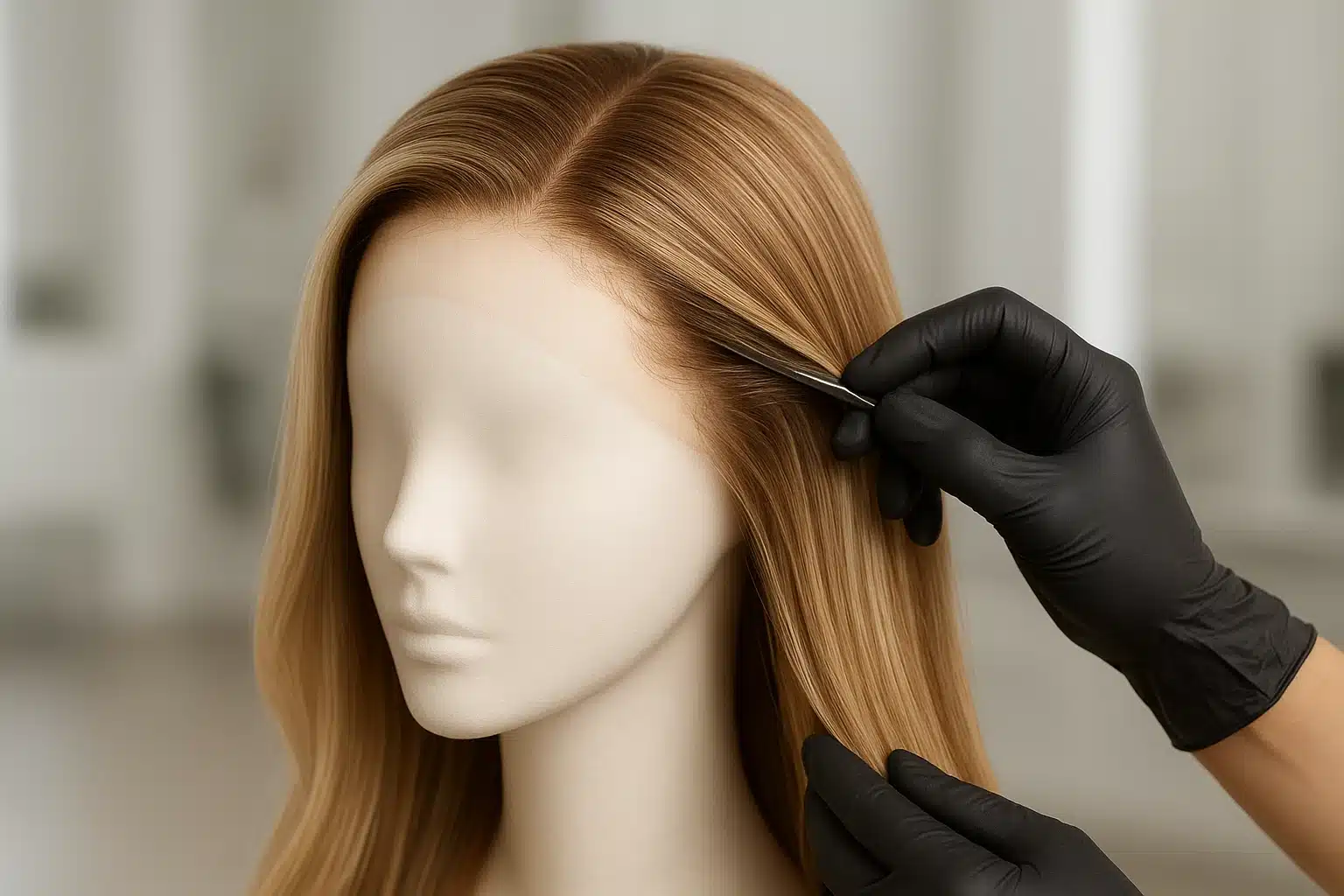
Once the right lace is selected, a Detroit customization specialist will carefully hand-pluck the hairline. Natural human hair does not grow in a dense, perfectly straight line across the forehead; it features a gradual, slightly irregular gradient. By meticulously tweezing hairs from the frontal, the stylist replicates the natural density of a human scalp.
Material Science: Understanding Your Canvas
Before a drop of color touches your unit, you and your stylist must understand the material science of the hair. Not all wigs can undergo chemical color transformations.
The Gold Standard: Raw European Hair
If your goal involves heavy lifting—such as transforming a brunette unit into an icy ash-blonde, or creating complex, multi-dimensional highlights—100% raw European hair (often referred to as a “euro wig”) is the ultimate canvas. Because the cuticles are fully intact and the hair is naturally finer and lighter in color, it can withstand professional chemical processing without losing its silky texture or degrading the lace grid.
The Limits of Synthetic Blends
Many wearers fall in love with human-synthetic blends, such as the popular BS219 wig, because they offer gorgeous, pre-styled wand curls at an accessible price point. However, a common mistake is attempting to dye these blends using traditional salon developer and color. Synthetic fibers lack the porous cuticles of human hair. They cannot absorb peroxide-based dyes. Applying bleach to a synthetic blend will not lighten it; it will simply fry the fibers and ruin the wig.
The Chemistry of Customization (And Viral Troubleshooting Hacks)
When you look closely at a hand-tied lace wig, you might notice tiny dark dots at the root where the hair is knotted to the lace. To achieve a realistic scalp illusion, stylists perform a chemical process called “bleaching the knots.”
This involves mixing a thick paste of 20-volume or 30-volume developer with blue or purple bleach powder. The thick viscosity ensures the bleach only lightens the knots without seeping through the lace and lightening the hair shafts. But what happens when things go wrong?
The “Beard Dye Hack” for Over-Bleached Knots
Even experienced wearers sometimes accidentally leave bleach on the knots too long, resulting in structural shedding and bright orange “hot roots” that look unnatural. Enter one of the industry’s most brilliant viral fixes: the men’s beard dye hack.
Why does beard dye work perfectly for fixing ruined roots? Unlike traditional liquid hair dye—which easily bleeds through the lace fabric and stains the scalp-colored mesh—men’s beard dye (like Just For Men) is formulated as a thick, low-ammonia paste. By dipping a clean mascara spoolie into the dark dye and gently grazing it over the over-bleached roots, you can instantly deposit rich, dark color exactly where you need it, restoring the illusion of natural growth without staining your delicate lace.
Aesthetic Customization as Medical Care: Navigating Insurance
For individuals experiencing alopecia, chemotherapy-induced hair loss, or other medical conditions, a custom wig is not just an accessory; it is an essential part of restoring confidence and well-being. However, the cost of high-quality, custom-colored European hair can be significant.
Many Detroit residents don’t realize that luxury aesthetic customization can often be covered by health insurance if properly coded. The secret lies in the terminology.
Insurance companies do not cover “wigs.” They cover Cranial Hair Prostheses.
The Reimbursement Roadmap
- Get the Right Prescription: Ask your dermatologist or oncologist to write a prescription specifically for a “Cranial Hair Prosthesis,” accompanied by your specific ICD-10 diagnosis code (e.g., L63.0 for Alopecia Totalis).
- Understand the Magic Code: When receiving an invoice from your wig provider or specialized salon, ensure they use the HCPCS billing code A9282 (Wig, any type, each) and include their National Provider Identifier (NPI). Organizations like the National Alopecia Areata Foundation (NAAF) highly recommend maintaining thorough documentation of these codes to ensure smooth processing.
- Submit for Reimbursement: Submit this highly specific paperwork to your insurance provider. This pathway turns an out-of-pocket luxury into highly accessible, medically necessary care.
The Detroit Salon Playbook: What to Expect and Ask
Metro Detroit is home to an array of highly skilled specialists, with top-tier aesthetic work happening in salons across Southfield, West Detroit, and Clinton Township.
When searching online for local talent, you might encounter confusing automated search terms. For example, you may see high search volume for a “stigma-rotary stylist.” Don’t be fooled! A Stigma-Rotary is actually a highly specialized, pen-style tattoo machine used by tattoo artists, not a hair salon tool. Save yourself a confusing phone call to a local tattoo parlor.
The Detroit Custom Wig Cost Index
While prices vary based on the stylist’s expertise and the salon’s location, here is what you can generally expect to invest in Metro Detroit for customization services (excluding the cost of the wig itself):
| Service | Description | Estimated Detroit Cost |
|---|---|---|
| Knot Bleaching & Plucking | The baseline for a natural lace melt | $75 – $150 |
| Custom Cut & Style | Precision bobs, layering, or face-framing | $85 – $200 |
| Custom Coloring | Balayage, double-process blonde, or root smudging | $150 – $400+ |
| Full Installation | Braid down, bald cap method, adhesive application, and styling | $150 – $300 |
The Consultation Checklist
Before handing your premium human hair unit over to a stylist, always ask these three questions during your consultation:
- “Do you use bond builders (like Olaplex) when lightening custom human hair units?” (Crucial for protecting the longevity of your investment).
- “What type of lace adhesive do you use, and do you have options for sensitive skin?”
- “Can you walk me through your post-color care recommendations for this specific hair origin?”
Frequently Asked Questions
Can I claim salon customization services on my insurance?
Typically, insurance covers the purchase of the “Cranial Hair Prosthesis” itself under CPT code A9282. However, if you purchase a fully customized, colored, and cut piece from a certified provider who bills the entire finished product under that code, the customized aspects are effectively included in your claim. Always check your specific policy limits.
How long does a “lace melt” installation last?
With proper care, a professional adhesive lace melt done at a salon can last anywhere from 1 to 3 weeks. However, the exact timeframe depends on your skin chemistry (oil production), your lifestyle (frequent sweating or swimming), and the type of adhesive used.
I bought a human hair blend wig. Can I at least add highlights?
No. Human-synthetic blends cannot be chemically lightened. Bleach will irreparably damage the synthetic fibers. If you want to experiment with color on a blend, you must purchase the wig in a lighter shade and use specialized synthetic-safe fabric dyes to go darker—though results can be unpredictable. For highlights, always invest in 100% human hair.
What is the difference between an over-the-counter wig and a custom unit?
An over-the-counter wig comes with standard, uniform density, unbleached knots, and factory-set color. A custom unit has been scientifically tailored to your exact measurements, skin tone, and aesthetic preferences—transforming a standard hairpiece into a perfectly personalized extension of yourself.
***
Taking the leap from wearing basic hairpieces to exploring custom coloring and professional styling can completely redefine your confidence. By understanding the chemistry, knowing your materials, and leveraging your medical benefits, you are well on your way to achieving a flawless, customized look that is uniquely yours.