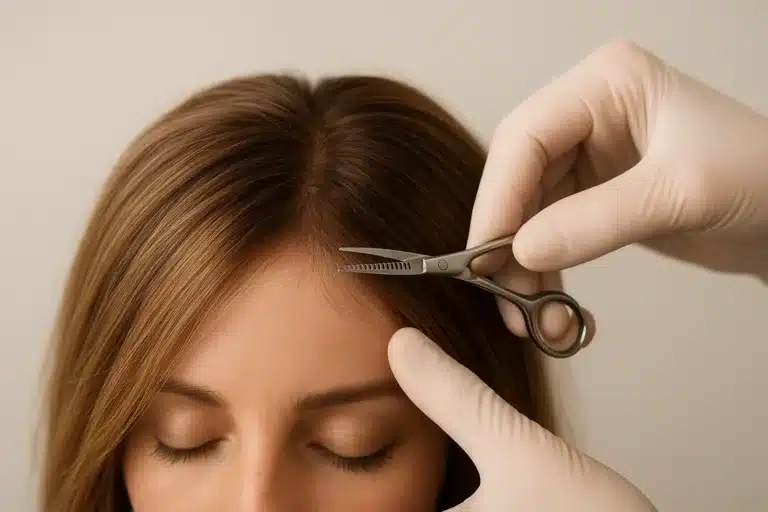
We see it on social media and in pop culture constantly—a celebrity debuts a dramatic new haircut or color, sparking viral trends and endless fascination. But for anyone navigating hair loss due to chemotherapy, alopecia, or postpartum thinning, a hair transformation isn’t a superficial lifestyle change. It is a deeply personal, often anxious journey to reclaim your sense of self.
If you are buying a wig for the first time, stepping into the world of alternative hair can feel overwhelming. It isn’t just about picking a style off a shelf; it’s about finding comfort, security, and a reflection in the mirror that feels like you.
Fortunately, the Greater New Orleans area is home to incredibly compassionate professionals who understand this vulnerable transition. In this guide, we will bridge the gap between clinical hair education and local business recommendations, mapping out exactly what to expect before, during, and after your first wig consultation.
Alternative Hair 101: Demystifying the Terminology
Before booking an appointment anywhere, it helps to understand the foundational elements of wig design. Knowing a few key terms will transform you from an anxious shopper into an empowered buyer.
Synthetic vs. Human Hair: The Great Debate
Most beginners naturally assume human hair is always the superior choice. However, for many medical hair loss patients, high-quality synthetic wigs are actually the better option.
Why? It comes down to “style memory.” Synthetic fibers are baked into their style. If you wash a synthetic curly wig and let it air dry, the curls bounce right back without any effort. For a patient undergoing exhausting chemotherapy treatments, this zero-maintenance routine is a massive relief compared to human hair, which requires the same washing, blow-drying, and heat-styling as bio hair.
The Anatomy of Comfort: Cap Construction
When you have a highly sensitive or completely bald scalp, what touches your skin matters just as much as how the hair looks. Standard wig cap construction comes in a few variations:
- Lace Front: Creates an invisible, natural-looking hairline, allowing you to pull the hair away from your face.
- Monofilament (Mono-Top): The hairs are individually tied to a sheer material at the crown, creating the illusion of natural hair growth from the scalp and allowing you to part the hair anywhere.
- 100% Hand-Tied Caps: The gold standard for medical hair loss. The entire cap is made of soft, stretchable mesh with no rigid wefts, preventing chafing on sensitive post-chemo scalps.
Sizing Your Crown
Wigs are not one-size-fits-all. To prevent your piece from slipping or giving you a headache, proper wig fitting is essential. You can easily measure your head at home using a soft measuring tape. You’ll want to note your circumference, your front-to-back measurement (hairline to the nape of your neck), and your ear-to-ear measurement.
Navigating the New Orleans Consultation Landscape
National blogs can give you great advice, but they can’t tell you where to go in NOLA. Here is an objective, curated profile of New Orleans’ premier wig boutiques, categorized by the specific environment and expertise they offer.
For the Medical Buyer Seeking Luxury & Realism: Wigs by Tiffani
Located in a private Metairie studio, Wigs by Tiffani specializes in high-grade human hair wigs with an ultra-realistic, modern approach.
- The Vibe: Exclusive, luxurious, and highly private.
- The Experience: Tiffani offers private studio consultations (ranging from $25 for a quick 30-minute fitting to $175 for a deep-dive, 1-hour try-on session). This is a safe haven for first-time buyers who want a premium piece and absolute privacy.
For the Chemotherapy Patient Seeking Compassion: Wig World
Established in 1976 and located just half a block from Severn Avenue in Metairie, Wig World is the local legacy authority on chemotherapy-related hair loss.
- The Vibe: Traditional, deeply compassionate, and rooted in medical necessity.
- The Experience: They offer in-store try-ons with a wide selection of synthetic, human hair, turbans, and headwraps. Walk-ins are welcome, lowering the barrier to entry, and they offer in-house wash, cut, and style services to customize your piece.
For the Bold Self-Expressionist: Fifi Mahony’s
Situated on Royal Street in the French Quarter, Fifi Mahony’s is the undisputed home of festival, Mardi Gras, and custom fashion wigs since 1997.
- The Vibe: Whimsical, celebratory, theatrical, and high-energy.
- The Experience: While this bustling shop might not offer the ultra-private, clinical intimacy a highly anxious medical patient needs, it is an incredibly supportive, joyful environment for those looking to embrace bold colors and custom stylings.
Preparing for Your Consultation: What to Expect
Walking into a store for the first time can be intimidating. A professional consultation is designed to ease that anxiety.
You won’t be expected to take off your scarf or hat in the middle of a crowded sales floor; dedicated medical wig shops have completely private consultation rooms. Bring a trusted friend for support, and bring photos of your natural hair if your goal is to replicate your original style.
The Financial Side: Louisiana Insurance & Aid
One of the most crucial teaching moments for any beginner is learning the term cranial prosthesis. Most health insurance companies will not cover a “wig” because it is classified as a cosmetic item. However, if your New Orleans oncologist writes a prescription for a “cranial prosthesis,” you may unlock health insurance benefits that can cover up to 80-100% of the cost. Always ask your local boutique if they provide itemized receipts formatted for insurance reimbursement.
Wear, Care, and Daily Confidence
Finding the perfect wig is only the first half of the journey. Learning how to live in it seamlessly is the second.
The Four-Finger Rule
A common mistake beginners make is pulling the wig down too far, resulting in “forehead shrinkage” that instantly makes the hairpiece look unnatural. Use the simple “Four-Finger Rule”: place four of your fingers flat across your forehead, resting just above your eyebrows. Your wig’s hairline should sit directly above your top finger.
Securing Your Piece
The fear of a wig slipping in public is a major psychological barrier. Thankfully, modern technology makes this a non-issue. Using a wig grip—a simple velvet headband worn under the wig—creates friction that locks your hairpiece comfortably in place all day without the need for messy glues or damaging clips.
Customization and Longevity
Never wear a wig straight out of the box. Every piece requires professional wig styling to look truly natural. A stylist will thin out excess bulk and trim the layers to frame your unique facial structure.
Once your wig is customized, maximizing its lifespan comes down to a gentle wig care routine. Wash your synthetic wig every 6-8 wears using specialized wig shampoo, and always let it air dry on a wig stand to preserve its shape and cap elasticity.
Frequently Asked Questions for First-Time Buyers
Will a wig irritate my scalp if I have complete hair loss?
If you choose the right cap construction, no. Wefted caps can sometimes cause friction, which is why 100% hand-tied caps and monofilament tops are highly recommended for medical hair loss. You can also wear a soft bamboo or cotton wig liner underneath for extra comfort.
Can I sleep in my wig?
It is highly recommended that you take your wig off before bed. Sleeping in a wig causes severe friction against your pillow, which tangles the hair, dulls the fibers, and drastically shortens the lifespan of the cap.
Should I buy online or go to a local New Orleans store?
If it is your first time, visiting a local expert is invaluable. You need to physically feel the cap materials, understand your exact measurements, and see how different hair densities look on your face. Once you know your perfect brand, size, and color code, purchasing replacement pieces online becomes a breeze.
Taking Your Next Step
Hair loss is undeniably challenging, but finding your alternative hair shouldn’t be. By arming yourself with knowledge about cap constructions, synthetic versus human hair, and exactly what to expect from your local New Orleans boutiques, you take the power back into your own hands.
Remember, this process isn’t about hiding. It’s about ensuring that when you look in the mirror, you see the beautiful, confident version of yourself looking right back. Take your time, lean on the expertise of compassionate local professionals, and be gentle with yourself during the transition.