You might have noticed the subtle shifts first. The extra time your partner spends staring into the bathroom mirror, the sudden avoidance of bright overhead lighting, or the growing collection of hats by the front door. When a loved one begins losing their hair, the emotional temperature of your home changes. You want to offer comfort, but every attempt to help can feel like stepping onto an emotional landmine.
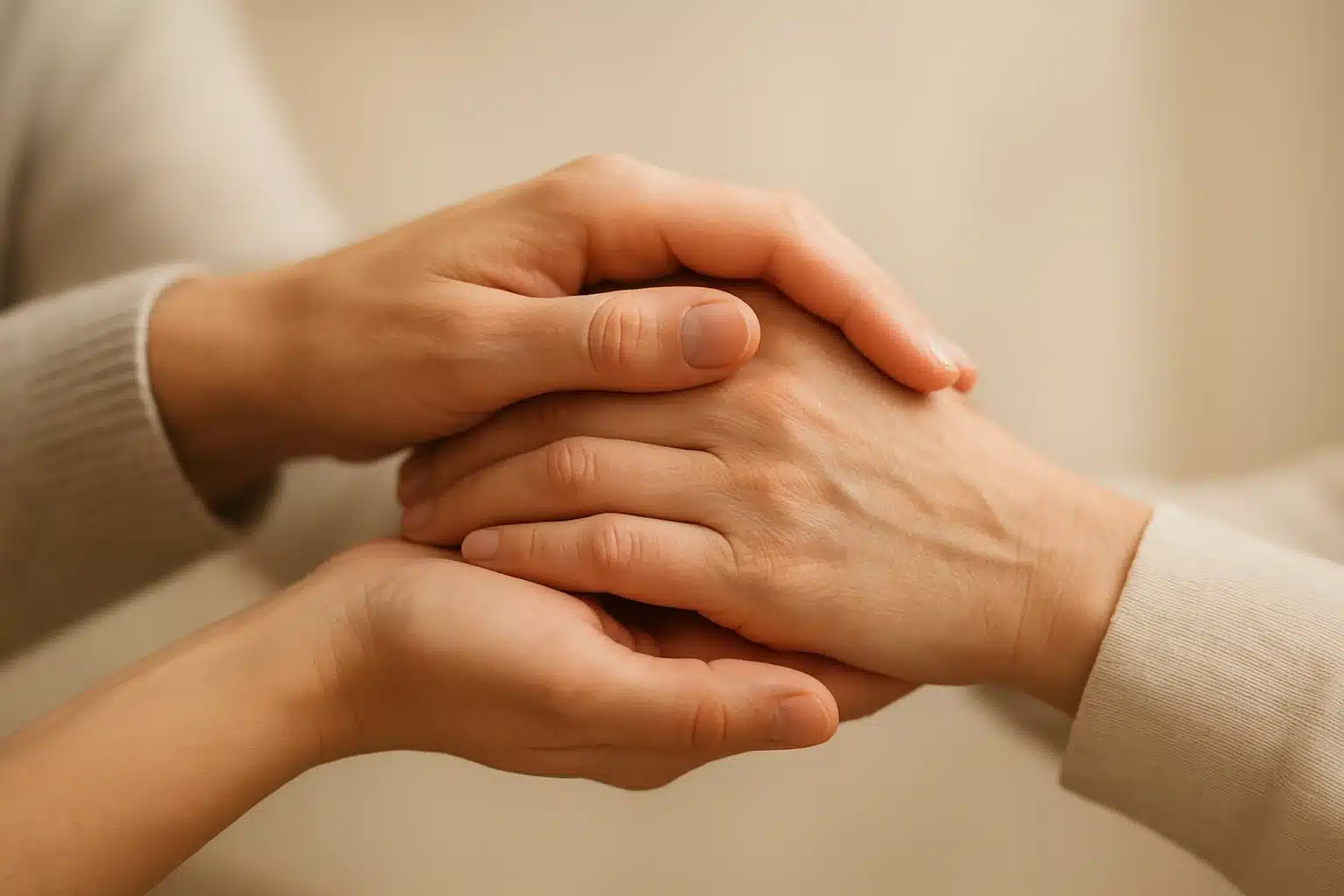
If you are feeling overwhelmed, you are not alone. Hair loss is rarely a solitary medical event; it is a shared relational experience that affects both of you. Successfully navigating the emotional landscape of hair loss requires moving beyond quick fixes and toxic positivity. It requires understanding your partner’s grief, managing your own silent anxieties, and learning a new vocabulary of empathy to help you weather this transition together.
Here is a comprehensive guide to understanding the psychological weight of hair loss, learning what to say, and discovering how you can be an active, compassionate co-navigator on this journey.
The Unspoken Shared Experience: Validating Your Own Feelings
When your partner is in distress, society tells you that your only job is to be an unwavering pillar of support. But partners of those experiencing hair loss often navigate a complex, hidden emotional landscape of their own.
You might be experiencing what psychologists call the “Attraction-Guilt Paradox.” It is deeply common for spouses to feel a sudden, jarring anxiety about their fading physical attraction as their partner’s appearance changes. Because we are taught that “true love is blind,” experiencing these feelings often leads to immense, silent guilt.
Take a deep breath and give yourself some grace: this is entirely normal. Losing physical attraction temporarily during a major aesthetic shift does not mean your relationship is doomed or that your love is superficial. It simply means you are in a period of relational transition. Acknowledging these feelings—rather than burying them in shame—is the first step toward decoupling deep, lasting intimacy from temporary physical changes.
The Psychology of Hair Loss (and the Gender Divide)
To truly support your partner, it helps to understand exactly what they are mourning. Hair loss triggers a legitimate bereavement process. Your partner isn’t just losing hair; they are losing a version of their identity.
However, this loss is processed through a heavy cultural prism that looks vastly different depending on gender:
- For Men: Hair loss is heavily tied to societal standards of youth, virility, and vitality. When a man begins thinning, he often battles a sudden fear of aging and a perceived loss of masculinity. Snappiness or irritability is rarely about you; it is often the “Anger” stage of grief manifesting.
- For Women: Female hair loss strikes at an existential threat to perceived femininity and social safety. Because female hair loss is less culturally normalized than male pattern baldness, women often experience intense social shame, isolation, and a feeling that their beauty is being stripped away.
The Biology of the Stress-Hair Loss Feedback Loop
Here is an “aha moment” that empowers many partners: your emotional support actually has a biological impact on your partner’s hair.
When a person obsesses over hair loss, their chronic anxiety elevates their body’s cortisol (stress hormone) levels. High cortisol disrupts the endocrine system and creates inflammation. This biological imbalance can prematurely push healthy hair follicles out of their growth phase and into the telogen (resting and shedding) phase.
This creates a cruel feedback loop:
- Hair loss causes anxiety.
- Anxiety spikes cortisol levels.
- Cortisol pushes more follicles into the shedding phase.
- Increased shedding creates even more anxiety.
By acting as a calm, empathetic sounding board, you help de-escalate their chronic stress. In doing so, you are actively helping to lower their cortisol levels, protecting their remaining hair follicles from stress-induced shedding.
The Spousal Communication Toolkit: What to Say (and Avoid)
When your partner is grieving, the instinct to “fix” the problem usually backfires. The goal in the early stages is not to solve the hair loss, but to provide emotional safety.
Phrases to Retire Immediately
- “It’s just hair.” — While well-intentioned, this completely invalidates their genuine grief and identity crisis.
- “At least you’re healthy, it’s not cancer.” — This is toxic positivity. Pain is not a competition, and this phrase makes them feel guilty for being upset.
- “Have you considered a hair transplant or shaving it?” — Suggesting drastic solutions before they are emotionally ready implies that their current appearance is unacceptable to you.
The “What to Say Instead” Matrix
When tension is high, lean on phrases that affirm their identity and validate their feelings without trying to rush a solution:
- Instead of dismissing: “I can see how much this is hurting you, and it makes total sense that you’re upset.”
- Instead of fixing: “I’m here for you. Do you want me to help you research options, or do you just need to vent right now?”
- Instead of toxic positivity: “You are so much more than your hair, but I know how important it is to you, and I’m sorry you have to deal with this.”
Understanding the “Readiness Spectrum”
Partners often struggle with when to bring up solutions. It helps to view your loved one’s journey on a “Readiness Spectrum.”
If they are in the Grief and Protection Phase (marked by denial, defensiveness, or crying), they are not ready for solutions. They simply need active listening and validation.
If they transition into the Action Phase (marked by asking questions, looking at old photos objectively, or mentioning treatments), you can begin gently exploring options together.
Warning: The “Second-Hand Shed”
If your partner decides to try medical therapies (like topical Minoxidil), they need to be prepared for the shedding phase. Many clinically proven treatments work by pushing out old, resting hairs to make way for new growth. This temporary spike in hair fall can cause panic. As a partner, knowing the biology behind this allows you to act as an “anchor of sanity,” gently reminding them that the shedding means the treatment is actually doing its job.
Exploring Solutions Together: When the Time is Right
When your partner is ready to take action, your role shifts from a sounding board to a supportive research assistant. Approach solutions not as a way to “fix a flaw,” but as empowering tools to reclaim their confidence.
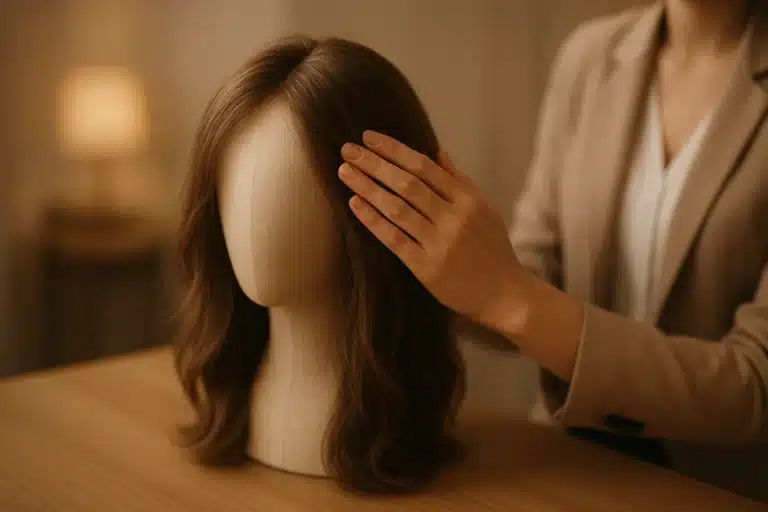
- Cosmetic Solutions: High-quality wigs, hairpieces, and toppers have evolved phenomenally. Modern, premium synthetic and 100% human hair wigs offer incredible realism and comfort. When discussing these options, frame them as premium beauty tools rather than “disguises.” Remind your partner that utilizing top-tier hair enhancements is a standard, empowering practice worldwide.
- Medical and Topical Therapies: Help them track progress and remain consistent with dermatological routines, keeping expectations realistic.
- Embracing the Shave: If they choose to shave their head, make an event out of it. Be their biggest cheerleader, compliment their new profile, and help them confidently embrace the bald aesthetic.
Frequently Asked Questions (FAQ)
How do I talk to my boyfriend or husband about his hair loss without offending him?
Wait for him to open the door to the conversation. If you must bring it up, frame it around his well-being, not his looks. Say, “I’ve noticed you’ve been seeming stressed when you get ready in the morning, and I want you to know I’m always here if you want to talk about it.” Avoid unsolicited advice about hair growth products.
Is it normal to lose physical attraction when my partner loses their hair?
Yes, it is entirely normal and very common. Hair plays a massive role in visual aesthetics. Give yourself permission to feel this without guilt. Focus on rebuilding sensory intimacy (touch, shared experiences, deep conversations) to bridge the gap while your visual perception naturally adjusts to their evolving appearance.
How can I gently suggest thinning hair solutions for women, like wigs or toppers?
Do not suggest a wig during a moment of high emotional distress. Wait for a neutral time, and frame it around convenience and empowerment. You might say, “I saw an article about these beautiful, high-quality human hair toppers that a lot of women wear just to add volume. Is that something we could look at together if you ever felt like it?”
How can I prevent “caregiver burnout” while supporting my partner?
Supporting a partner through a long-term identity crisis is exhausting. Establish boundaries around “hair talk.” It is incredibly healthy to say, “I love you and I want to support you, but can we take a one-hour break from talking about hair tonight and just watch our favorite show?” Ensure you are still prioritizing your own hobbies, friendships, and self-care.
Moving Forward: Your Next Steps Together
Watching someone you love struggle with hair loss is difficult, but it can also be a profound opportunity to deepen your relationship. By replacing reactive frustration with empathetic frameworks, validating their grief, and understanding the biological impact of your support, you transform from a passive bystander into a powerful ally.
Remember, you don’t have to navigate this unmapped territory alone. When your partner is ready to explore their options, take the journey one step at a time. Whether that involves researching the science of hair growth or discovering the incredible realism of premium hairpieces, moving forward together is the surest way to help them rediscover their confidence.