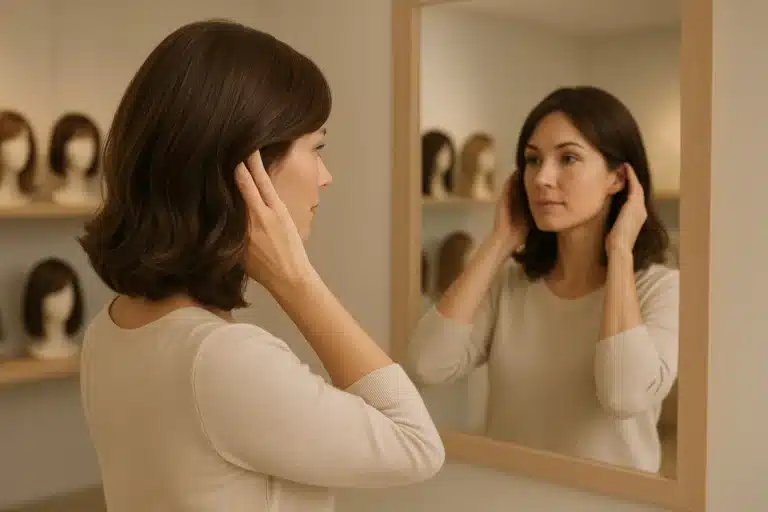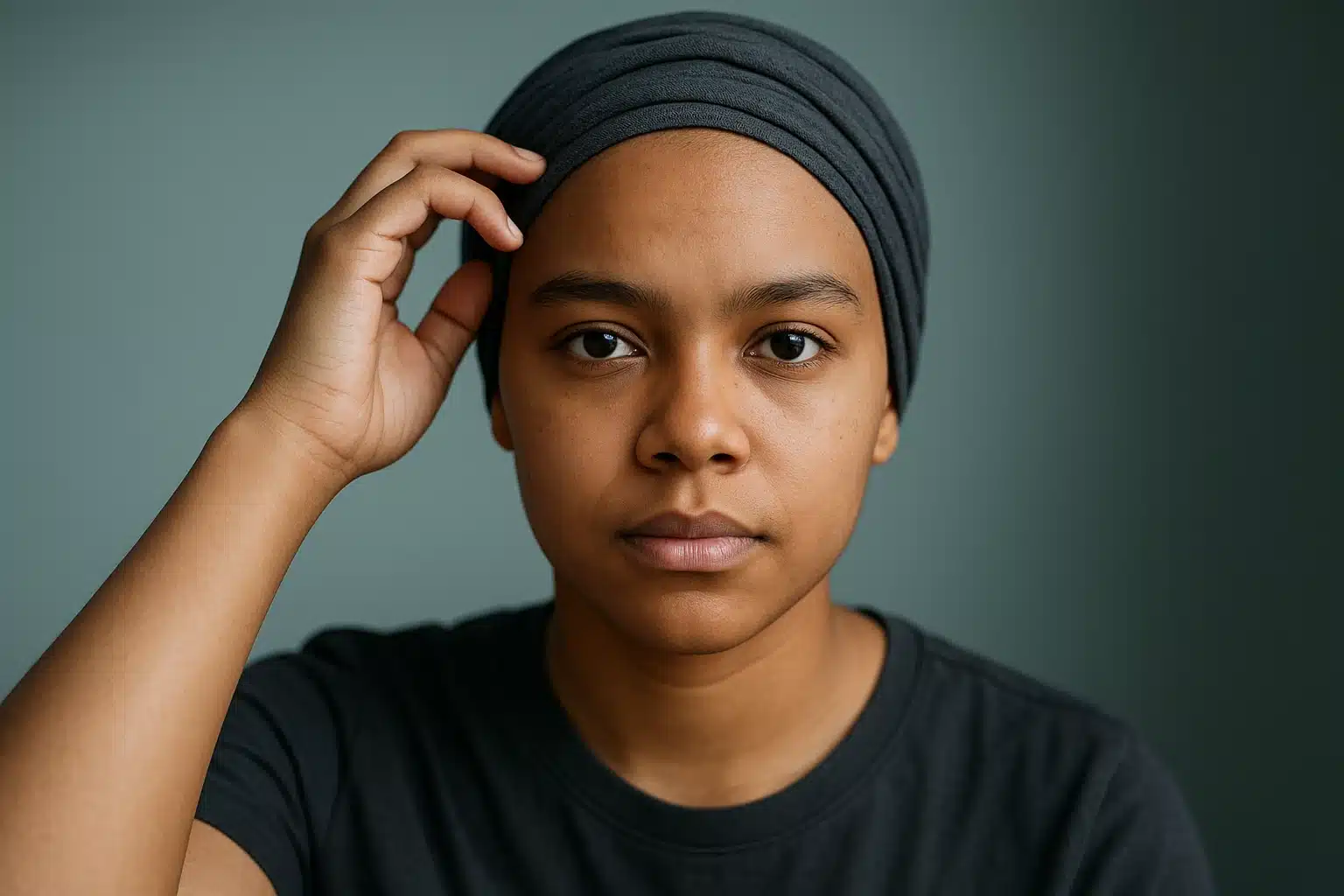
Imagine waking up, sleepily brushing your hair before school, and seeing a terrifying amount of hair left behind in the bristles. For an adult, this is highly distressing. But for a teenager, it can feel like the end of the world. During adolescence—a time that developmental psychologist Erik Erikson defined as the “Identity vs. Role Confusion” stage—your appearance is deeply intertwined with your developing sense of self and group belonging. When your hair starts thinning or falling out in patches, it doesn’t just change how you look in the mirror; it fractures your self-concept.
As a parent watching this happen, or a teenager walking through it, the panic is incredibly real. You are suddenly thrust into a whirlwind of medical terms, desperate hiding strategies, and immense social anxiety. Understanding the physical mechanics of what’s happening is an important first step, but true healing requires navigating the emotional landscape of hair loss with genuine empathy and practical tools. Let’s demystify why this is happening and, more importantly, explore how to survive the social and emotional turbulence that comes with it.
Decoding Teen Hair Loss: What is Actually Happening?
When teenagers start losing their hair, the immediate reaction is usually a panicked Google search asking, “Is this cancer?” or “Am I going bald forever?” The truth is, adolescent hair loss is surprisingly common and stems from several distinct triggers.
The Stress-Shedding Cycle (Telogen Effluvium)
Here is an incredible “aha” moment for many teens and parents: the hair loss you are experiencing today is likely a biological delayed reaction to something that happened months ago. A condition called Telogen Effluvium occurs when a severe stressor—like a severe illness, a traumatic life event, or extreme weight loss—shocks the hair follicles.
The hair stops growing and transitions into a resting phase. About three to four months after the stressful event, the hair sheds in large amounts. Understanding this chronological delay often brings immense relief. It means your body is processing a past event, not necessarily breaking down in the present.
The Autoimmune Response (Alopecia Areata)
Sometimes, the body’s immune system gets confused and attacks healthy hair follicles, causing hair to fall out in distinct, round patches. This is known as Alopecia Areata. It’s highly unpredictable; hair may grow back entirely, or the condition may progress. It’s important to know that this is a medical condition, not a result of anything you did wrong.
The 4C Textured Hair Nuance (Traction Alopecia)
For Black teenagers and those with highly textured 4C hair, there is an added layer of cultural and styling pressure. Tight braids, heavy extensions, and weaves are often used as “protective styles.” However, if applied with too much tension over time, these styles can cause Traction Alopecia—localized hair loss typically around the edges or hairline. The common mistake is attempting to hide these new bald spots with even tighter protective styling, which unfortunately only accelerates the damage.
The Psychological Toll: Why “It’s Just Hair” is Terrible Advice
If you take only one thing away from this guide, let it be this: telling a teenager “it’s just hair” is incredibly dismissive. During adolescence, hair is not just dead keratin. It is a vital canvas for self-expression, gender identity, and social blending.
The Control Trap and the Diet Connection
When a teenager starts losing their hair, they are losing control over their appearance. In an attempt to regain control, some adolescents subconsciously redirect their focus to something they can govern: their weight.
This creates a devastating biological loop. Restricting food intake starves the body of essential nutrients like iron, zinc, B12, and protein. Because the body views hair as “non-essential” for survival, it immediately shuts down the hair growth phase (anagen) to conserve nutrients for vital organs. The result? The eating disorder meant to restore a sense of control actually worsens the hair loss.
Your Social Survival Kit: Dealing with Stigma and Peers
The hardest part of adolescent hair loss rarely happens in the doctor’s office; it happens in the school cafeteria. Here are practical strategies to navigate the social friction.
Managing the “Chemotherapy Assumption”
One of the heaviest invisible burdens teens carry when losing their hair is the assumption by peers that they have a terminal illness. The whispering and staring can be agonizing.
The best way to handle this is to take control of the narrative with a concrete communication script. If a well-meaning but awkward peer asks if you are sick, you can say: “Actually, I have something called alopecia. My immune system is just a little confused and attacks my hair, but otherwise, I’m perfectly healthy!” Being direct neutralizes the rumors instantly and diffuses the awkwardness.
The Shaving Control Paradox
Many medical sites frame shaving your head as a “last resort” when treatments fail. But psychologically, shaving can be a profound victory.
Waking up every morning to find clumps of hair on your pillow, or watching it swirl down the shower drain, is a form of slow, daily trauma. Choosing to shave your head flips the script. It is an empowering act of taking back control. You are no longer waiting for the hair to fall; you are making a bold, definitive choice about your own body.
Shifting Focus: The “Circle of Control”
When anxiety spikes, it helps to mentally map out your “Circle of Control.”
Things Outside Your Control:
- Your genetic pre-programming
- The speed at which your hair is shedding
- How an autoimmune condition behaves
- Other people’s initial reactions
Things Completely Within Your Control:
- How gently you treat your scalp and remaining hair
- The nutrition you feed your body
- Choosing to wear hats, wraps, or exploring high-quality wigs
- The words you use to explain your condition to friends
- The decision to shave your head and reclaim your image
Frequently Asked Questions (FAQ) About Teenage Hair Loss
Why is my teenager’s hair falling out suddenly?
Sudden, diffuse hair loss is often caused by Telogen Effluvium (triggered by stress, illness, or diet changes 3-4 months prior). If the hair is falling out in distinct, smooth, round patches, it is more likely Alopecia Areata, an autoimmune condition. Always consult a pediatric dermatologist for an accurate diagnosis.
Can severe stress or weight loss really make your hair fall out?
Absolutely. Extreme stress or rapid weight loss pushes hair follicles prematurely into their resting phase. Starving the body of vital nutrients like ferritin (iron) and protein forces the body to abandon hair growth to keep your essential organs functioning.
Is it normal to have bald spots on 4C hair?
Bald spots are never “normal,” but they are common if the hair has been subjected to high-tension styling. Traction alopecia disproportionately affects those with 4C hair who rely heavily on tight braids or heavy extensions. Giving the hair a break and switching to low-tension styles is critical.
How do I tell my friends about my hair loss?
Keep it simple, direct, and factual. You don’t owe anyone your medical history, but sharing a simple fact—like “I have a condition that makes my hair shed, but I feel fine”—stops gossip in its tracks and allows your true friends to support you.
Next Steps: Moving from Isolation to Acceptance
Adolescent hair loss is an incredibly tough mountain to climb, but you do not have to climb it alone. From connecting with youth support groups to exploring alternative hair solutions, the journey moves from panic to acceptance, and eventually, to empowerment.
Whether you choose to rock a bold, bare head, experiment with vibrant scarves, or explore beautifully crafted wigs that make you feel like yourself again, remember that your identity is so much more than what grows on your scalp. You are resilient, you are whole, and you are entirely in control of how you define your beauty.