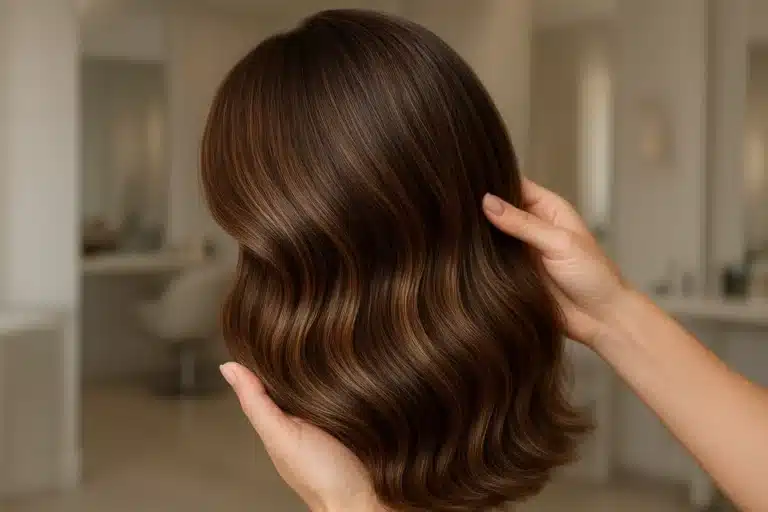
Imagine the lights coming up, the music swelling, and your character stepping onto the stage or convention floor. Your costume is flawless, your makeup is perfectly contoured, but the moment you execute your first piece of high-action choreography, your wig shifts. Suddenly, the illusion is broken. Whether you are a high school theater director, a seasoned stage actor, or a dedicated cosplayer, you already know that a character is only as believable as their hair.
Finding a wig that looks realistic, withstands intense lighting, and survives hours of movement requires more than a quick trip to a generic Halloween aisle. Local performers need physical storefronts where they can touch fibers, test caps, and purchase professional-grade adhesives. To help you navigate the local retail landscape, we highly recommend referencing this comprehensive Guide to the Best Wig Stores in Fort Worth TX, which maps out top-rated local retailers where you can find the perfect piece. Let’s dive into what makes a theatrical wig truly stage-ready, where to find them locally, and the professional secrets to keeping them secure.
The Local Landscape: Discovering Fort Worth’s Theatrical Retailers
When searching for reliable wig shops in Fort Worth Texas, performers need locations that offer not just products, but tangible expertise. Here are the cornerstone institutions that cater specifically to the theatrical and cosplay communities:
- Magic etc / Ft Worth Costume inc: Located on N Forest Park Blvd, this massive 30,000-square-foot facility is a year-round playground for theatrical performers. It is the ultimate local destination for professional FX makeup, spirit gum, cap accessories, and a wide array of base wigs waiting to be styled.
- Harris Costumes: Serving the Fort Worth area since 1949, this historic shop on Camp Bowie Blvd offers authentic rental catalogs and stage makeup. They are an invaluable resource for actors needing custom character-fitting solutions for historical or period-specific productions.
- Wig Studio: Situated on S Hulen St, this location bridges the gap between theatrical needs and medical-grade comfort. They specialize in high-realism pieces, offering custom fittings and soft, breathable caps that are a lifesaver during exhausting, multi-show weekends.
The Stage vs. Street Difference: Fiber and Cap Anatomy
To the untrained eye, a wig is just a wig. But under high-intensity stage lighting, the differences between standard fashion pieces and professional theatrical wigs become glaringly obvious.
Understanding Hair Fibers Under the Lights
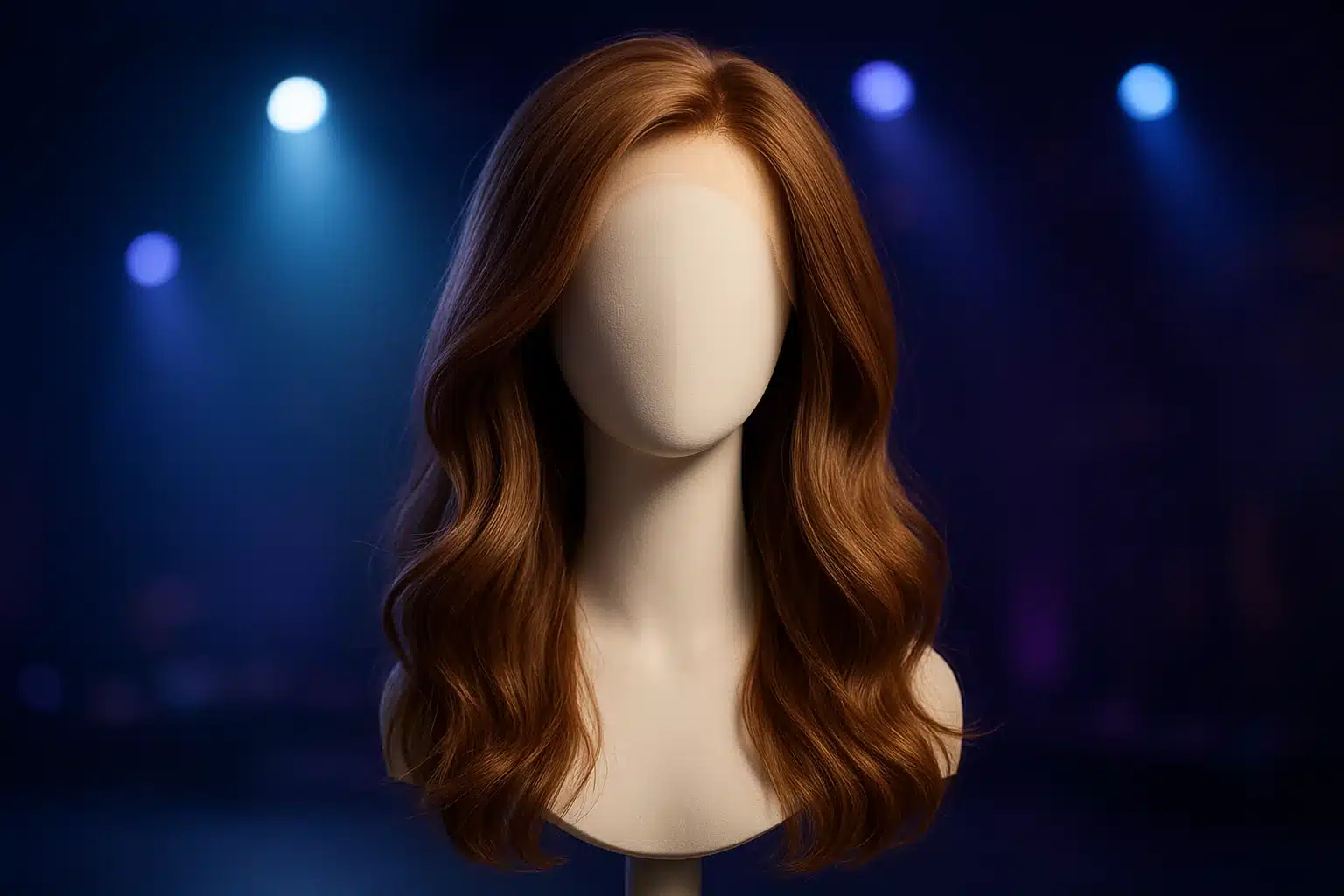
Standard synthetic wigs often look incredibly shiny. While this might pass in everyday daylight, incandescent and LED stage lights will reflect off low-grade plastics, giving the hair a glaring, unnatural sheen. Theatrical productions rely on heat-resistant synthetic fibers (like Kanekalon) or high-quality human hair, which absorb light more naturally and allow for thermal styling without melting.
Cap Construction and Performer Comfort
A stage wig must endure sweat, friction, and heat. Premium theatrical pieces often borrow technology from medical-grade caps—such as those adhering to UK NHS wig standards. These feature monofilament tops, hand-tied lace, and soft bamboo linings. This breathable construction protects sensitive scalps from chafing and overheating, ensuring the actor remains comfortable from opening night to the final curtain call.
Anatomical Customization
Luxury wig makers utilize a technique called “ear-tab tracing” to ensure a flawless fit. By carefully measuring and trimming the sides of the cap to follow the wearer’s exact hairline and ear placement, the wig stops looking like a hat and starts looking like natural hair growing directly from the scalp.
Masterclass: Theatrical Styling and Character Contouring
Taking a wig from “out of the box” to “stage-ready” requires advanced wig styling techniques. Character hair often defies gravity or requires extreme manipulation to look correct.
Creating Gravity-Defying Anime Spikes
If you are a cosplayer building heavy, gravity-defying spikes, standard hairspray won’t work—it merely creates a white, flaky residue. Professionals use the “crimp-and-tease” method. By crimping the lower layers of the synthetic fibers near the roots, you create a dense, textured matrix that acts as a structural foundation. This hidden teasing supports heavy spikes and prevents the underlying wefts of the cap from showing through.
Facial Proportion Balancing
Theatrical styling is also about visual illusion. If you are cosplaying a highly stylized character—such as an anime villain or a “long chin character”—the wig can be used to contour the face. By cutting and styling sideburns, bangs, and face-framing layers forward and downward, you can visually break up the length of the face, bringing extreme character proportions into balance.
The “Hurricane-Tested” Hold: Professional Wig Security
In the classic movie Goodfellas, the famous “Morrie’s Wigs” commercial brags that their hairpieces won’t come off, even in hurricane-force winds. While that was a cinematic joke, professional theatrical security is highly scientific. If you’ve ever wondered how to keep wig from slipping during a vigorous dance routine, the secret lies in the anchor system.
The Pin-Curl Anchor System
Never rely solely on the wig’s built-in combs. Performers tightly flat-pin their natural hair to their scalp, often wrapping it in a specialized wig cap. They then create secure, cross-pinned “X” anchors using bobby pins around the perimeter of the head. When the wig is applied, toupee clips and hairpins are driven directly through the wig cap and into these rock-solid anchors.
Strategic Adhesives
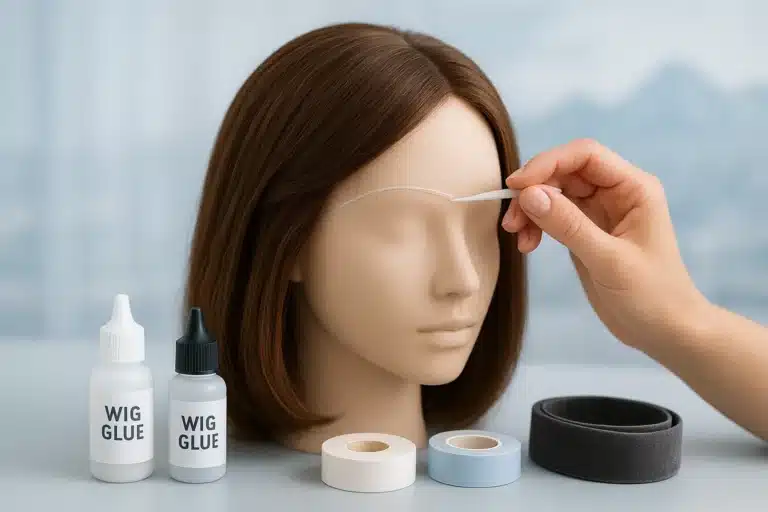
For pieces requiring an invisible hairline, such as lace front wigs, adhesives are mandatory. However, sweat and heavy stage makeup can break down standard glues. Theatrical techs use heavy-duty skin bonds, double-sided lace tape, or surgical spirit gum. If you suffer from skin irritation under hot lights, prioritizing a hypoallergenic wig glue will prevent painful contact dermatitis and protect your skin throughout a long run of performances.
Safe Removal and Post-Performance Skin Recovery
Putting a wig on is only half the battle; taking it off safely is where most beginners ruin their investments. Ripping off a laced edge at the end of a long night will not only tear the delicate Swiss lace, but it will also pull out your natural hairline.
Chemical Release Methods
Always use a specialized, alcohol-free lace remover to dissolve bonds cleanly. Saturate a cotton swab with the solvent, trace it along the glued hairline, and wait a full 60 seconds. The wig should slide off with zero resistance. For lingering residue on the cap, a gentle soak in warm water and grease-cutting dish soap can safely break down stubborn adhesives.
Post-Wear Skin Care
Hours of wearing heavy lace, spirit gum, and tight caps take a toll on a performer’s skin. Deeply cleansing your face and scalp is vital to prevent clogged pores and “glue rash.” Many local performers make it a habit to book deep-cleansing facials at local Fort Worth spas after a heavy run of shows to soothe their skin, repair their moisture barrier, and prep their canvas for the next production.
Frequently Asked Questions (FAQ)
What is the difference between a cheap Halloween wig and a professional stage wig?
Cheap Halloween wigs use low-grade, shiny plastics that cannot be heat-styled and look highly unnatural under bright lights. Professional stage wigs utilize heat-resistant synthetics or human hair, feature breathable caps for comfort, and have complex hairlines that mimic natural growth.
How do I prep my natural hair so the wig sits flat?
The key to a flat, natural-looking wig is compressing your natural hair. Braid your hair tightly against the scalp (cornrows work best for thick hair) or create flat pin-curls. Cover this with a nylon wig cap to smooth out any bumps before applying your wig.
What is the safest way to remove wig glue without ruining the lace?
Never pull or peel dry lace! Apply a generous amount of specialized lace adhesive remover or 99% isopropyl alcohol directly to the bonded area. Let it sit for a minute to break down the chemical bond, allowing the lace to gently lift away from the skin without stretching or tearing.
Next Steps for Your Theatrical Journey
A great theatrical or cosplay wig is an investment in your craft, transforming a good costume into a breathtaking, believable character. Now that you understand the mechanics of stage-ready fibers, secure styling, and safe adhesive removal, you are better equipped to step under the stage lights with total confidence.
We encourage you to visit local Fort Worth shops to feel the cap constructions for yourself, speak with in-store experts, and begin experimenting with professional styling techniques. The more you learn about the science of wig application and care, the more seamless your onstage transformations will become.