Walking into a brightly lit, crowded salon when you’re experiencing medical hair loss or seeking a highly personalized hair transformation can feel completely overwhelming. You aren’t just looking for a product off a shelf; you’re looking for a safe haven. For many in the DMV area, the priority is finding a secure, supportive environment where expert advice meets absolute discretion away from the public eye.
If you’re beginning this highly personal journey, knowing where to start makes all the difference. To help you discover the most reputable local boutiques that prioritize your privacy, we’ve put together a comprehensive resource on evaluating the best wig stores in Washington, DC. This guide will walk you through what to expect during a private fitting, how to navigate the complex world of medical insurance, and how to transform an anxious errand into an empowering moment of self-discovery.
The Emotional Reality of Alternative Hair
If you are nervous about your first consultation, you are not alone. The number-one fear for most beginners is looking like they are wearing a completely unnatural hairpiece. Pop culture has not been kind to alternative hair—whether it’s memes about the infamous, stiffly styled “blagojevich wig” or the historical trope of low-quality “rug wigs” that sit awkwardly on the head.
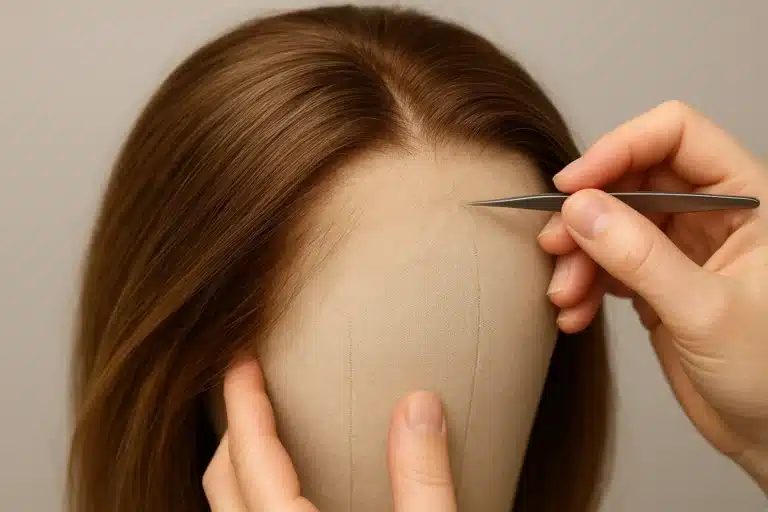
It is important to understand the massive difference between novelty items—like neon fiber optic wigs for parties or even humorous custom wigs for pigs—and modern, medical-grade custom hair restoration. Today’s premium lace-front constructions and monofilament caps mimic natural scalp growth flawlessly, avoiding the artificial shine and heavy density that make older pieces look fake.
What Actually Happens During a Private Fitting?
A premier private consultation in the DC area focuses on education, not pressure. When you step into a private suite, you should expect a “Fit First” protocol.
Many beginners assume that wig sizing simply involves wrapping a tape measure around their head. In reality, a proper fitting involves a much more nuanced approach to prevent painful scalp tension or a loose, slipping cap. Your consultant should introduce you to two essential fitting concepts:
- The Three-Point Anatomy Check: This ensures the wig properly aligns with your ear tabs, hugs the nape of your neck securely, and lays flat across your crown without buckling.
- The Four-Finger Rule: Beginners often pull their wigs too far down on their foreheads. Placing four fingers horizontally above your brow bone helps identify where your natural hairline should sit, creating a seamlessly realistic look.
Understanding these concepts is the first step to alternative hair confidence. You can explore our comprehensive wig size guide to learn more about taking these measurements at home before your appointment.
Material Mastery and Budgeting Your “Wig Money”
One of the most confusing aspects of buying alternative hair is understanding the financial landscape. Being open about your “wig money”—how much you plan to budget for the piece and its lifetime maintenance—will help your consultant guide you appropriately.
Prices can range dramatically. A high-quality synthetic wig with a natural lace front can be a highly effective, budget-friendly entry point at around $300. On the opposite end of the spectrum are ultra-premium custom systems. Often referred to in luxury circles as “10k wigs,” these bespoke medical-grade prosthetics (like the Cesare Ragazzi CNC system) involve 3D scalp mapping and are long-term investments for permanent hair loss.
Your consultant will also help you decode the industry’s complex color systems. For example, if you see a label for a “1b30 wig,” you might be completely lost. However, once you learn how to read wig colors by number, you’ll instantly know that “1b” means off-black and “30” represents a warm medium auburn blend.
Navigating Health Insurance for Medical Hair Loss
If you are experiencing hair loss due to chemotherapy, alopecia, or another medical condition, you shouldn’t have to bear the financial burden alone. However, if you submit a claim to your insurance company for a “wig,” it will almost certainly be denied as a cosmetic expense.
The vital industry term you need to know is cranial prosthesis.
Securing insurance reimbursement requires specific documentation. You will need a prescription from your oncologist or dermatologist for a “cranial prosthesis” using the specific HCPCS medical code A9282. By framing your hair replacement as a necessary medical device, you significantly increase your chances of coverage. To make this process easier, we’ve developed a complete guide to getting your cranial prosthesis covered by insurance.
The DMV Discreet Directory: Finding Your Safe Space
When discretion is your top priority, finding a boutique with thoughtful architectural features—like private parking or secluded rear entryways—is just as important as the hair they sell. While our full DC guide offers deeper insights, here are a few distinct approaches taken by top regional specialists:
- Eivind and Hans of Georgetown (Washington, DC): Located on Wisconsin Avenue, this long-standing establishment offers private salon suites located near a discreet secondary rear entrance adjacent to their parking lot, ensuring you never have to walk through a busy main storefront.
- Sanctüary Hair Solutions (Shaw, DC): Operating on a “Trichology First” methodology, they analyze scalp health before recommending hair restoration systems in a zero-pressure, one-on-one environment.
- High Definition Hair (Washington, DC): Specializing in custom, patent-pending 3D scalp replica technology, they build ultra-realistic, custom-fitted lace wigs and medical units for those seeking high-end customization.
- Joi Wig Salon (Springfield, VA): A renowned regional specialist focusing on compassionate customer journeys specifically tailored for chemotherapy and alopecia patients, offering lightweight caps for highly sensitive scalps.
Protecting Your Investment at Home
A successful consultation doesn’t end when you leave the salon; it continues with proper home care.
Many beginners make the mistake of buying a cheap styrofoam head for wigs. While styrofoam is perfectly fine for quick air-drying, storing a custom-fitted cap on a rigid foam head that doesn’t match your exact measurements can stretch delicate materials out of shape. For long-term structural preservation, washing, and styling, a heavy-duty canvas block or a professional mannequin head for wigs is an essential investment.
Additionally, ensuring you have the best wig care products specifically formulated for either synthetic fibers or human hair will protect your piece from friction frizz and premature shedding.
Frequently Asked Questions (FAQ)
Do I need to shave my head before a consultation?
Absolutely not. You are in complete control of your hair journey. A skilled consultant can measure your head and fit a cap securely over thinning hair using specialized liners. Any decisions about shaving or cutting your bio-hair are made entirely on your terms.
How do I travel safely with premium alternative hair?
Packaging wigs correctly is crucial to prevent crushing delicate lace fronts. Never just throw your wig in a suitcase. Turn the cap inside out, tuck the hair gently inside the cap to protect it from friction, and place it in a hard-shell travel case or a silk bag.
Is synthetic hair or human hair better?
“Better” depends entirely on your lifestyle. Premium synthetic fibers hold their style perfectly even after washing and require very little maintenance, making them ideal for individuals recovering from medical treatments who may have low energy. Premium human hair offers unparalleled realism and styling versatility but requires the same time-consuming washing and heat-styling as bio-hair.
Take the Next Step in Your Journey
Navigating medical hair loss or a significant hair transition is a profound, deeply personal experience. You deserve a shopping environment that honors your privacy, answers your questions without industry jargon, and treats you with genuine compassion.
By familiarizing yourself with cap sizing, material differences, and the physical discretion offered by local DMV boutiques, you take the power back into your own hands. When you’re ready, reach out to a local specialist and request a private consultation—your future, confident self will thank you for taking that brave first step.