Facing medical hair loss due to chemotherapy, alopecia, or thyroid conditions is an emotionally taxing experience. Between navigating doctor appointments, managing treatments at local centers like NYU Langone Hospital—Long Island or MSKCC Nassau, and processing your own feelings, the last thing you need is an administrative headache. Yet, when many women start looking for a medical wig, they are met with a confusing maze of insurance jargon, automated phone systems, and fragmented retail listings that offer little real help.
If you’ve been researching local options, you might already know that finding the best wig stores in Garden City, NY, a complete buyer’s guide is an excellent first step for understanding the local retail landscape. But finding a beautiful, natural-looking wig is only half the battle. Figuring out how to get your health insurance to pay for it is a completely different challenge.
This guide is designed to bridge the gap between clinical terminology and local retail realities. We will decode the insurance process, explain the exact medical codes you need, and show you how to navigate Garden City boutiques so you can secure your medical wig with confidence and peace of mind.
The Insurance Secret: Why the Word “Wig” Gets Denied
Here is the most important “aha moment” you will have during this process: in the eyes of insurance companies, the word “wig” implies a cosmetic accessory. If you submit a claim for a “wig,” automated insurance software will almost certainly deny it.
To unlock your medical benefits, you must shift your vocabulary. The correct medical term is a cranial prosthesis (or sometimes a hair prosthesis).
A cranial prosthesis is specifically designed for patients with severe hair loss. Unlike standard fashion wigs, a true medical prosthesis often features specialized cap constructions—such as hand-tied bases, monofilament tops, and silicone grips—designed to protect a highly sensitive, bare scalp. By ensuring your doctor, your local boutique, and your insurance provider all use this specific terminology, you instantly move your request from the “cosmetic” category into “durable medical equipment” (DME) or specialized medical care.
How Medical Coverage Actually Works on Long Island
A common misconception is that you can walk into a local Garden City wig shop, hand over your Empire BCBS or Oxford insurance card, and walk out with a fully covered cranial prosthesis.
The local reality is quite different. Over 90% of independent wig boutiques in Nassau County operate as out-of-network, fee-for-service retailers. This means you will typically pay for your piece upfront. The boutique will then provide you with a compliant, itemized medical receipt (which includes their Tax ID and specific medical billing codes), which you will submit to your insurance company for reimbursement.
Understanding Your Plan
- Private Commercial Insurance: Plans from providers like Aetna, Cigna, Oxford/UnitedHealthcare, and Empire BCBS often provide an allowance (typically ranging from $500 to $3,000) or cover 80% to 100% of the cost. Note that some New York group policies have limits, such as one prosthesis per lifetime or one per calendar year.
- Original Medicare: Unfortunately, Original Medicare (Parts A & B) currently excludes wigs under their Durable Medical Equipment rules. However, certain Medicare Advantage plans may offer supplemental coverage.
- FSA and HSA Accounts: Because a cranial prosthesis is prescribed for a medical condition, you can almost always use your Flexible Spending Account (FSA) or Health Savings Account (HSA) card to purchase it directly.
The Medical Wig Prescription and Coding Blueprint
Before you start trying on different styles in a boutique’s private fitting room, you need to lay the clinical groundwork. The most crucial step is securing a properly formatted wig prescription from your oncologist or dermatologist.
To ensure your claim is processed smoothly, your prescription and your final store receipt must include the following details:
- The Diagnosis Code (ICD-10): This tells the insurance company why you need the prosthesis. Common codes include
L63.9(Alopecia areata, unspecified),L63.0(Alopecia totalis), or specific codes for chemotherapy-induced alopecia and radiation dermatitis (L58.1). - The Billing Code (HCPCS): The universal billing code for a medical wig is
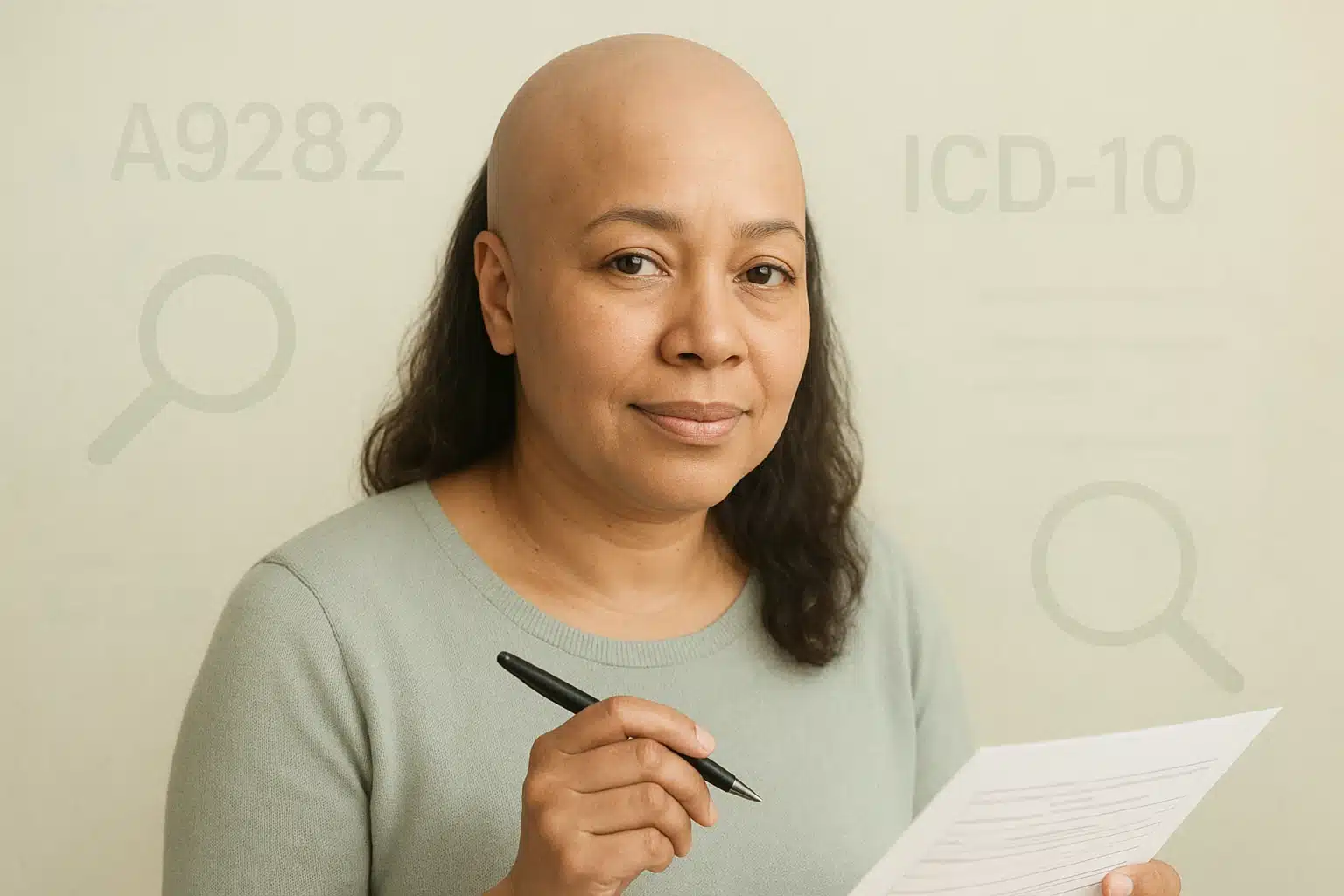
A9282(Wig, any type, each). - The Physician’s NPI Number: The National Provider Identifier of your prescribing doctor.
- The Correct Terminology: The prescription must explicitly state “Cranial Prosthesis for Medical Hair Loss.”
Navigating Garden City & Nassau County Medical Wig Providers
When evaluating wig providers around Garden City and Long Island, your needs are different from someone buying a hairpiece for a weekend event. You are looking for a supportive environment that understands both the emotional weight of your purchase and the administrative requirements of your insurance.
When calling local boutiques, ask these three critical questions:
- “Do you have private fitting rooms?” (Privacy is essential when you are experiencing hair loss).
- “Do you carry medical-grade caps, such as 100% hand-tied or monofilament caps for sensitive scalps?”
- “Are you able to provide an itemized medical receipt that includes your Tax ID and the HCPCS A9282 code?”
A reputable provider with nearly two decades of industry expertise will understand exactly what you are asking and will readily accommodate these requests, ensuring you leave with both a beautiful product and the exact documentation you need.
Step-by-Step Claim Filing and Handling Denials
Taking control of the reimbursement process doesn’t have to be intimidating. Follow this simple workflow:
1. The Pre-Purchase Call
Call the member services number on the back of your insurance card. Ask them:
- “Does my policy cover a cranial prosthesis for medical hair loss under code A9282?”
- “What is my coverage allowance, and is it out-of-network?”
- “What specific forms do I need to submit for reimbursement?”
2. The Post-Purchase Assembly
Gather your doctor’s prescription, your itemized receipt from the wig boutique (showing a zero balance/paid in full), and your insurance claim form. Keep photocopies of absolutely everything before mailing it or submitting it via your online portal.
3. Appealing a “Cosmetic Denial”
If your claim is initially denied as a “cosmetic” expense, don’t panic. This is incredibly common and is usually the result of automated software seeing the word “wig.” You can submit a denial appeal letter. In your letter, reiterate that the item is a Cranial Prosthesis prescribed by a licensed physician to treat the psychological and physiological side effects of your specific medical diagnosis (referencing your ICD-10 code). Often, a human review of an appealed claim results in an approval.
Frequently Asked Questions (FAQ)
What is the difference between a cosmetic wig and a cranial prosthesis?
While both provide hair replacement, a cranial prosthesis is prescribed by a doctor for a medical condition. It is typically constructed with softer, breathable materials designed specifically to not irritate a sensitive, bare scalp, whereas cosmetic wigs are often designed to be worn over existing hair.
Will Medicaid cover my medical wig in New York?
Medicaid coverage for cranial prostheses in New York can vary widely based on the specific managed care plan you have. It is highly recommended to call your specific Medicaid case worker or managed care provider to ask about coverage for HCPCS code A9282.
Can I buy my medical wig online and still get reimbursed?
Yes. As long as you have a valid prescription and the online retailer can provide an itemized medical receipt featuring their Tax ID and the correct billing codes, most insurance companies will process the out-of-network reimbursement just as they would for a physical store in Garden City.
Taking Your Next Step
Experiencing hair loss is challenging, but taking control of your recovery and your self-image is incredibly empowering. Now that you are armed with the right terminology, the correct medical codes, and an understanding of the local landscape, you can approach your medical wig purchase with confidence.
Take a moment to download or write down the specific codes (A9282 and your doctor’s ICD-10) and schedule a conversation with your healthcare provider to get your prescription for a cranial prosthesis. By combining compassionate care with premium, high-quality products, finding the perfect hairpiece is a journey you don’t have to walk alone.