Imagine finally finding the perfect wig. You bring it home, wear it proudly, and love how it makes you feel. But fast forward a few weeks, and you might notice the lace starting to fray, the style losing its bounce, or perhaps you’re struggling to apply it without irritating your scalp. This is a remarkably common experience for beginners and seasoned wearers alike. Buying your hairpiece is only the first 50% of your journey; the other half relies entirely on the tools and accessories you use to maintain it.
When transitioning into wearing wigs, the learning curve can feel incredibly steep. If you’re exploring the best wig stores in Brooklyn, NY to find your piece, you also need to know exactly where to source the stands, glues, tapes, and specialized shampoos that will protect your investment. Your natural edges and the delicate craftsmanship of your wig depend on it.
Let’s demystify the world of wig accessories, explore how to use them safely, and map out exactly where you can find these essentials in Brooklyn.
The Accessory Categorization Framework: What You Actually Need
It’s easy to walk into a specialty boutique and feel overwhelmed by walls of sprays, pins, and mannequins. To make sense of it all, it helps to categorize accessories into four distinct functional pillars. Think of this as your master starter kit.
1. Foundation & Security
Before styling comes security. The foundation dictates how comfortable you will be throughout the day.
- Wig Caps: Essential for flattening natural hair and creating a barrier against friction.
- Glueless Velvet Grips: Perfect for those who want to avoid adhesives altogether. These bands use multi-directional velvet to lock the wig in place through gentle friction.
- Tapes and Glues: For semi-permanent holds, particularly with lace-front wigs. Choosing the right adhesive based on your skin type and wear time is paramount (more on this below).
2. Maintenance & Washing
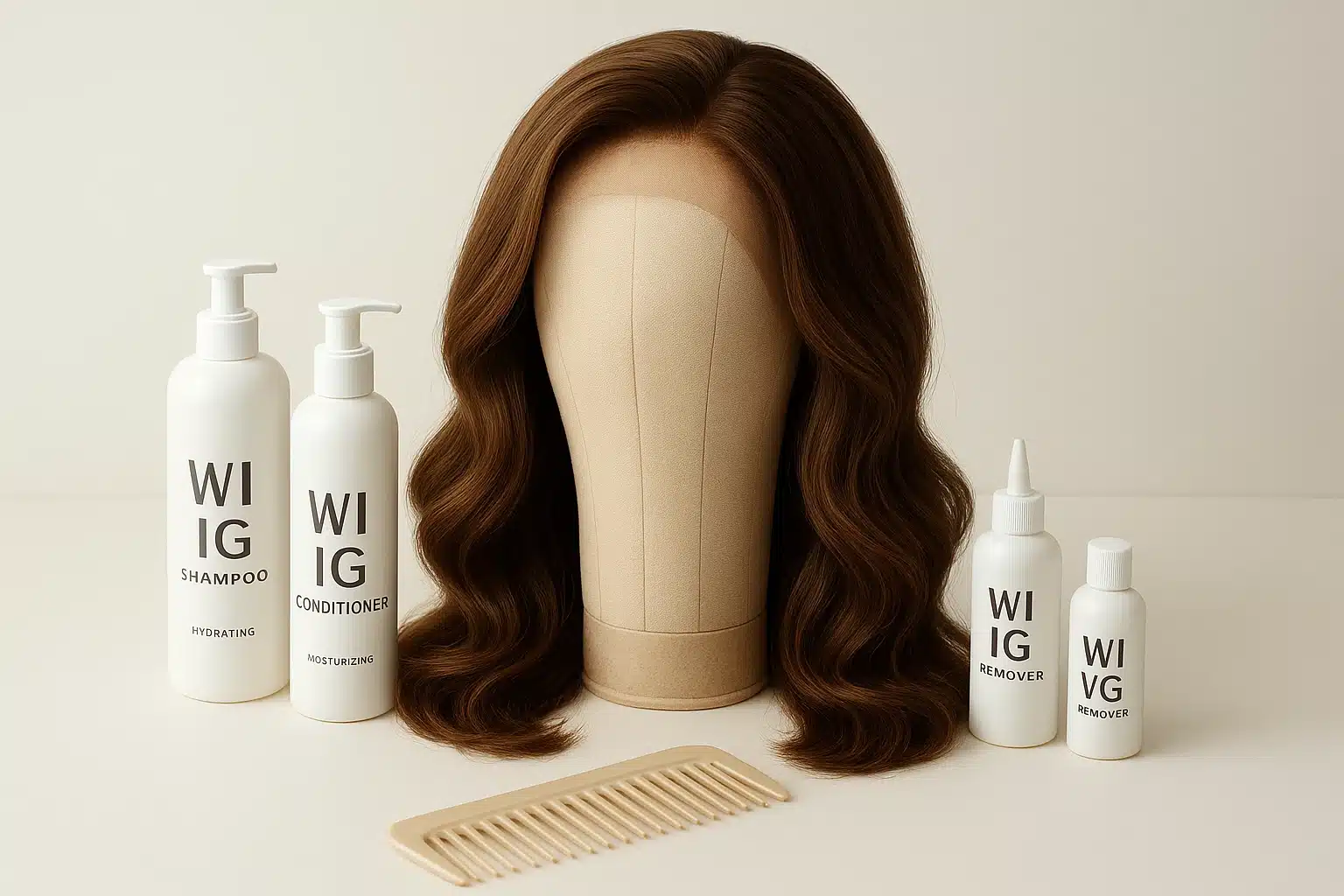
You cannot use regular drugstore shampoo on a wig. Human hair wigs require profound hydration because they no longer receive natural scalp oils, while synthetic fibers require specialized cleansers that won’t degrade their synthetic coating. Investing in proper wig care formulations—like sulfate-free shampoos, hydrating conditioners, and anti-static detanglers—is non-negotiable for longevity.
3. Styling & Preservation
Where does your wig go when it’s not on your head?
- Collapsible Plastic Stands: Excellent for travel and allowing air circulation after washing.
- Canvas Block Heads: The gold standard for styling. Unlike styrofoam, canvas blocks can be pinned into safely (using T-pins) without stretching out your delicate wig cap.
- Wide-Tooth Metal Combs: Essential for synthetic hair to prevent static and frizz.
4. Lace Care & Removal
Proper removal is where most beginners accidentally damage their natural hairline or tear the Swiss lace of their wig. You will need skin-safe solvent removers, lace melting bands to set your glue flawlessly, and skin guards to protect your epidermis before adhesive application.
The “Skin-First” Adhesive Application Protocol
One of the biggest pain points in the hair loss and wig community is hairline damage caused by improper glue usage. Current trends on social media often skip the crucial safety steps of adhesive application. To protect your edges and your lace, follow this three-step protocol:
- Scalp Assessment & Alcohol Cleanse: Never apply glue to oily skin. Gently wipe your hairline with 91% rubbing alcohol to remove natural oils and makeup. Wait for it to dry completely.
- Skin Guard Barrier Application: This is the step most beginners skip! Apply a liquid skin guard to the area where the glue will sit. This creates a protective microscopic barrier between your skin and the adhesive, preventing irritation and making removal significantly easier.
- Thin Layer Curing: Less is more. Apply water-soluble polymer glue in a very thin layer. Wait until it turns completely clear and tacky before pressing the lace into it. Pressing lace into wet, white glue will cause it to seep through the hair knots, creating a messy, visible crust.
Pro Tip: The “Four-Finger Rule.” Place four fingers horizontally flat against your forehead, resting the bottom finger on your eyebrows. The top of your index finger is generally where your natural hairline should begin. Never glue lace directly over your natural baby hairs.
Mapping Brooklyn’s Wig Accessory Landscape
If you’ve ever typed “wig store nyc” into your search bar hoping for a comprehensive one-stop-shop, you’ll find that Brooklyn offers some of the most specialized, community-focused boutiques in the city. The borough’s wig market features over 80 dedicated stores, heavily concentrated in neighborhoods like Midwood, Crown Heights, Flatbush, and Borough Park.
While many shops focus purely on selling the hair itself, several stand out for offering extensive, floor-to-ceiling accessory collections.
What to Look for in Local Brooklyn Hubs
When visiting iconic local retailers—such as Wig Showcase on Kings Highway, Shuly Wigs, Yaffa Wigs on 13th Ave, or Alipearl NYC—look for dedicated maintenance sections. A high-quality boutique will have:
- Physical displays of different sized canvas block heads (so you can match your head circumference).
- A diverse range of adhesives, clearly separating water-soluble daily wear glues from acrylic tapes designed for longer hold times.
- Staff willing to explain the chemical differences between synthetic wig sprays and human hair serums.
Visiting a physical store in Brooklyn allows you to color-match lace tints in person and feel the texture of different wig caps, saving you the trial-and-error of ordering blind online.
Your Preventative Maintenance Checklist
To extend the life of your hairpiece, adopt a proactive routine rather than waiting for the hair to tangle or dull.
- Daily: Gently detangle starting from the ends and working up to the roots. Mist synthetic wigs with an anti-static conditioning spray. Store on a stand away from direct sunlight and heat vents.
- Weekly/Bi-Weekly (depending on wear): Wash using cool to lukewarm water. Never rub or wring the hair; instead, gently squeeze the specialized shampoo through the fibers.
- Monthly: Do a deep-conditioning treatment (for human hair) and inspect your lace for any buildup of old adhesive, carefully cleaning it with a soft toothbrush and citrus solvent.
Myth Buster: Never use household fabric softener to “revive” a synthetic wig, and absolutely avoid dish soap for washing. These internet myths degrade the fibers and can cause the cap to deteriorate rapidly.
Frequently Asked Questions (FAQ)
What is the difference between wig glue and wig tape?
Wig glue (liquid adhesive) usually offers a more customizable, seamless melt into the skin, making it ideal for the front hairline. Wig tapes are double-sided, medical-grade acrylic adhesives that offer a stronger, longer-lasting hold. Tapes are often used at the nape of the neck or by individuals with total hair loss who need multi-day security without the mess of liquid glue.
How do I remove stubborn lace glue without tearing the lace?
Patience is your best tool. Saturate the glued area with a specialized, skin-safe adhesive solvent (often citrus or oil-based). Let it sit for 2 to 5 minutes to break down the adhesive bonds. The lace should lift away with zero resistance. If you have to pull or tug, you need more solvent and more time.
Do I really need a canvas block head, or is a plastic stand enough?
Both serve different purposes. A collapsible plastic stand is perfect for air-drying a wet wig because it allows maximum airflow through the cap. However, if you plan to heat-style, curl, or aggressively brush your wig, a canvas block head is necessary. You can secure the wig to the canvas using T-pins, providing the tension needed to style without stretching out the delicate cap construction.
What should I prioritize when buying accessories for my first wig?
Start with the absolute essentials: a wide-tooth comb or loop brush, a collapsible drying stand, sulfate-free shampoo and conditioner specifically formulated for your wig’s hair type (human or synthetic), and a velvet wig grip for comfortable, glueless security. You can always add adhesives and advanced styling tools as you become more comfortable.
Continuing Your Educational Journey
Mastering wig care is a process of discovery, but armed with the right tools and knowledge, it becomes a deeply rewarding self-care ritual. Understanding the “why” behind every accessory—from the protective barrier of a skin guard to the structural support of a canvas block—transforms a daunting routine into second nature.
Take the time to explore your local Brooklyn wig boutiques not just as retail stores, but as educational resources. Ask questions, read labels, and prioritize the long-term health of both your natural scalp and your beautiful hairpiece. By building a strong foundation of care, your confidence will shine through every time you step out the door.