Shopping for an ethnic wig in West Michigan shouldn’t feel like a guessing game, yet many find themselves caught in a frustrating loop. You know the struggle: scrolling through endless generic online catalogs or wandering into a local shop only to find they don’t carry the specific 4C coil or coarse Yaki texture you actually need. Too often, buyers are forced to choose between the convenience of national online stores—where you can’t feel the hair or check the density—and local directories that offer zero details on what textures are actually in stock.
To truly find the perfect fit, you need a roadmap that bridges the gap between understanding hair science and navigating the local market. If you are exploring all your regional options, having a comprehensive guide to the best wig stores in Grand Rapids, MI is an absolute game-changer. It’s not just about finding a store; it’s about finding a sanctuary that understands the difference between a blown-out natural texture and a silky straight relaxer mimic. Let’s break down everything you need to know to confidently shop for ethnic wigs in Grand Rapids.
Foundational Hair Science: Decoding the Texture Spectrum
One of the biggest “aha moments” in wig shopping is realizing that commercial wig terminology doesn’t always match the natural hair typing system (types 3A to 4C) we use at home. When you walk into a store, the labels can be confusing. Here is exactly what those terms mean in the real world:
- Light Yaki: This texture mimics natural hair that has been chemically relaxed and flat-ironed bone straight. It has a micro-crimp that gives it a bit more volume than silky European textures.
- Coarse Yaki: Think of natural hair that has been relaxed, but blown dry rather than flat-ironed. It has movement but holds significant texture.
- Kinky Blowout: This is the perfect match for natural Type 4 hair that has been blown out with a hairdryer. It has no chemical relaxer texture—just pure, voluminous natural hair stretched out.
- Kinky Curly / Afro Coily: Designed to match the 3C to 4A curl patterns. These units feature beautifully defined, tight ringlets.
- Afro Kinky / My Coils: This texture mimics the beautiful, tight, zig-zag coil patterns of 4B and 4C hair.
Human Virgin Hair vs. Synthetic Pre-Styled Units
When evaluating options, you’ll also need to decide between human and synthetic fibers. Virgin human hair is highly sought after, but it’s important to know that textured human hair wigs (like kinky curly styles) are typically “steam-processed.” This means the hair was baked around tiny rods using steam to create that curl memory.
On the other hand, pre-styled synthetic units from popular brands like Outre, Sensationnel, or Shake-N-Go offer incredible out-of-the-box style. Today’s heat-friendly synthetics are surprisingly realistic, making them a fantastic option for protective styling on a budget, though they require entirely different maintenance than human hair.
The Grand Rapids Ethnic Wig & Beauty Supply Blueprint
While online shopping offers infinite choices, there is no substitute for inspecting a wig in person. Grand Rapids has a vibrant, albeit sometimes hidden, network of beauty supply stores, custom wig makers, and boutiques.
Spots like Queen Latrese Wig & Bundle Factory, Breton Designer Wigs, Elegance Downtown Wigs, and H&J Beauty all serve the West Michigan community. Furthermore, local salons like Mariam’s African Hair Braiding & Accessories often provide the necessary under-cap prep (like foundational cornrows) required for a flawless install.
What to Look For When Shopping Locally
When you visit a Grand Rapids shop, use this quick checklist to evaluate the units:
- Lace Transparency: Check the lace against your skin tone. High-quality lace front wigs should feature sheer or HD lace that blends seamlessly with your complexion, rather than a thick, grayish material.
- Weft Sealing: Look closely at the tracks inside the cap. Tightly sewn, double-wefted tracks will prevent shedding.
- Fiber Shine: Synthetic wigs shouldn’t look like plastic. If a unit is overly shiny, it’s a dead giveaway. Look for natural, low-luster finishes.
Medical Fittings and Specialized Needs
For those experiencing hair loss due to alopecia or chemotherapy, shopping for a wig takes on a deeper medical dimension. Seeking out a custom-fitted cranial prosthesis can provide not only a more comfortable, breathable fit but may also qualify for medical insurance reimbursement in Michigan. Boutiques that specialize in these medical fittings offer private rooms and empathetic, specialized care.
Mastering the Look: Density, Fitting, and Protective Prep
Getting the texture right is only half the battle; how the wig is constructed and how you prep your natural hair makes all the difference.
The Density Math
Wig density refers to how thick the hair is. Choosing the wrong density is a common beginner mistake:
- 120% to 130% Density: Looks incredibly natural, mimicking the average human head of hair. Best for everyday wear and shorter lengths.
- 150% Density: Offers a full, voluminous look without being overwhelmingly heavy. This is the sweet spot for most textured units.
- 180% to 200% Density: Pure glamour. This heavy density is best reserved for very long units or ultra-voluminous Afro styles.
Blending and Protective Prep
If you are wearing a U-part wig or leaving your edges out, blending is crucial. Using the Curly Girl Method on your leave-out—applying a high-quality leave-in conditioner and a defining gel—helps match your natural curl clump to the wig’s texture. Underneath it all, ensure your natural hair is protected with neat, flat cornrows and a well-moisturized scalp to promote healthy hair growth while you wear your protective style.
The Maintenance Manual: Protecting Your Investment
Humid Michigan summers and dry, freezing winters can wreak havoc on textured wigs. Proper care depends entirely on the fiber:
For Steam-Processed Human Hair: Moisture is your best friend. Co-wash (washing with conditioner only) these units to keep the curl memory intact. Avoid heavy greases or oils near the lace, as this can loosen the hand-tied knots and cause severe shedding.
For Synthetic Blends: Less is more. Never use heavy oils on synthetic hair, as it simply coats the plastic fiber and causes matting. Instead, use silicone-based synthetic wig sprays. Most importantly, avoid applying high heat to synthetic curls, as it will permanently melt or alter the curl pattern.
Frequently Asked Questions (FAQ)
What is the physical difference between Yaki straight and Kinky straight?
Yaki straight mimics natural hair that has been chemically relaxed—it’s very straight with a slight micro-texture. Kinky straight (or Kinky Blowout) mimics natural, unrelaxed Type 4 hair that has been blown dry. Kinky straight is significantly more voluminous and textured.
How do I choose between synthetic pre-styled and virgin human hair bundles?
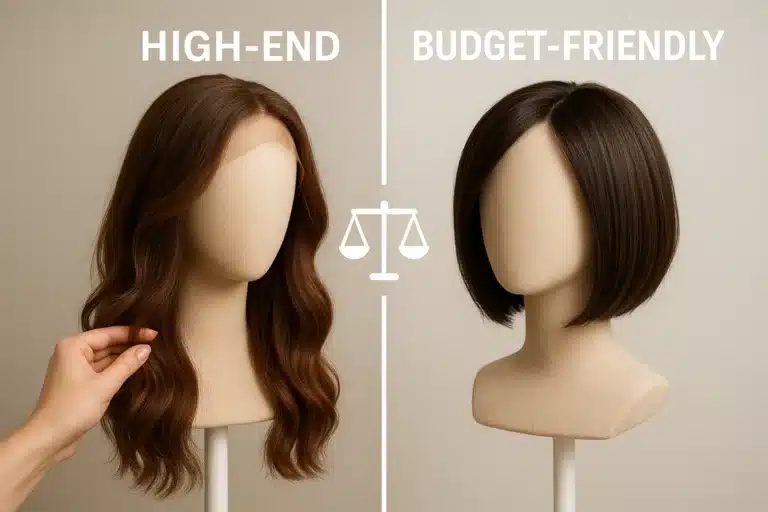
Choose synthetic if you want a budget-friendly, out-of-the-box style that requires zero styling effort and holds its curl perfectly. Choose virgin human hair if you want a long-term investment that you can custom color, heat style, and part in multiple directions.
Can I apply leave-in conditioners to synthetic wigs?
No. Traditional leave-in conditioners and natural hair products (like shea butter or heavy oils) are designed to absorb into a human hair cuticle. Synthetic hair has no cuticle; it is a manufactured fiber. Heavy products will just sit on the surface, attracting dirt and causing the wig to mat and tangle.
How do I restore steam-processed kinky curly human hair without ruining the curl memory?
To restore the curls, gently detangle the hair while it is soaking wet and saturated with a slippery conditioner. Use a Denman brush or wide-tooth comb, starting from the ends and working up to the roots. Rinse with cool water and “scrunch” the hair upward to encourage the curl memory, then let it air dry completely without touching it.
How do local medical wig fittings work in Michigan for ethnic hair loss?
Specialized boutiques or hair loss clinics offer private consultations where they measure your head for a custom fit. If your hair loss is medical (alopecia, chemo), they can provide you with an itemized receipt containing the correct NPI and HCPCS codes (usually A9282) needed to submit a claim to your health insurance provider for a cranial prosthesis.
Taking the Next Step
Understanding the intricacies of ethnic hair textures, cap constructions, and local shopping nuances empowers you to make a choice that celebrates your unique style and needs. Whether you’re preparing for a complete hair transformation, exploring protective styling to retain length, or navigating medical hair loss, knowledge is your most powerful accessory. Take the time to explore Grand Rapids’ local boutiques, ask questions about fiber and density, and trust your newfound expertise to guide you to the perfect unit.