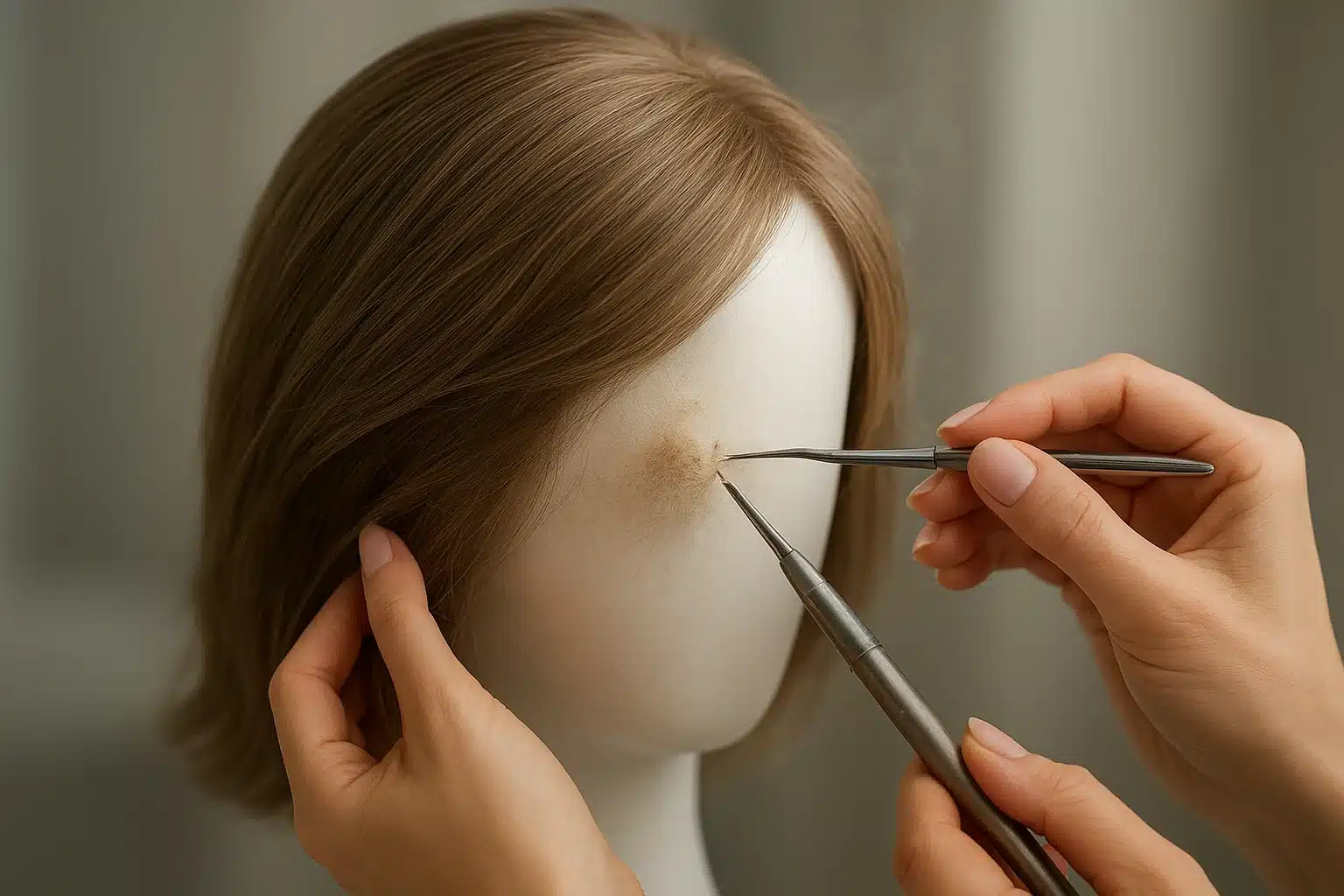
Imagine investing hundreds of dollars into a gorgeous wig that makes you feel incredibly confident, only to watch the delicate lace start tearing or the hair at the nape of your neck turn into a frizzy, tangled mess after just a few weeks. If you are experiencing this right now, you aren’t alone, and more importantly, your wig is likely far from ruined.
For many wearers in Springfield, Missouri—whether you are navigating medical hair loss, exploring alternative hair for everyday convenience, or wearing theatrical pieces—this is a frustratingly common scenario. The immediate reaction is often to throw the unit away and start fresh. In fact, when faced with a deteriorating unit, many people immediately start searching for our ultimate guide to the best wig stores in Springfield, MO to find a brand new replacement. But before you discard that tired, torn, or frizzy hairpiece, you need to know a well-kept secret in the alternative hair industry: up to 80% of common wig failures are completely reversible through proper technical maintenance.
The Investment Preservation Mindset
Wigs are significant financial, medical, and emotional investments. Just as you wouldn’t throw away a designer coat because a seam came loose, you shouldn’t discard a premium wig because of a small lace tear or localized tangling.
Understanding what causes alternative hair to break down is the first step toward extending its lifespan. When you learn to identify whether a wig needs a simple at-home refresh, a professional wig repair, or a complete replacement, you save yourself hundreds of dollars and unnecessary stress.
The Anatomy of Damage: Understanding Your Wig’s Vulnerabilities
To fix the problem, you first have to understand the physics of the fiber. Human hair and synthetic hair behave entirely differently and require different rescue tactics.
Synthetic Memory vs. Human Hair Cuticles
Human hair wigs lose hydration. Because they are no longer attached to a scalp, they do not receive the natural sebum (oils) needed to keep the hair cuticles smooth. Over time, human hair pieces become dry, brittle, and prone to snapping if they aren’t replenished with specialized lipids and deep conditioning treatments.
On the other hand, synthetic wigs suffer from a phenomenon known as “memory degradation” and friction. Synthetic fibers are essentially plastics molded by heat. When exposed to uncontrolled heat or continuous rubbing, those fibers lose their smooth texture.
The Mechanics of “Nape Matting”
Have you ever wondered why your wig always tangles right at the back of your neck? This is known as nape matting. It happens due to a combination of body heat, sweat, and constant friction against the collar of your shirt or winter coat.
Every time you turn your head, those microscopic fibers rub against your clothing, creating microscopic crimps in the hair. Most people try to fix this by vigorously brushing or applying heavy oils, but this actually makes it worse. True synthetic wig care for nape frizz requires controlled low-temperature steaming (between 160°F–180°F) to physically realign the plastic fibers and melt away the micro-crimps.
Mistake Callout: The Danger of Household Hacks Never use household dish soap, laundry bleach, or standard drugstore scalp shampoo to clean a high-end wig. These harsh chemicals strip moisture from human hair and aggressively break down the delicate knots hand-tied into the cap foundation, leading to massive hair shedding.
The Triage Decision Tree: Repair, Restore, or Replace?
How do you know if your wig can be saved? Use this simple triage guide to evaluate your piece:
1. When to Repair ($35–$120)
Minor structural issues and localized wear-and-tear can usually be fixed quickly.
- Lace Tearing: Small tears under 1 inch can be patched or re-fronted. If you accidentally cut the lace too close to the hairline, technicians can add lace extensions.
- Hardware Issues: Broken combs, loose clips, or stretched elastic ear tabs.
- Nape Frizz: Localized steaming and de-frizzing at the base of the neck.
2. When to Restore ($100–$250)
Restoration involves bringing life back to a heavily used, but structurally sound, wig.
- Hand-Ventilating (Re-Knotting): If the part or crown is thinning, a specialist can use a tiny needle to tie individual new hairs into the silk or monofilament top, restoring its original density.
- Intensive Spa Treatments: Ultrasonic baths, full-cap synthetic steaming, or complete lipid replenishment for European human hair wigs.
3. When to Replace ($300+)
Sometimes, letting go is the safest option.
- Cap Disintegration: When the actual fabric of the cap is dry-rotted, severely misshapen, or heavily punctured from improper T-pin usage.
- Massive Fiber Loss: If more than 60% of the wig’s total density has shed or degraded beyond repair.
Navigating Professional Wig Services in Springfield, MO
While everyday wig maintenance can happen at home, certain structural fixes require a professional’s touch. Fortunately, Springfield offers several localized resources for alternative hair wearers.
- Brigitte’s Wig Boutique: Known for consultative, compassionate guidance, they are a strong local choice for medical and chemo hair loss. They offer excellent in-person custom trimming and personal fittings to ensure your piece sits perfectly.
- Celebrity Hair Solutions: A local retail heavyweight with an extensive selection of brands like Raquel Welch and Jon Renau. They are a great starting point when you need to evaluate if your current wig can be salvaged or if it’s time to shop their expansive inventory.
- Local Styling Experts: General beauty salons like Studio 417 and Hair Waves Salon are excellent local resources for specialized wig installations, braid-down foundations, and custom styling.
- Medical Support Resources: For cancer patients in Greene County, community organizations like the GYN Cancers Alliance’s Shelly Sachs Wig Room provide incredible support, education, and sometimes cleaning and maintenance assistance for medical cranial prostheses.
(Note: For highly advanced, microscopic lace reconstruction or silk top separations, some Springfield residents opt to mail their pieces to national restoration labs, which specialize exclusively in structural needlework.)
The At-Home Preventative Maintenance Protocol
The best way to avoid costly repairs is to prevent damage before it starts. Here is a baseline routine you can implement immediately:
- The Washing Rule: Always wash in cool water. Never wring or twist the hair. Use only sulfate-free cleansers formulated specifically for your fiber type (synthetic vs. human hair).
- The Brushing Order: Always start brushing from the ends of the hair and slowly work your way up to the roots. Use a wide-tooth silicone detangler or a specialized loop brush to avoid snagging the hand-tied knots at the cap base.
- The Storage Secret: Never store your wig on a styrofoam head long-term, as this can permanently stretch out the cap. Instead, use a collapsible open-air wig stand or store it smoothly inside a silk bag to prevent friction.
Frequently Asked Questions (FAQ)
Can a ripped lace front or torn wig cap actually be repaired?
Yes! As long as the tear isn’t massive, professional wig technicians can use specialized translucent threads to patch lace tears, or even perform a “re-fronting” procedure where damaged lace is removed and a new hairline is carefully hand-knotted.
Does health insurance cover wig repairs and cap refittings?
It depends on your policy and the cause of hair loss. If your wig was originally prescribed by a doctor as a “cranial prosthesis” (often billed under CPT code A9282), some insurance policies may cover maintenance or adjustments. Always check with your provider and ask specifically about prosthesis maintenance coverage.
What is the difference between single and double knotting?
These terms refer to how the hair is tied to the wig cap. Single knotting ties one hair securely and creates a very flat, undetectable, natural-looking hairline. Double knotting ties the hair twice for maximum security, which is highly durable but slightly bulkier, often used at the back of the wig where durability is key.
Can I use regular salon styling products on my wig?
Generally, no. Standard salon products are formulated to work with the natural oils produced by a human scalp. Because wigs don’t have a natural oil supply, these products can build up rapidly, drying out human hair pieces and causing a sticky, cloudy film on synthetic fibers. Always use alternative-hair-approved products.
Taking the Next Step in Your Wig Journey
Your wig does so much more than just cover your head—it gives you the freedom to express your style and face the world with confidence. By learning the basics of fiber care, understanding how to address nape matting, and knowing when to call upon Springfield’s local professionals, you can add months, or even years, to the lifespan of your favorite pieces.
Before you throw away a wig that has lost its bounce, take a closer look. A simple steam treatment, a careful detangling session, or a quick trip to a local boutique might be all it needs to look brand new once again.