Imagine finding a stunning wig online or at a local boutique. You bring it home, eagerly pull it out of the box, and slide it on, expecting an instant transformation. Instead, you look in the mirror and see what many affectionately—and frustratingly—call “helmet hair.” The hair looks beautiful, but it doesn’t look like your hair. This is a remarkably common experience, whether you are exploring wigs for fashion or navigating medical hair loss. The secret to achieving a truly undetectable, natural look isn’t just about buying a high-quality piece; it’s about advanced tailoring. If you’re on this journey, finding your perfect fit: a guide to the best wig stores in Fresno, CA requires understanding how master artisans transform standard units into bespoke hair systems.
Many shoppers in California’s Central Valley assume that premium wigs should be perfect from the start. But here’s the industry secret: factory-produced wigs are intentionally over-ventilated (meaning they have 20–30% extra hair sewn in) to prevent shedding during shipping and to provide a sturdy base for future styling. Transforming that bulky foundation into a seamless, natural extension of yourself requires specialized customization like advanced density debulking, lace-safe color blending, and precision cap alterations.
The “Helmet Hair” Breakthrough: The Anatomical Zone Method
Let’s talk about wig density. Beginners often wonder why an out-of-the-box wig feels heavy or unnatural. The truth lies in anatomy. A natural human scalp does not grow hair at a uniform thickness. Our biological hair density graduates: it is typically around 80% at the delicate hairline, 120% at the temples, and up to 140% at the crown.
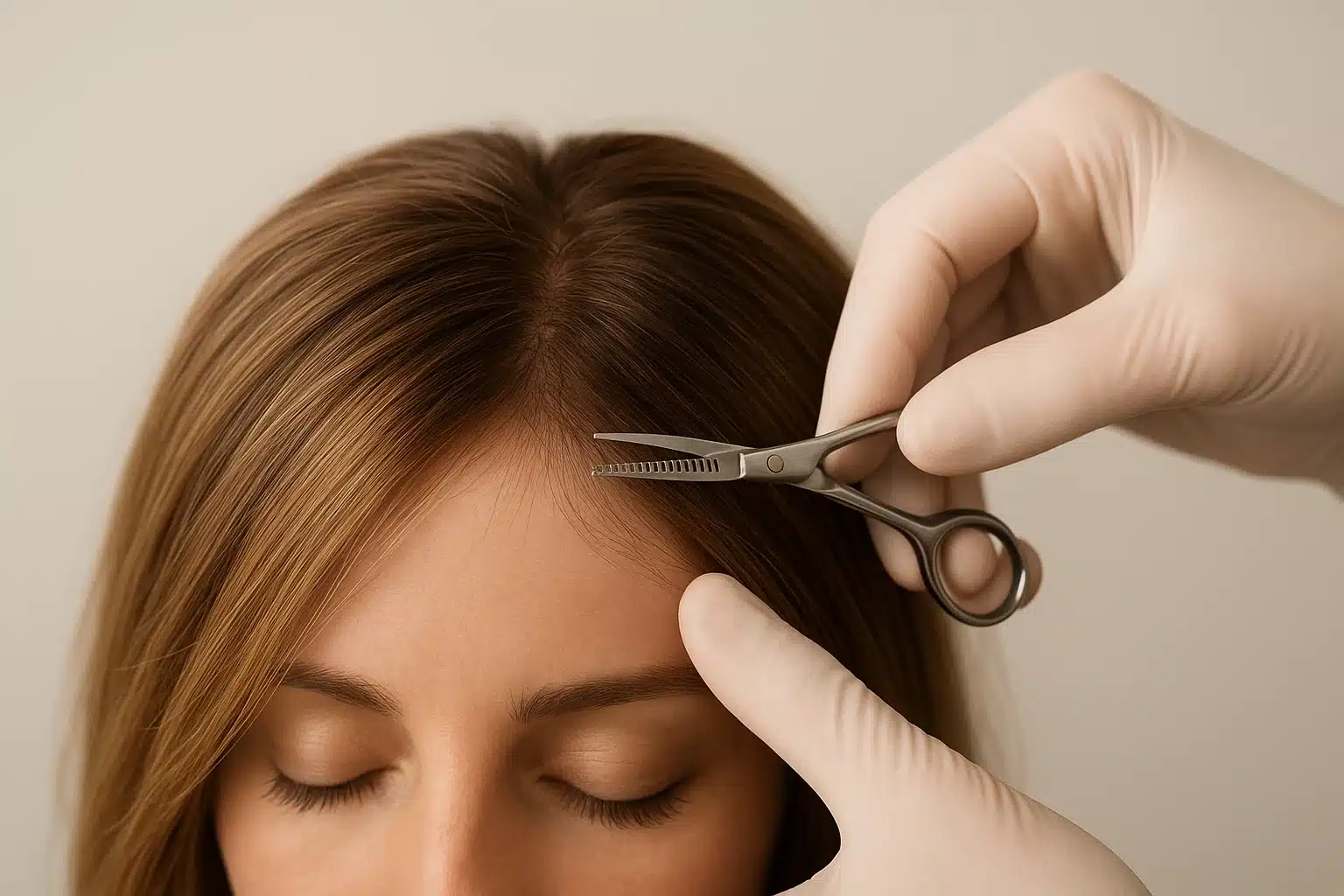
When you visit specialized wigs in fresno ca boutiques, expert artisans use what we call the Anatomical Zone Method. Rather than haphazardly chopping the hair, they use specialized thinning shears along the mid-shaft and meticulously hand-pluck individual knots to mimic that natural, graduated density. This strategic weight reduction eliminates the “stubble prickle”—those short, coarse hairs that stick straight up when a wig is thinned improperly by an inexperienced stylist.
Advanced Customization: The Magic Is in the Details
Basic styling like a quick trim or curling can only do so much. To create a piece that withstands the scrutiny of daylight and Fresno’s bright summer sun, we have to look deeper into structural customization.
Hand Ventilation and the “Four-Finger” Hairline Rule
Have you ever noticed a wig that sits uncomfortably low on the forehead? The most realistic hairlines follow the “Four-Finger Rule”—a simple measurement where you place four fingers flat across your forehead, starting just above the brow bone. Where your top finger rests is typically where your natural hairline should begin.
To make a piece look as though it is growing directly from your scalp, specialists perform advanced hand ventilation. This involves using tiny needles to tie individual strands of hair into the lace, creating custom baby hairs and dynamic parting lines. If you’re investing in a premium piece like a hand tied human hair wig, this localized plucking and knot-bleaching (which neutralizes those tiny dark dots where the hair is tied to the lace) creates a virtually invisible transition from your forehead to the hairline.
Bespoke Color Blending: Lace-Safe Color Chemistry
Coloring a wig isn’t like sitting in a traditional salon chair. A common mistake is attempting to use standard box dye on a hairpiece, which can permanently stain the delicate lace base or melt synthetic fibers.
True customization involves lace-safe color chemistry. For processed human hair, experts can formulate lowlights with demi-permanent glosses, execute beautiful balayage, or create custom root melts while protecting the lace grid with specialized barrier creams. Even heat-defiant synthetic fibers can undergo fiber-safe steam tinting. If you’re looking for dimension that perfectly matches a specific aesthetic, referencing tools like an ellen wille wigs color chart can help you and your stylist pinpoint the exact dimensional shading needed to bring the piece to life.
Precision Cap Alterations: The 3D Cranial Contouring Blueprint
A beautifully styled wig means very little if it shifts, slips, or causes tension headaches. Standard wigs often rely on basic adjustable straps at the nape of the neck. But if you have a sensitive scalp—perhaps due to alopecia or chemotherapy—a perfectly contoured fit is non-negotiable.
This brings us to the 3D Cranial Contouring Blueprint. It requires a 6-point measurement standard (circumference, front-to-nape, ear-to-ear across the forehead, ear-to-ear over the top, temple-to-temple, and nape width). Armed with these measurements, a specialist can deconstruct the wefts, perform structural darting, and safely tuck the circumference so the unit hugs your head perfectly.
A word of caution: Never take your wig to a standard clothing seamstress for sizing adjustments. The delicate wig cap construction requires highly specialized knowledge to prevent ruining the structural integrity. Advanced shops will even sew in medical-grade silicone non-slip panels and polyurethane strips so the wig lays completely flat and secure without the need for painful clips or combs.
Navigating Insurance and Medical Cranial Prosthetics
If you are experiencing medical hair loss, the terminology changes slightly. A high-end customized wig for medical purposes is often classified as a “cranial prosthesis.”
Understanding this distinction is crucial because it opens the door to financial assistance. Many private consultations at high-end boutiques coordinate with medical insurance, FSA/HSA accounts, and oncology centers. A knowledgeable specialist will guide you through the process of obtaining a prescription and claiming reimbursement, frequently utilizing specific medical billing codes like HCPCS Code A9282.
Does My Wig Need Customization? A Quick Diagnostic
Not sure if you need the expertise of a custom human hair wig maker or if an off-the-rack piece will do? Run through this quick checklist:
- Density Check: Does the hair look disproportionately thick around your temples and hairline compared to biological hair?
- Slippage Check: Does the wig slide backward throughout the day, or do you experience tension headaches behind your ears?
- Hairline Check: When you pull the hair back into a low ponytail, does the edge look like a solid wall of hair rather than a staggered, natural gradient?
- Color Flatness: Does the hair color look like one solid, opaque shade without natural dimension in the sunlight?
If you answered “yes” to any of these, your piece is a perfect candidate for advanced customization.
Frequently Asked Questions (FAQ)
What is wig density, and why does my out-of-the-box wig look bulky?
Wig density refers to the amount of hair ventilated into the cap, usually ranging from 50% to 180%. Most factory wigs are made at higher densities (often 120% to 150%) to prevent shedding during transit. They look bulky because real human hair gradually thins toward the hairline, whereas uncustomized wigs maintain a dense, uniform thickness everywhere.
Can I dye or add highlights to a synthetic wig versus a 100% human hair wig?
You cannot use traditional hair dye or bleach on synthetic wigs; the chemicals will destroy the fibers. However, specialized artisans can alter synthetics using fabric dyes or steam-tinting methods. 100% human hair wigs can be dyed, balayaged, and root-smudged, though it requires specialized barrier techniques to avoid staining the lace base.
How do I measure my head accurately to avoid slipping or headaches?
You should take six distinct measurements using a flexible seamstress tape: circumference, front-to-nape, ear-to-ear across the forehead, ear-to-ear over the top, temple-to-temple around the back, and the width of the nape. Always ensure your biological hair is wrapped as flat as possible when measuring.
What is the difference between a fashion wig and a medical cranial prosthesis?
While both can look beautiful, a medical cranial prosthesis is engineered specifically for individuals with total or partial hair loss. They feature specialized cap constructions—like monofilament tops, 100% hand-tied bases, and silicone grip panels—designed to be breathable and gentle on sensitive scalps without relying on natural hair for attachment clips.
Your Next Steps Toward the Perfect Fit
The journey to finding a wig that feels undeniably like you doesn’t end at the cash register; that’s simply where the craftsmanship begins. Whether you need the density expertly thinned to mimic a natural hairline, or require an intricate cap resizing to ensure all-day comfort during the hot Fresno summers, advanced customization is the key to reclaiming your confidence.
Start by taking your precise cranial measurements and noting the specific aspects of your current hairpieces that feel unnatural. Armed with this knowledge, you are ready to seek out specialists who view wig customization not just as styling, but as transformative structural artistry.