Imagine this: You’ve just finished a flawless wig installation. The lace is melted, the style is perfect, and you’re ready to head out. But halfway through a warm Central Arkansas afternoon, you feel that dreaded sensation—your lace is lifting. When a wig emergency strikes, you don’t have time to wait three to five business days for an online delivery. You need to know exactly which local aisles carry the professional-grade adhesives, contour tapes, and barrier sprays that will save the day.
Navigating the local retail landscape for specialized wig application tools can feel disjointed. While you can always explore our comprehensive guide to the best wig stores in Little Rock, AR to find full-service salons and custom fittings, sometimes you just need to grab a specific medical-grade bonding agent or a sweat-resistant melt band on your lunch break.
Whether you are securing a medical cranial prosthesis, styling a daily lace frontal, or building elaborate theatrical hair for a local cosplay event, understanding the science of adhesion and knowing exactly where to shop locally changes everything.
Demystifying Wig Adhesion: Chemistry vs. Luck
A secure wig isn’t the result of luck; it’s the result of chemistry. Beginners often struggle with adhesives simply because they are missing a few fundamental principles of how these products interact with skin and climate.
The “Clear Curing Rule”
One of the most common mistakes happens when applying liquid adhesives. Most popular water-based copolymer dispersions (like Ghost Bond) go on as an opaque, white liquid. The secret to an invisible, immovable hold is patience. You must wait for the molecular transition to occur—when the white emulsion fully cures into a clear polymer film.
If you press your lace into the glue while it is still white or cloudy, you will trigger what experts call “The Slime Effect.” The moisture becomes trapped beneath the lace, preventing the glue from ever fully drying, resulting in a rubbery, white residue and inevitable lifting.
The Arkansas Summer Protocol
Central Arkansas humidity mixed with your body’s natural sebaceous (oil) gland activity is the ultimate test for any adhesive. Water-based bonds can easily break down when exposed to heavy sweat and oil. To formulate an adhesive barrier for high humidity, you must degrease the skin using 91% isopropyl alcohol and apply a scalp protector or skin shield. This creates a microscopic barrier that blocks sweat and oils from degrading the adhesive matrix.
The Accessory & Application Toolkit: What Do You Actually Need?
Before you hit the local supply stores, it helps to know exactly what you are looking for. Here is a breakdown of the core installation categories:
- Chemical Adhesives: These range from water-based copolymer dispersions (great for daily wear and sensitive skin) to solvent-based acrylics (medical-grade, designed for extended 1-to-4-week holds).
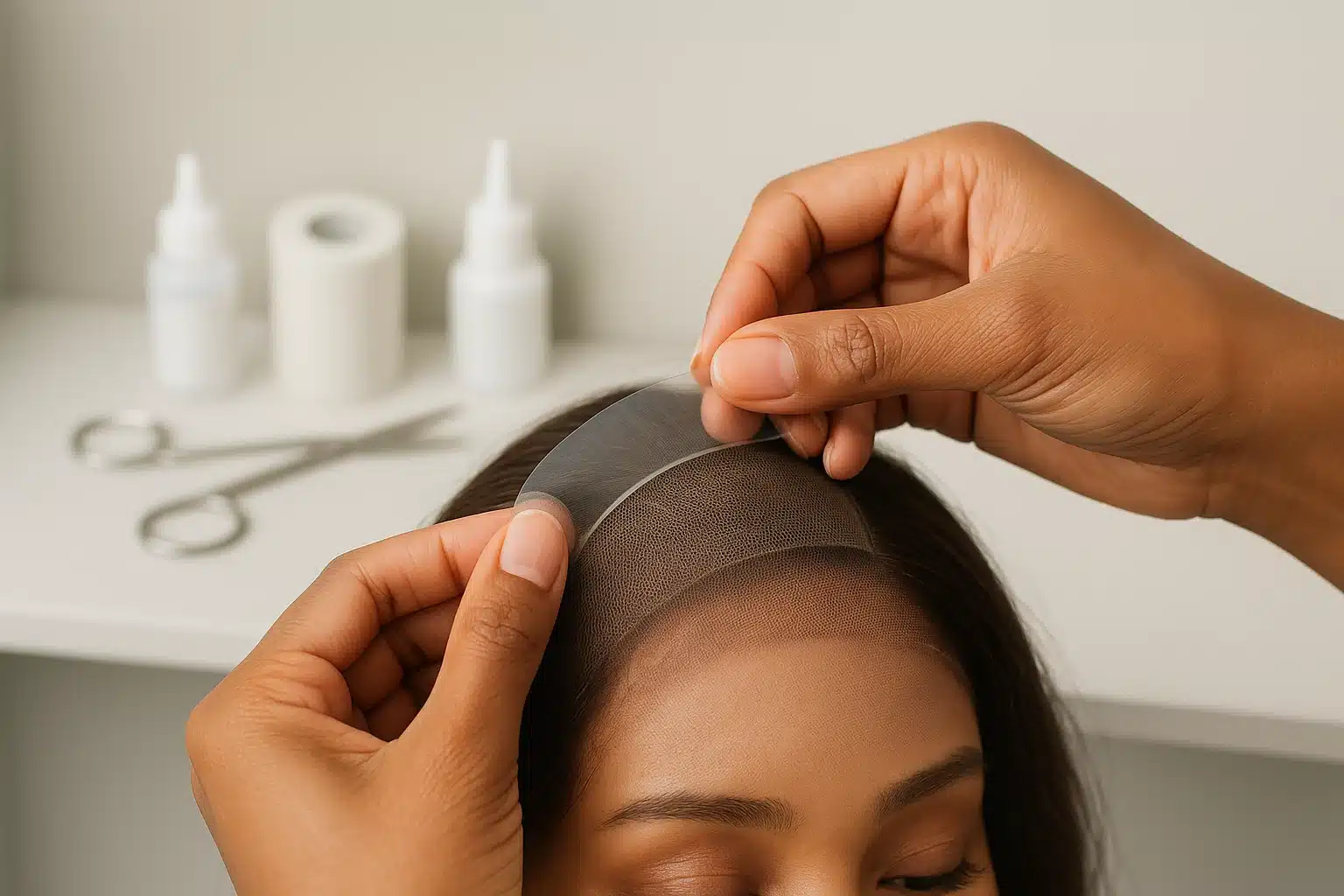
- Tapes & Contours: Double-sided wig tapes are incredible for quick applications. They come in various shapes (like CC Contours) and strengths. Costume wearers and cosplay artists rely heavily on heavy-duty perimeter tapes to support back-heavy fiber distributions.
- Glueless Anchors: If you prefer to skip adhesives altogether, velvet wig grips, elastic melt bands, and silicone grip caps use friction to keep your unit in place. If you struggle with irritation beneath your unit, finding a breathable wig cap for sensitive scalp is a game-changer for daily comfort.
- Physical Tools: Precision matters. Stock your kit with rat-tail combs for parting, edge brushes for styling baby hairs, and precision shears for cutting lace without fraying the grid.
The Little Rock Retail Directory: Where to Buy Locally
When you need supplies today, here is exactly where to look across Pulaski County, categorized by their inventory specialties:
South University / Midtown Corridor
- Taylor Made Beauty Supply (2000 S University Ave): If you are a medical hair-loss patient needing hypoallergenic adhesives or cranial prosthetic supplies, this is your local haven. They specialize in medical-grade tapes and essential cap construction supplies.
- Peacock Beauty (3901 S University Ave): A fantastic, comprehensive stop for all-around wig accessories, a wide variety of adhesives, and extension tools.
Broadway & Downtown Hubs
- Hair Plus Beauty Supply (2403 Broadway St): This location boasts an extensive inventory of liquid lace glues, daily wear tapes, and everyday wig maintenance tools. It’s highly reliable for quick restocks.
Colonel Glenn & Southwest Little Rock
- Supreme Hair & Beauty (6420 Colonel Glenn Rd): When you need premium styling accessories, from high-quality melt bands to closure caps and specialized styling tools, their inventory is top-tier.
North Little Rock (McCain / Lakewood Corridor)
- Wigs & Beauty Plus / Wig Land (Lakewood Village / McCain Blvd): A high-volume wig shop that carries excellent contour tapes and structural styling supplies. It’s a must-visit for specialized tape shapes.
Professional Grade Equipment
- CosmoProf & SalonCentric (N Rodney Parham Rd): Note: These stores typically require a cosmetology license to shop. They carry pro-grade thermal tools, professional salon shears, and specialized acrylic solvents not easily found over the counter.
Master Your Install: Essential Techniques for Beginners
Having the right tools is only half the battle. Knowing how to apply them protects your skin and your hairpiece.
The 4-Finger Hairline Alignment Rule
When installing lace front wigs, beginners often apply adhesive directly onto their natural edges—a critical mistake that leads to traction alopecia. To find the correct spatial placement, place four fingers horizontally across your forehead, starting from your eyebrows. The top of your fourth finger is generally where your lace should sit, ensuring the adhesive bonds to your forehead skin (the frontal bone) rather than delicate baby hairs.
The Physics of the Occipital Nape Slip
Does your wig constantly ride up at the back of your neck? This is known as the Occipital Nape Slip. It happens due to the flat shape of the occipital bone combined with the friction of your wig rubbing against your collar. Instead of piling on more glue at the nape, switch to mechanical friction tools—like a velvet grip band sewn into the back—to anchor the wig securely without sticky residue.
Skin Safety, Troubleshooting & Damage-Free Removal
Taking your wig off safely is just as important as putting it on securely. Ripping dried lace off your forehead without a dedicated release agent will damage your skin and tear the delicate lace grid.
Proper removal is an essential part of your routine wig maintenance to preserve both your scalp health and the longevity of the hairpiece. Always use a solvent designed specifically for your adhesive type. Citrus-based removers are excellent for breaking down water-based glues and tapes, while 91%+ isopropyl alcohol is necessary for acrylic bonds. Spray the solvent generously, wait a few minutes, and let the chemicals do the work. The lace should lift away with zero tension.
Frequently Asked Questions (FAQ)
What is the difference between wig glue and wig tape?
Liquid wig glue (adhesive) offers a seamless, flush melt against the skin, making it ideal for invisible lace frontals. Wig tape provides a slightly thicker, incredibly strong bond that is generally less messy to apply and easier to clean, though it may not look as “invisible” under ultra-thin lace.
Why did my wig glue turn white and rubbery after two days?
This is typically caused by trapping moisture during application (applying lace before the glue cures clear) or excessive sweating that breaks down the water-based emulsion. Using a scalp protector and letting thin layers dry completely prevents this.
Do I need glue for a lace front wig, or can I install it gluelessly?
You absolutely do not need glue! Glueless installations are incredibly popular and skin-safe. By utilizing velvet wig grips, elastic melt bands, and wigs with adjustable interior straps or built-in combs, you can achieve a secure, flat fit without a drop of chemical adhesive.
What is the best way to cut lace without ruining the wig?
Always use small, precision scissors (like eyebrow shears) and cut in a slight, jagged zigzag motion rather than a straight, blunt line. A zigzag edge blends into the skin seamlessly and mimics a natural, imperfect hairline.
Continue Your Journey
Understanding the science of adhesion and discovering where to source your tools locally in Little Rock empowers you to wear your hair with absolute confidence. Whether you’re dealing with hair loss, exploring protective styling, or crafting the perfect theatrical look, education is your best accessory. As you build your local toolkit, take your time, patch-test new adhesives behind your ear, and enjoy the transformative power of a perfectly applied wig.