Imagine this scenario: you’ve just invested in a beautiful new wig. You unbox it, carefully lift it from its netting, and marvel at the flawless style. But as you admire your new look in the mirror, a subtle panic sets in. How do I wash this without ruining it? What happens when the curls fall flat? If you’ve ever felt this post-purchase maintenance anxiety, you are far from alone. For many navigating alternative hair—whether driven by medical alopecia, chemotherapy, gender affirmation, theatrical performance, or a love for fashion—the steepest learning curve happens right after you bring your hairpiece home.
Thankfully, local brick-and-mortar boutiques across Dane County are transforming wig ownership from an intimidating task into an empowering daily routine. Instead of just focusing on sales, many local salons now offer incredible hands-on workshops, seminars, and personalized demonstrations. If you are looking for localized support and hands-on learning, consulting a guide to the best wig stores in Madison, WI is the perfect first step to finding a welcoming educational environment near you.
Let’s explore the robust educational landscape of wig care, debunk a few internet myths, and dive into the exact tools and techniques you need to master your crown.
Madison Educational Hubs: Beyond the Transaction
The world of wig education is often fragmented. Online video clips move too quickly, and generic articles rarely address your specific piece. In Madison, educational authority generally falls into two incredible, community-focused tiers:
- Medical and Clinical Support: Programs like the UW Health Eastpark Medical Center Wig Salon excel in compassionate, patient-centric education. If you are navigating medical hair loss, these environments teach gentle scalp preparation, basic hygiene, and the psychological transition into wearing alternative hair.
- Specialized Regional Salons: High-end local boutiques, such as Madison’s Julia Grace Salon, offer private, compassionate fitting consultations. These specialized hubs are fantastic for learning about distinct fiber grades—from Kanekalon Vibralite® and Tru2Life® heat-friendly synthetics to certified Remy hair—while navigating important local nuances like Wisconsin DOT photo ID guidelines for headwear.
By taking advantage of these local resources, you transition from simply wearing a wig to truly understanding it.
Foundational Tool Lab: Equipment Mastery
One of the biggest hurdles beginners face is using the wrong tools for the right job. A classic example is misunderstanding the difference between a wig stand for styling and a canvas wig head for styling.
The Collapsible Wire Stand vs. The Canvas Block
- The Wire/Plastic Wig Stand: This open-air frame is your drying best friend. Because it is hollow, it allows air to circulate through the inside of the cap, ensuring the hairpiece dries quickly and evenly. More importantly, it won’t stretch out the delicate elastane in your wig cap when the fibers are weighed down by water.
- The Cork Canvas Head: If you are trying to brush, steam, or style your wig on a flimsy wire stand, you’re likely chasing it across your table. A solid cork canvas block—anchored to your desk with a C-clamp and secured with T-pins at the ear tabs and nape—is mandatory for tension styling.
Whether you are maintaining everyday affordable wigs or a premium customized piece, matching your equipment to the task prevents premature stretching and damage.
The Science of Cleansing: Debunking the Dish Soap Myth
A quick search for “how to wash a synthetic wig” will inevitably lead you to forums suggesting household detergents like Dawn dish soap or fabric softener. Stop right there.
While these internet “hacks” seem logical, they are structurally disastrous for modern wigs. Synthetic hair is composed of extruded modacrylic fibers coated in a specific silicone finish. Household dish soaps contain heavy surfactants designed to aggressively strip grease. When applied to a wig, these chemicals strip the protective factory coating, leaving the fibers statically charged, prone to matting, and irreversibly dull. Furthermore, traditional leave-in conditioners meant for human hair wigs will just sit on top of synthetic fibers, creating a sticky, frizzy film.
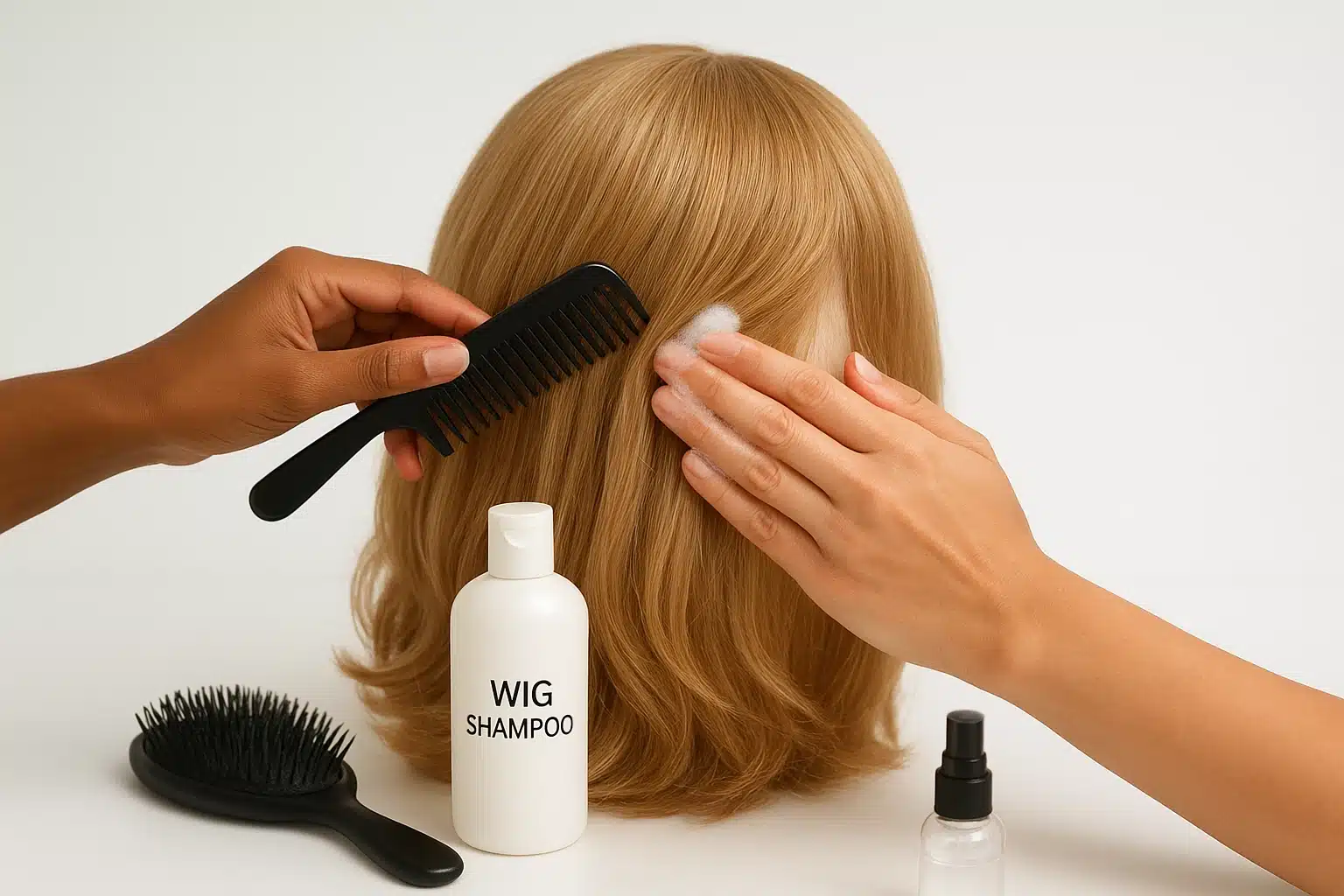
Instead, opt for specialized synthetic wig shampoos that cleanse gently using a cold-water soak technique. Swish the hair gently—never wring or scrub—and always blot dry with a microfiber towel.
The 5 Basic Tips for Wig Styling & Daily Longevity
To help you get the most life out of your hairpiece, industry professionals swear by these 5 basic tips for wig styling:
- Never style or brush while damp: Wet fibers—both human hair and synthetic—have compromised tensile strength. Brushing them wet causes permanent stretching and breakage.
- Work strictly bottom-to-top: Using a wide-tooth comb or metal prong brush, start detangling at the very ends and slowly work your way up to the roots to prevent compounding knots.
- Lock synthetic fibers with cooling cycles: Synthetic hair is essentially thermoplastic. It doesn’t set when heat is applied; it sets as it cools. Use heat to shape, but pin the curl and let it cool completely to lock the style.
- Cleanse sparingly: Only wash your wig every 8 to 12 wears. Over-washing is the fastest way to degrade the fiber’s lifespan.
- Match drying supports to cap elasticity: Always dry on a collapsible stand to prevent the ear tabs and nape from permanently sagging.
These rules are vital across the board, but they are especially critical if you are trying to preserve the delicate bounce and volume of curly lace front wigs, which can easily lose their pattern if combed aggressively or exposed to the wrong temperatures.
Hands-On Styling Masterclass: Cap Fitting to Cosplay
Education shouldn’t stop at just keeping the wig clean. Understanding the mechanics of styling and fitting is where the magic happens.
Cap Fitting Geometry: The “Four-Finger” Rule
One of the most common beginner mistakes is pulling a wig too far down on the forehead, creating an unnatural look. The golden standard taught in local workshops is the “Four-Finger Benchmark.” Place four fingers horizontally across your forehead, resting your pinky on your brow bone. Your index finger marks the exact natural placement for your wig’s front hairline.
Advanced and Theatrical Techniques
Local education isn’t just for daily wearers. Madison is home to a thriving theatrical community and UW-Madison drama programs where users desperately need wig styling tips cosplay enthusiasts swear by. Cross-discipline techniques are highly valuable:
- Low-Heat Re-texturizing: Using a handheld garment steamer (which safely keeps temperatures well below the 280°F danger zone for heat-friendly synthetics) to smooth out “friction frizz” that develops at the collar line.
- Structural Crimping: For cosplay and theatrical styles that require gravity-defying volume, workshops teach how to crimp the base layers of the wig to create a structural foundation, allowing you to tease the hair without destroying the delicate cap mesh underneath.
Navigating In-Person and Hybrid Wig Styling Classes Online
Ready to take your skills to the next level? When seeking out local workshops in Dane County, always ask a few vital questions before booking:
- Do they offer hands-on practice, or is it just a visual demonstration?
- Are they experienced with your specific fiber type (e.g., heat-friendly Tru2Life® vs. Remy Human Hair)?
- Do they teach cap customization and perimeter taping?
If local in-person sessions don’t fit your schedule, there are numerous hybrid wig styling classes online that will actually ship a foundational tool kit—including a canvas head, T-pins, and styling products—straight to your door, allowing you to follow along interactively from home.
Frequently Asked Questions (FAQ)
How do I wash a synthetic wig without making it frizz or matte?
Never use hot water or household detergents. Fill a basin with cold water and a capful of synthetic-safe wig shampoo. Gently submerge and swish the wig—do not scrub or wring it. Rinse in cold water, blot with a towel, and let it air dry completely on an open-wire stand before brushing.
What is the physical difference between a wire wig stand and a canvas wig head?
A wire stand is hollow and collapsible, meant solely for air-drying a wet wig without stretching the cap. A cork canvas block is a heavy, solid head meant to be clamped to a table so you can pin the wig down for tension brushing, steaming, and advanced styling.
How can I fix the frizzy, matted hair at the nape of the neck?
This is known as “friction frizz,” caused by the synthetic fibers rubbing against your collar and body heat. You can rescue the fibers by pinning the wig to a canvas head, applying a heat-protectant detangler, and gently running a garment steamer over the ends while combing through with a wide-tooth comb. (Always ensure your wig is heat-friendly before applying steam).
How do you repair frayed HD lace fronts?
Repairing delicate lace fronts requires ventilated lace needles and specialized knotting techniques. Because this involves re-tying individual hairs into the microscopic mesh, this is a repair best learned in an advanced hands-on masterclass or handled by a professional wig technician.
Your Lifelong Learning Journey
Transitioning into alternative hair is an incredibly personal journey, but it doesn’t have to be a solitary one. By stepping out of the online forums and into local Madison workshops, you gain the hands-on confidence to make any hairpiece truly your own. Whether you’re mastering the four-finger rule for a natural hairline or learning how to steam-set curls for a theatrical debut, the right education transforms a simple hairpiece into your daily crown.