Imagine stepping into a beautiful hair boutique in Wicker Park or the Near South Side. The shelves are lined with stunning styles, the lighting is warm, and you’re ready to finally find a piece that makes you feel like yourself again. But as you run your hands over the hair, a wave of overwhelm hits.
How do you know if it will look natural in the harsh daylight of a Chicago winter? Will the lace irritate your scalp? Why does one wig cost $150 and the one next to it cost $2,500?
When you’re shopping for hair in person, you have a massive advantage over online buyers—you can actually touch, inspect, and test the construction before making an investment. However, most buyers don’t know exactly what to look for beyond “does the style look nice?”
Whether you’re exploring high-quality wigs in chicago il for fashion, convenience, or medical hair loss, this guide will give you the tools of a seasoned expert. We’re going to break down exactly how to evaluate lace fronts and monofilament tops in-store, so you can shop with absolute confidence.
Decoding the Foundation: Lace Fronts vs. Monofilament Tops
Before we get into the tactile tests, it helps to understand the two features that contribute most to a realistic look. If you’ve been looking into different types of wig caps, you’ve likely seen these terms everywhere.
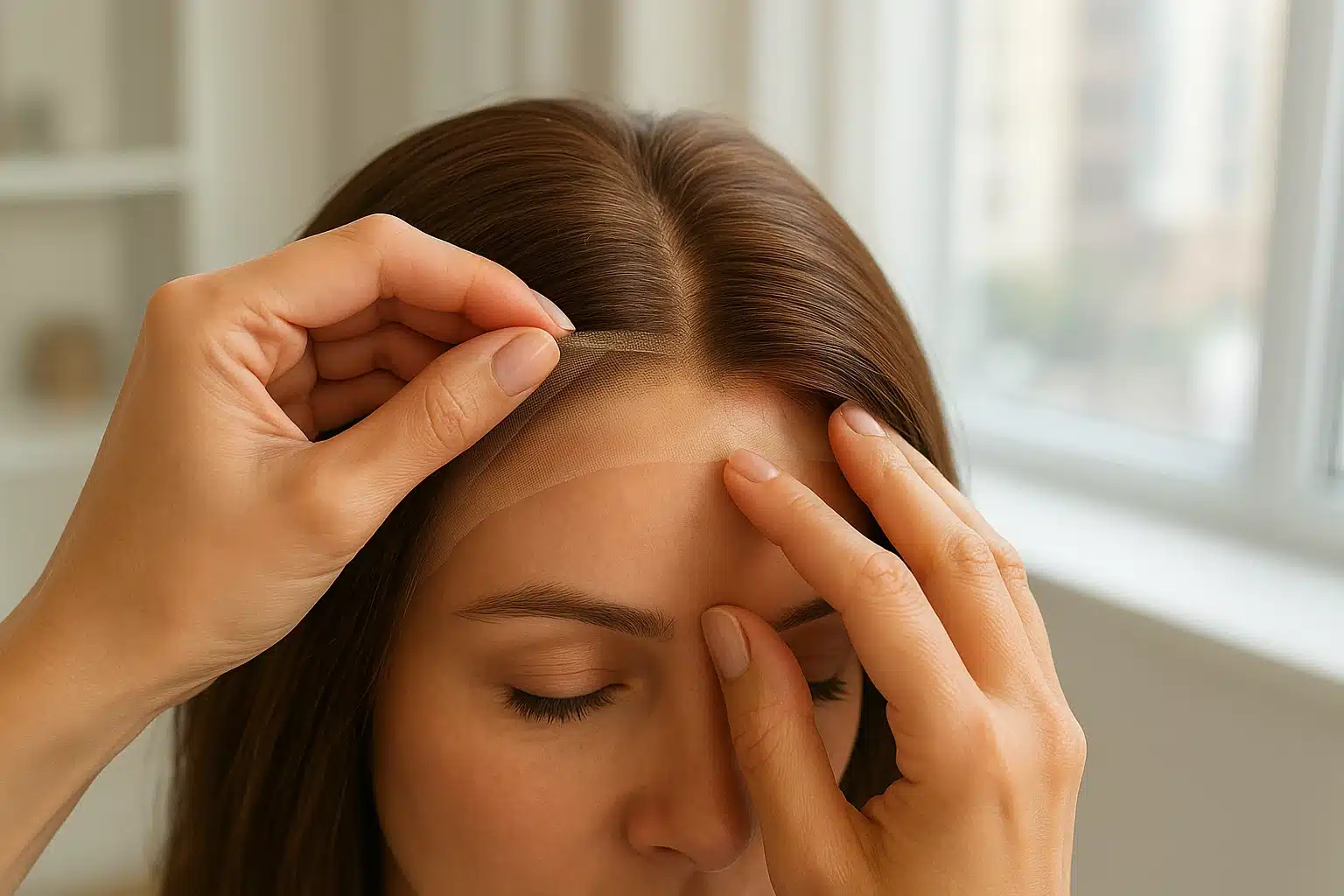
The Lace FrontA lace front is a delicate mesh material located exclusively at the front hairline (usually extending 0.5 to 2.5 inches deep). Its sole purpose is to create the illusion that hair is growing directly out of your scalp along the forehead, allowing you to style the hair off your face.
The Monofilament Top (Mono Top)While the lace front handles the hairline, a monofilament top covers the crown and parting area. It’s made of a sheer, breathable mesh where individual hairs are hand-tied. This allows you to part the hair in multiple directions while mimicking the look of natural scalp growth.
The Micro-Mechanics of Realism: What Makes a Wig Look “Wiggy”?
Have you ever seen a wig that just looked off, even if you couldn’t put your finger on why? It usually comes down to two microscopic details that you can easily spot if you know what to look for.
1. The Density Gradient
Natural human hair never grows at 100% fullness right at the very edge of the hairline. A high-quality lace front will feature an irregular, graduated transition. It should start at about 60–80% density at the very front micro-perimeter and slowly taper up to 120–130% behind the first centimeter. If you pick up a wig and see a blunt, solid “wall of hair” at the front, put it back. That is the number one visual cue of a poorly constructed hairline.
2. The Knotting Method
When you look closely at the root of a hand tied human hair wig, you will see tiny knots where the hair is secured to the lace.
- Single Flat Knots: These are hyper-realistic and look like tiny, imperceptible dots. They are more delicate but offer the most natural appearance.
- Double Knots: These are highly durable, but they can create bulky, dark “pepper spots” across your parting space.
- Bleached Knots: Premium wigs will often have the knots lightly bleached to remove the dark pigment, making them blend seamlessly with your skin tone. If you see distinct black dots resembling blackheads along a blonde lace front, the knots are unbleached.
The Chicago Salon 7-Point Hands-On Inspection Protocol
Next time you are in a fitting room, use this field-tested protocol to ensure you are getting premium quality.
1. The Window Walk (The Lighting Check)
Commercial salon spotlights are notoriously deceiving. Often, salons use 3000K warm halogen or 4000K high-glare LED lights. These lights bleach out the synthetic shine and can easily mask grayish, poorly matched lace edges.
The Test: Ask your consultant for a handheld mirror and walk to the front window. You need to assess the hairline and color under natural Chicago daylight (5500K–6500K) to know exactly how it will look out on the street.
2. The Forehead Drape (Melt & Shear Test)
Not all lace is created equal. High-Definition (HD) film lace is incredibly thin and melts beautifully into the skin, but it is fragile. French lace is slightly thicker and more durable, but if not customized well, can leave a visible rim.
The Test: Lay the untrimmed lace flat against your forearm or forehead. Does the undertone match your skin (warm, neutral, cool)? Does the lace feel stiff and scratchy, or soft and pliable?
3. The Parting Grid Inspection
For those seeking medical wigs due to chemotherapy or severe alopecia, scalp sensitivity is a major factor. Single monofilament offers great breathability but can cause friction on a bare scalp. Double monofilament (or a silk top) uses an ultra-soft glass-silk layer to protect the scalp from knot irritation.
The Test: Part the mono top in three different places. Does the mesh mimic a natural scalp, or does it look like a visible grid canvas? Run your fingers inside the cap—if it feels rough and you have a sensitive scalp, you need a double mono construction.
4. The Cap Stretch & Recovery Check
A wig is a wearable garment; it needs to fit securely without giving you a headache.
The Test: Gently stretch the cap along the occipital bone (the back of the head) and the ear tabs. It should have strong elastic memory, snapping back into place smoothly without the structural stays flaring outward.
5. The Friction & Coat Finger-Glide
Sometimes, lower-quality synthetic fibers are coated in an alkaline silicone layer to make them feel silky smooth in the store. After two washes, this coating strips away, leaving you with dry, brittle hair.
The Test: Run your fingers firmly from the roots to the ends. If the hair feels unnaturally slippery or leaves a residue on your fingers, it may be over-coated.
6. Ear-Tab Symmetry & Metal Stay Flex
The ear tabs sit right at your temples and help the wig lay flat. They usually contain small, bendable metal stays.
The Test: Put the wig on. Ensure the pliable wire stays contour flush against your temples without digging in. If you wear glasses, check that the stays don’t painfully press your eyeglass arms into your head.
7. The Chicago Climate Calibration
Your wig needs to survive the Midwest.
- Winter (Dec–March): Forced radiator heat creates incredibly dry indoor air, while heavy wool coats cause friction-frizz at the nape of the neck.
- Summer (June–Aug): Lake Michigan humidity easily pushes past 75%, making cheap human hair puff and tangle, and causing heavy lace adhesives to slip.
The Test: Factor the climate into your purchase. If we are entering winter, consider a style with shorter lengths (like a lob or bob) that clears your heavy winter coat collar, and ensure you brush up on proper wig maintenance for dry climates. For summer, prioritize breathable single monofilament tops and open-wefted sides.
Navigating Local Chicago Boutiques Like a Pro
Going to a physical store allows you to ask the right questions before paying a deposit. If you are looking into custom hair wigs for alopecia in chicago, it’s essential to understand the salon’s capabilities and policies.
Before you checkout, ask the consultant:
- “Is lace trimming, plucking, and steam customizing included in this price?”
- “Do you stock medical-grade cranial prostheses, and can you provide the necessary paperwork for insurance reimbursement?”
- “What is your exact policy on alterations if the cap feels too loose after a few hours of wear?”
A reputable salon built on compassionate care and deep industry expertise will welcome these questions with open arms.
Frequently Asked Questions (FAQ)
What is the difference between single and double knots?
Single knots tie a single hair strand to the lace, creating a tiny, realistic dot at the “root.” They look incredibly natural but can shed faster. Double knots tie multiple hairs with a thicker knot. They are much more durable but can look like dark dots on the scalp if they aren’t bleached.
Can I wear a lace front wig without using glue?
Absolutely. Many modern lace front wigs are designed to be worn entirely glueless. They utilize secure tension clips, adjustable nape straps, and sometimes a silicone perimeter or velvet-grip band to stay firmly in place without the need for adhesives.
Why does my synthetic wig get so frizzy at the neck during winter?
This is a classic Chicago winter issue! The friction of the synthetic fibers rubbing against heavy wool winter coats, combined with dry static from radiator heating, causes the hair to tangle and mat. Using anti-static conditioning sprays and opting for styles that sit above the collar can prevent this.
Is it okay to pluck the lace front myself?
While you can customize a hairline by plucking it, beginners should be incredibly cautious. Plucking too aggressively near the temples can easily tear fragile Swiss or HD lace. It’s often best to let a professional stylist handle the initial customization.
Your Next Steps
Evaluating alternative hair doesn’t have to be intimidating. By understanding the density gradient, checking the knotting under natural light, and doing a quick stretch-and-feel test in the fitting room, you’re transforming yourself from a vulnerable shopper into an educated buyer.
Remember, finding the perfect piece is a journey, and you deserve a product that offers both beautiful realism and long-lasting comfort. Keep this guide handy on your phone the next time you visit a boutique, take your time in the mirror, and never be afraid to step over to the window to see how you truly look in the light of day.