Imagine this: You’ve just invested in a gorgeous, high-quality wig. Whether you’re navigating the vulnerable journey of medical hair loss or simply looking to change up your daily style, stepping out of the salon or unboxing that piece feels incredible.
But fast forward 30 days. The delicate lace edge is fraying, the fibers are inexplicably frizzy at the nape of your neck, and the cap feels strangely stretched out.
What went wrong?
More often than not, the culprit isn’t the wig itself—it’s the hidden cost of “bare” wig ownership. Spending hundreds or even thousands on a beautiful piece without the proper supporting cast of accessories is like buying a luxury sports car and never changing the oil.
To protect your investment, you need a foundational understanding of wig physics and the right tools. Today, we’re going to demystify wig care and take you on a curated tour of the best places in San Francisco to build your ultimate wig maintenance toolkit.
The Cap Chemistry Framework: Why Accessories Make or Break Your Wig
Human hair cuticles and synthetic extruded polymers behave entirely differently, meaning they require vastly different care protocols. Before you go shopping, you need to know exactly why certain tools are non-negotiable.
The Great Wig Stand Debate
If you take away just one piece of advice today, let it be this: Do not dry a wet wig on a solid styrofoam head.
When figuring out how to store wigs correctly, you have to consider aeration. Placing a soaking wet cap onto a solid styrofoam block traps moisture against the base. This harbors mildew, produces foul odors, and permanently over-stretches the elastic bands.
Instead, follow this simple Wig Stand Decision Tree:
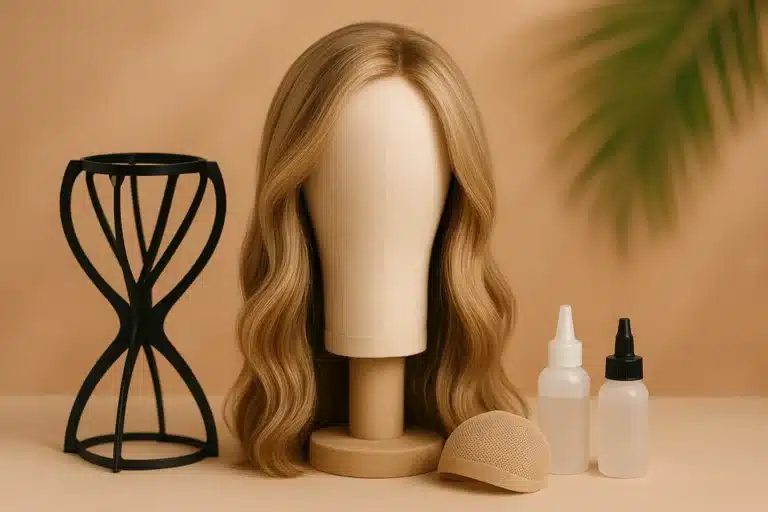
- Is the wig wet? You need a collapsible open-air plastic or wire stand to allow 360-degree airflow.
- Are you styling or hot-combing? You need a solid canvas block head paired with a table clamp and T-pins to anchor the piece securely.
- Need a quick overnight rest? A breathable, simple wig peg or collapsible stand works perfectly.
Brushing Physics: Why Your Regular Hairbrush is the Enemy
It’s tempting to reach for your everyday cushion brush, but standard hairbrushes have tiny, rounded ball-tips on the end of the bristles.
Here is the snag mechanism: Wigs—especially lace fronts—are created by hand-tying tiny monofilament knots into delicate Swiss lace. Those little ball-tips catch and hook onto these fragile knots, literally ripping the hair out of the lace and creating permanent bald patches.
The solution is a loop brush. Because the metal or nylon bristles curve smoothly back into the base in a continuous loop, they glide effortlessly over the lace junctions without ever catching a knot.
Adhesives and the San Francisco Microclimate
San Francisco’s famously diverse microclimates—the foggy, humid mornings in the Richmond District versus the sunny, warmer afternoons in the Mission—directly impact your wig adhesives.
Humidity naturally softens water-based copolymer bonds (like Ghost Bond), meaning a foggy SF morning might compromise your hold. If you require absolute security, poly-acrylic solvent-based adhesives or double-sided lace tapes (like Walker No-Shine) offer more resilience against moisture.
If you are dealing with a sensitive scalp or undergoing chemotherapy, you’ll want to pivot toward hypoallergenic hairpiece adhesives or skip glue entirely in favor of a silicone wig grip, which uses gentle friction to secure the cap without chemical contact.
Step-by-Step Styling & Maintenance Protocols
Thermal Rules for Synthetic Wigs
“Heat-friendly” is not the same as “heat-proof.” A common mistake is applying a dry flat iron to a synthetic wig at over $300. This causes immediate plastic polymer shrinkage, resulting in a melted, frizzy mess.
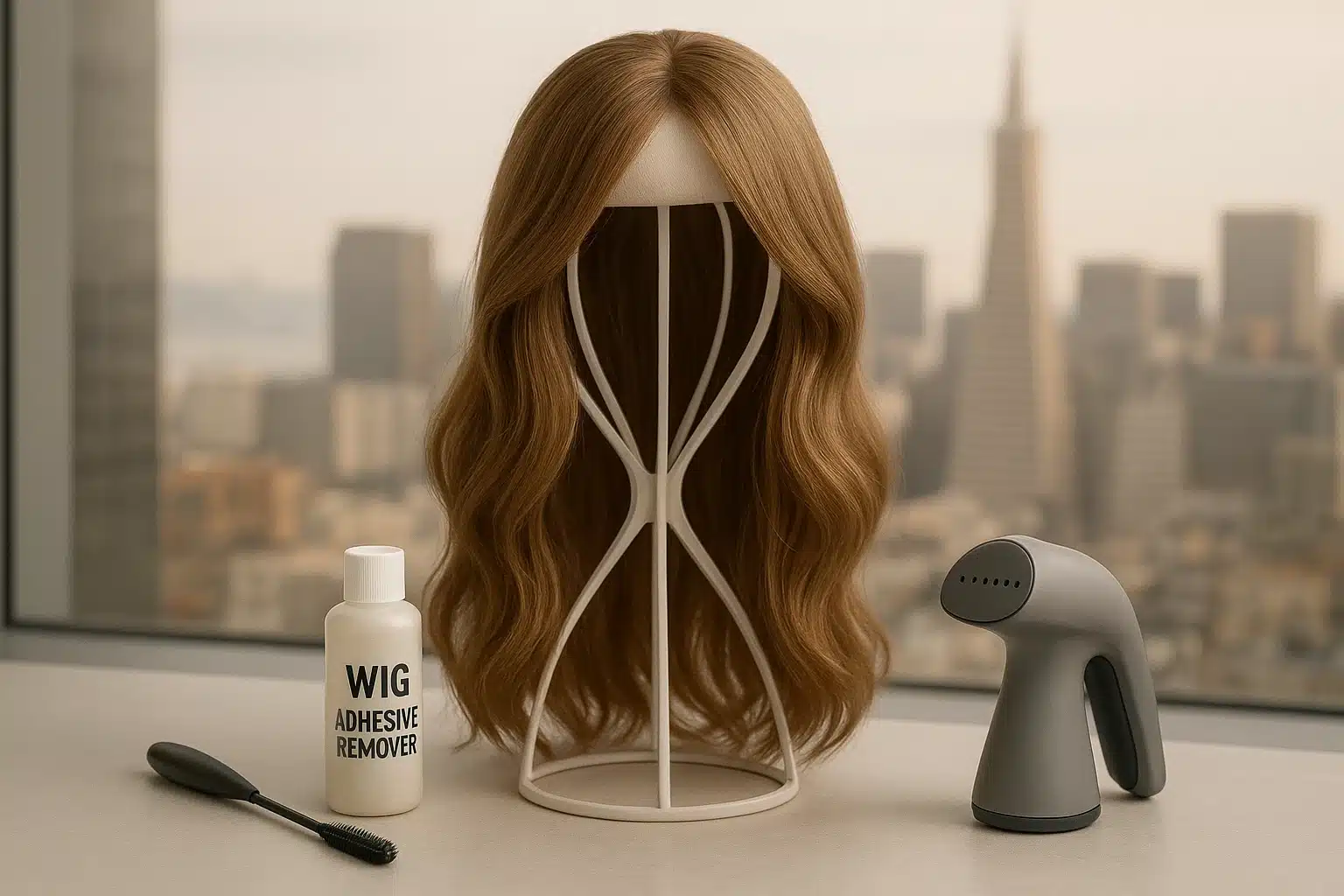
The Golden Rule for Synthetic Hair: Never exceed $284 – $140. Pro-Tip: To reset frizzy synthetic fibers (especially the friction-prone hair at the nape of the neck), use a handheld fabric steamer paired with a wide-tooth comb. The steam safely smooths the plastic polymers without direct metal contact.
Safe De-Bonding: Saving Your Edges
Tearing off a glued wig at the end of the day without a solvent is a guaranteed way to stretch the lace and accidentally pull out your natural hairline. Finding the best way to remove wig glue is an essential step in your routine. Always use a citrus or alcohol-based adhesive remover (like C-22). Let the solvent sit and dissolve the polymer bonds until the lace lifts away with zero traction.
The Four-Finger Golden Ratio
Struggling with positioning? Use the Four-Finger Rule: Rest four fingers flat horizontally on your forehead, just above your brow bone. Your wig’s lace front should begin exactly at the top of your top finger. This ensures natural anatomical balance, preventing the dreaded “shortened forehead” look.
The San Francisco Neighborhood Sourcing Directory
Now that you know what to look for, where do you find these specialized tools in the Bay Area? Skip the generic aggregators—here is your ground-level San Francisco shopping playbook.
1. Beauty Supply Warehouse (Western Addition)
Location: 1440 Fillmore St
The Vibe: The ultimate mega-depot.
Best For: Structural hardware. If you need 21–23 inch canvas cork heads, heavy-duty table clamps, T-pins, electric hot combs, and bulk adhesives, BSW is your primary destination. It’s easily accessible via the 38 Geary or 22 Fillmore MUNI lines.
2. Trendy Hair Gallery & Beauty Supply (SoMa)
Location: 925 Howard St
The Vibe: Expert guidance and professional application.
Best For: Bridging the gap between retail and salon. This is the place to go if you need live advice on the “Glue vs. Grip” trade-off. Their experts can help you match adhesives to your specific skin sensitivities and even provide custom cap adjustments.
3. Hansen Fontana (Union Square)
Location: 450 Sutter St, Suite 704
The Vibe: Private, compassionate, and medically focused.
Best For: Cranial prosthetics and sensitive scalps. For those experiencing alopecia or undergoing chemotherapy, harsh retail glues aren’t an option. Hansen Fontana specializes in hypoallergenic medical adhesives, custom toupee tapes, and ultra-gentle scalp solutions in a discrete environment.
4. T.G.I.F. Beauty Supply (Portola)
Location: 2714 San Bruno Ave
The Vibe: A reliable, welcoming community staple.
Best For: Building your daily maintenance kit on a budget. They consistently stock affordable collapsible drying stands, essential loop brushes, lace tint sprays, and silicone smoothing serums to protect your synthetic fibers from the city’s damp fog.
5. CAN Beauty Supplies (Excelsior)
Location: 4696 Mission St
The Vibe: Strong neighborhood supply store.
Best For: Basic care essentials. When you realize you’re out of adhesive remover or you urgently need replacement combs and wig caps before an event, CAN Beauty is a lifesaver in the southern part of the city.
Frequently Asked Questions (FAQ)
Do I really need a special brush, or can I use my regular hairbrush?
You absolutely need a special brush. Regular brushes have tiny balls on the end of the bristles that will hook onto the delicate hand-tied knots of your wig, ripping the hair out and causing bald patches. Always use a specialized loop brush or a wide-tooth comb.
How do I dry a washed wig without stretching the cap or trapping mildew?
Never dry a soaking wet wig on a solid foam or canvas head. Use a collapsible open-air wire or plastic stand. This allows 360-degree airflow, drying the cap thoroughly without stretching the elastic bands or trapping mildew-causing moisture.
Is wig glue or a silicone wig grip better for sensitive scalps?
If you have a sensitive scalp, a silicone wig grip is generally much safer than liquid adhesives. Grips use natural friction to hold the wig securely in place without chemical contact. If you must use tape or glue, ensure it is a medical-grade, hypoallergenic option and always perform a 24-hour patch test behind your ear.
What temperature can heat-friendly synthetic wigs tolerate before melting?
While human hair can handle higher heat, “heat-friendly” synthetic fiber usually tops out at $284 – $140. Going above $300 with a dry flat iron will melt and frizzle the plastic polymers. When in doubt, use a handheld steamer instead of direct heated metal.
Next Steps: Continuing Your Wig Journey
Mastering your wig care toolkit is the first major milestone in your hair journey. By understanding the physics of your piece and curating the right accessories from San Francisco’s top local suppliers, you transform a fragile hairpiece into a long-lasting, beautiful staple of your daily routine.
Your education doesn’t have to stop at the city limits. Hair care is a universal language, and having a trusted resource makes all the difference, whether you’re eventually seeking out a reputable wig store grand rapids while traveling, or researching how to source the best wigs in baltimore for a friend.
Take inventory of what you currently have at home, print out a checklist of the gaps in your toolkit, and plan a weekend trip to one of these stellar local shops. Your wig—and your confidence—will thank you!