When you are facing a temporary need for a wig—whether due to a medical transition like chemotherapy, a bout of telogen effluvium, or simply for a special event—the price tag of high-end hair systems can feel overwhelming. There is a common misconception that in order to look natural, you must invest thousands of dollars in human hair. This belief often leads to unnecessary financial stress during an already difficult time.
The reality of the modern hair industry is quite different. For short-term use (3 to 6 months), a high-quality synthetic option is often the superior engineering choice, offering benefits that expensive human hair cannot match. When budgeting for your perfect wig, the goal isn’t just to spend less; it’s to understand where the true value lies. By focusing on specific construction features and learning a few professional styling hacks, you can achieve a flawless look without the long-term investment.
The Temporary Use Mindset: Why “Less” Can Be More
If you are looking for a hair solution for a defined period, human hair wigs can actually be a burden. They react to weather, frizz in humidity, and require significant time to style after every wash.
For the temporary wearer, synthetic fiber offers a “set-it-and-forget-it” advantage known as “Style Memory.” The curl pattern or straight style is baked into the fiber. You can wash it, air dry it, and shake it out, and it snaps back to its original style. This means you aren’t paying for the hair itself; you are paying for the freedom from daily styling.
Navigating the “Big 3” of Budget Fibers
Not all non-human hair is created equal. Understanding the fiber technology is the first step in ensuring your budget purchase doesn’t look like a “costume” piece.
- Traditional Synthetic: These are the most affordable and hold their style permanently. However, they have a distinctive shine that needs to be managed (more on that later).
- Heat-Friendly Synthetic: These fibers lack the artificial shine of traditional synthetic hair and allow you to use low heat tools. They are incredibly realistic but require more maintenance to prevent friction tangling.
- Synthetic Blends: A mix of human and synthetic hair. These offer natural movement but typically sit at a higher price point.
If you are new to synthetic wigs, sticking to a high-quality traditional fiber for temporary use is often the sweet spot between durability and cost.
The Foundation First Rule: Comfort on a Budget
A common complaint with affordable wigs is that they feel itchy or hot. Often, this isn’t a fault of the fiber, but a mismatch in cap construction.
When you cannot afford a hand-tied cap (the most expensive construction), you can still achieve comfort with basic caps by using the “Silk Scarf Barrier” hack. Wearing a soft bamboo or silk liner underneath a basic cap creates a barrier between the wefts and a sensitive scalp. This is particularly crucial for medical patients whose scalps may be hypersensitive.
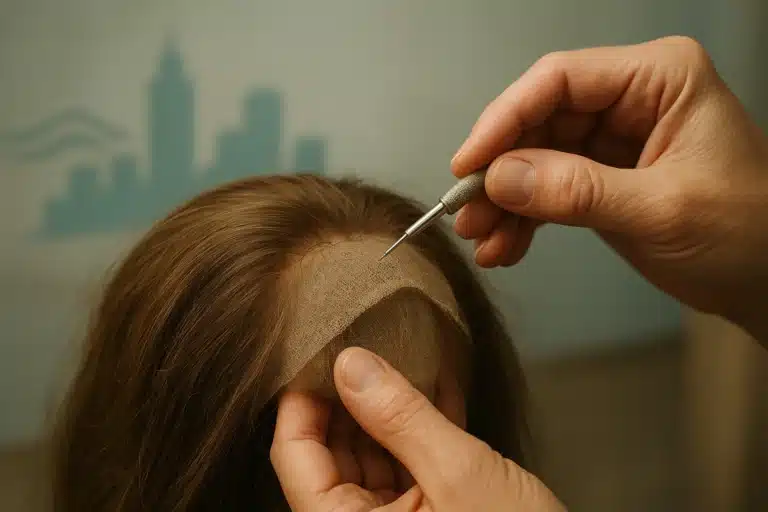
Furthermore, understanding the types of wig caps available allows you to prioritize spending. For example, if you have bangs, you do not need to pay extra for a lace front, as the hairline will be covered. Investing that money into a monofilament part (which makes the part look like real skin) is a smarter allocation of funds.
The Realism Workshop: How to Make a Budget Wig Look Premium
The difference between a wig that looks “wiggy” and one that looks undetectable is usually about 20 minutes of customization. You do not need a professional stylist to do this; you just need to know the tricks of the trade.
1. The Four-Finger Rule
One of the biggest giveaways of a wig is wearing it too low on the forehead. To find your natural hairline, place four fingers flat against your forehead, starting from your eyebrows. Your wig’s hairline should sit right where your top finger ends.
2. The Shine Solution
New synthetic fibers can sometimes reflect too much light. A simple fix is the “Dry Shampoo Method.” Lightly misting the hair with dry shampoo dulls the artificial sheen and gives the fiber a texture that mimics natural hair growth.
3. The Concealer Part
If your wig has a part, use a small angled brush to apply a tiny amount of concealer (matching your skin tone) along the parting line. This creates the illusion of a scalp and is a cornerstone of wig customization diy techniques.
Extending the Lifespan: Maintenance Myths vs. Reality
When working with a tighter budget, longevity is key. A standard synthetic wig should last 3 to 6 months with daily wear, but simple mistakes can shorten this to weeks.
The Safety/Heat Paradox:Many budget-conscious wearers accidentally ruin their wigs in the kitchen. A sudden blast of heat from opening an oven door or standing over a boiling pot can singe synthetic fibers instantly (a phenomenon known as “frizzing”). If you cook while wearing your wig, wrapping it in a turban is a vital safety measure.
The Wash Cycle:Over-washing is the enemy of longevity. Unlike biological hair, wigs do not produce oils. They only need to be washed every 6 to 8 wears. When you do wash, avoid standard drugstore shampoos, which contain sulfates that strip the coating off synthetic fibers. Proper wig maintenance requires cool water and products formulated specifically for synthetic hair to keep the fibers soft and mobile.
Financial Navigation: The “Cranial Prosthesis” Factor
If your hair loss is medical, you may be able to offset the cost of your wig through insurance. Many insurance providers do not cover “wigs” (viewed as cosmetic), but they do cover a “Cranial Prosthesis” (viewed as a medical necessity).
Ask your doctor to write a prescription specifically using the term “Cranial Prosthesis” along with the specific medical code for your condition (such as Alopecia or Chemotherapy-induced hair loss). While not all budget-friendly retailers process insurance directly, having this documentation can allow you to file for reimbursement or use an HSA/FSA card for the purchase.
Frequently Asked Questions
Can I sleep in my affordable wig?
It is not recommended. Friction is the enemy of synthetic fiber. Sleeping in your wig causes tangling and matting that can permanently damage the style. If you need coverage at night, a soft sleep cap is a better alternative.
Why do the ends of my wig feel rough after a few weeks?
This is caused by friction against your clothing (collars and scarves). It is normal wear and tear. Using a wide-tooth comb and a detangling spray daily can help manage this.
Can I dye a synthetic wig?
Generally, no. Synthetic fibers are like plastic; they do not absorb color like human hair. It is best to purchase the color you want rather than attempting to alter it later.
Moving Forward with Confidence
Finding a wig on a budget doesn’t mean you have to compromise on feeling beautiful. By choosing the right fiber for your needs, mastering a few placement techniques, and caring for the hair correctly, you can navigate your hair loss journey with confidence and grace. The “perfect” wig isn’t necessarily the most expensive one—it’s the one that allows you to forget you’re wearing it and get back to living your life.