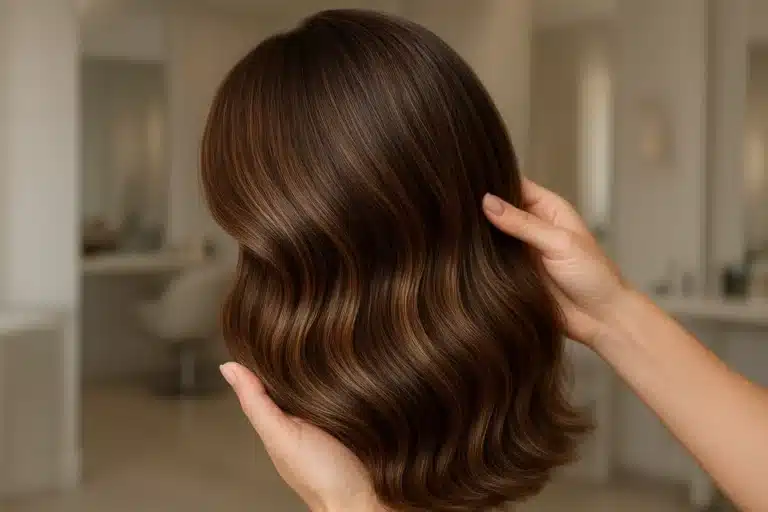
Have you ever fallen in love with a hair color on your screen, only to feel a wave of hesitation before clicking “add to cart”? You aren’t alone. One of the most common anxieties we hear from our community involves the “Monitor Mirage”—the fear that the stunning chestnut shade you see online will arrive looking more like a stark raven black in your living room lighting.
This challenge is unique when navigating the world of Beautrium. Unlike standard brands that stick to universal color codes, Beautrium treats color as an art form, using a nomenclature that can feel like a secret language. While this results in breathtakingly realistic depth and dimension, it can be intimidating for a first-time wearer. Whether you have already read our complete guide to Beautrium wigs or are just discovering the brand today, understanding their specific color philosophy is the key to unlocking a look that feels authentically you.
The Science of Sight: Why “Standard” Matching Fails
If you are coming from a background of buying box dye at a drugstore or ordering standard wigs, you are likely used to a simple numerical scale: 1 is black, and 10 is the lightest blonde. While helpful for a general baseline, this system fails to capture the complexity of high-end alternative hair.
Natural hair is never just one flat color. It is a mosaic of lowlights, highlights, sun-bleached tips, and darker roots. Beautrium’s approach mimics this biological reality. They don’t just dye fibers; they blend them. A single Beautrium shade might contain four to six different pigments woven together to create what we call “Atmospheric Tone.”
This is why a standard color chart often falls short. You aren’t looking for a single number; you are looking for a blend that resonates with your skin’s natural undertones and your personal aesthetic.
Decoding the Beautrium Palette
To find your perfect hue, we need to translate the brand’s artistic names into technical terms you can use. Think of this section as your “Rosetta Stone” for navigating their unique collections.
The “Loon” Collection: More Than Just a Name
When you see a color labeled with “Loon,” you are looking at a sophisticated interplay between a base level and a tonal shift. It helps to think of these not as random names, but as specific recipes.
- Loon 126: This is often a point of confusion for beginners. It isn’t a random number; it generally represents a specific base level (often in the medium-to-light brown range, around a Level 8) paired with a distinct atmospheric tone. It offers a softness that standard browns lack.
- The Atmospheric Shifts (Typhoon & Reloaded): Colors like “Loon Typhoon” or “Reloaded” suggest movement. These shades are designed to look dynamic under different lighting conditions, mimicking how natural hair reflects the environment around it.
The “Lumon” & “Severance” Connection
Here is where Beautrium gets truly fascinating. The brand often uses thematic elements that align with the “4 Tempers”—a concept that can actually help you determine if a color will suit your complexion. You can use these temperaments as a mnemonic device for undertones:
- Dread & Malice (Cool Tones): While the names sound intense, in color theory, these correspond to cool, ash, or icy undertones. If you look better in silver jewelry and have veins that appear blue, shades in this spectrum will likely brighten your complexion.
- Frolic & Woe (Warm Tones): These align with warm, golden, or honeyed undertones. If you gravitate toward gold jewelry and earth tones, these “temper” colors will add a healthy glow to your skin rather than washing you out.
Cracking the Code: KU and SDL
As you browse the catalog, you will encounter technical acronyms that define the hairline and root appearance. Understanding these is just as important as choosing the color itself.
KU: The Signature Series
When you see “KU” attached to a color code, think of it as the “Signature” version of that hue. These colors are often mixed with a specific density or highlight pattern that is unique to the brand. It usually indicates a color blend that has been optimized for the specific fiber texture of that wig style.
SDL: The Secret to Scalp Realism
“SDL” stands for a variation of “See-Through” or “Clear Color” regarding the base. This is a massive “aha moment” for many wearers. An SDL designation often means the wig features a specialized cap construction where the color of the hair is knotted into a translucent base. This creates the illusion that the hair is growing directly out of your scalp, adopting your natural skin tone as the background canvas. It prevents the jarring “wiggy” look of a dark root sitting on a thick, opaque material.
Finding Your Match: The Undertone Test
Before you commit to a Loon or Lumon shade, you need to know your own canvas. The most effective way to do this is the “White Towel Test.”
- Wash your face completely (no makeup).
- Wrap a stark white towel around your hair and neck, covering your clothes.
- Look in a mirror in natural daylight (not the yellow bulb in your bathroom).
If your skin looks pink or rosy against the white towel, you have Cool Undertones. You should look for “Ash” labels or the “Dread/Malice” spectrum equivalents.
If your skin looks yellow or golden, you have Warm Undertones. You will shine in “Honey,” “Auburn,” or the “Frolic/Woe” spectrum.
If you can’t quite tell, or you look good in both, you likely have Neutral Undertones. You are the lucky universal recipient who can wear almost any shade in the Beautrium line, from “Loon 126” to deep brunettes.
The Lighting Factor: Avoiding the “Monitor Mirage”
Finally, a note on environment. We often forget that hair color is a reflection of light. The “Loon Typhoon” shade you love will look different at a picnic in the sun (where the warm highlights pop) than it will in an office with fluorescent overheads (where the cool ash tones take over).
We recommend using the “Two-Shade Rule.” Once you identify your general range (e.g., Medium Brown), pick two shades: one slightly warmer and one slightly cooler. View photos of them, if possible, in outdoor lighting. By anticipating how the color shifts, you protect yourself from disappointment and ensure your new look is versatile enough for your real life.
Frequently Asked Questions
Q: How does the “Loon” numbering system compare to standard brands like Jon Renau?
A: Standard brands use a strict numerical scale (e.g., 4/27 is Dark Brown with Strawberry Blonde highlights). “Loon” colors are more thematic and blended. While a Loon shade might technically be a “Level 8,” it includes unique atmospheric tones that don’t translate directly to a standard chart.
Q: Will “Lumon” colors fade over time?
A: High-quality synthetic wigs hold their pigment incredibly well. However, just like a painting left in the sun, excessive exposure to UV rays can eventually shift the tone. The “4 Tempers” colors are engineered to remain vibrant with proper care.
Q: I have redness in my skin. Which Beautrium color should I avoid?
A: If you have natural redness (cool undertone), avoid shades that are too red or copper, as they can accentuate the pink in your skin. Stick to the “Ash” or “Cool” variations within the palette to neutralize the redness and create a balanced look.
Q: What if the color looks different in person than on my screen?
A: This is common due to monitor calibration. We always recommend looking at user-generated photos or contacting support for a description of the “atmospheric tone” (whether it runs warm or cool) before purchasing.
Q: Can I dye my Beautrium wig if the color isn’t right?
A: We strongly advise against dyeing synthetic wigs. The fibers do not absorb color like human hair, and you risk ruining the complex factory blend. It is always better to exchange for a different shade than to attempt a DIY fix.
Ready to Explore?
Understanding the difference between a “Loon” and a “Lumon” shade is the first step toward feeling confident in your selection. Remember, the goal isn’t just to cover your head—it’s to express your personality. Now that you understand the language of the palette, you are ready to browse with the eye of an expert. Take your time, trust your undertones, and enjoy the discovery of your perfect hue.