You’ve watched the tutorials, bought the supplies, and carefully mixed the bleach. But when you rinse the lace, panic sets in. Instead of a flawless, undetectable scalp, you’re staring at bright orange polka dots, a platinum blonde halo, or worse—hair that’s shedding in clumps. If you’re standing over your sink right now feeling like you just ruined a beautiful wig, take a deep breath. You are not the first person to experience a bleach fail, and more importantly, almost every mistake is correctable.
Customizing a lace front wig is a high-stakes, technically demanding art. It requires an understanding of how chemicals interact with delicate hand-tied fibers. If you are currently learning the fundamentals of wig customization, understanding The Anatomy of a Perfect Wig Mastering Hairline Density and Texture is crucial, especially when trying to create a seamless, natural-looking install. In this guide, we’ll step away from the quick 60-second video hacks and dive into the actual chemistry of troubleshooting chemical mishaps, so you can transform panic into clinical, step-by-step action.
Diagnosing the Bleach Fail: What Went Wrong?
Before we start applying fixes, we need to properly diagnose the issue. Lace wig customization isn’t just about painting on bleach; it involves a delicate chemical reaction on a fragile structural point. A “knot” is actually a tiny, highly stressed tension point where hair has been tightly looped around lace fibers.
Identify your specific symptom below to find out exactly what happened:
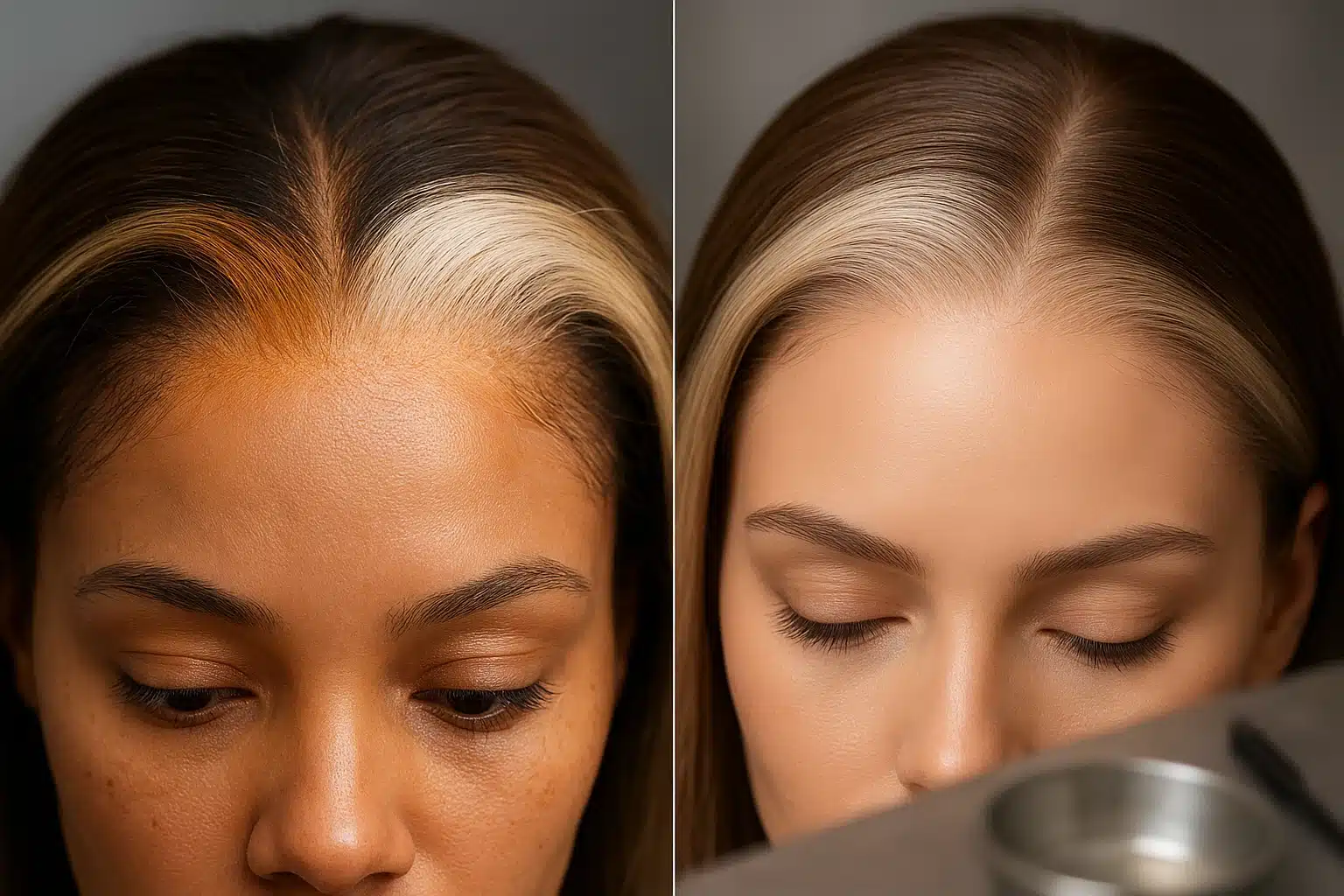
- Symptom: Bright orange or copper-colored dots along the hairline.
- Diagnosis: Under-processed/Brassy Knots. The bleach lifted the dark pigment but was rinsed out before it could break through the underlying warm tones.
- Symptom: Platinum blonde patches extending a quarter-inch (or more) up the hair shaft.
- Diagnosis: Over-bleached Knots (Flooded Lace). Your bleach mixture was too runny, and capillary action pulled it through the lace mesh onto the actual hair roots.
- Symptom: The hairline is shedding in clumps, and knots are snapping when brushed.
- Diagnosis: Chemical Over-processing. The bleach sat for too long, completely destroying the hair’s disulfide bonds (the structural proteins that give hair its strength).
- Symptom: Bleach sat on the lace for 45 minutes but did absolutely nothing to the knot color.
- Diagnosis: Bleached Knots Synthetic Wig Attempt. Synthetic hair fibers are made of plastics (polyester or acrylic). They cannot be lightened by chemical oxidation.
Correction Protocol I: Fixing “Flooded Lace” and Over-Bleached Roots
One of the most common beginner mistakes is mixing bleach that is too thin. Because lace is a mesh material with tiny holes, thin liquids are naturally drawn through the pores via capillary action. When this happens, you don’t just bleach the tiny knot—you bleach the entire root of the hair, leaving you with a highly visible blonde halo.
To fix this without staining your delicate lace dark again, you need the Dry Spoolie Reverse-Dye Technique.
The Step-by-Step Spoolie Fix:
- Prep the Foundation: Dry your wig completely. Apply a thin protective barrier, like petroleum jelly, exclusively to the underside of the lace to prevent accidental staining.
- Mix Your Dye: Choose a semi-permanent or demi-permanent hair dye that perfectly matches the wig’s original color (usually a 1N to 3N dark brown/black).
- The “Dry” Brush Method: Take a clean mascara wand (a spoolie brush) and lightly dip it into the dye. Scrape almost all the excess off the sides of the bowl. The brush should feel practically dry to the touch.
- Brush Up and Away: Hold the spoolie parallel to the lace. Starting right at the root, brush up and away from the lace. Working in 1-inch sections ensures precision. The stiff bristles will coat the blonde hair shafts without ever touching the mesh.
- Rinse Safely: When processing time is up, rinse the hairline with cool water while keeping the lace facing downward, so dark water runs off the hair ends, not through the lace.
Correction Protocol II: Neutralizing Brassy, Orange, and Yellow Knots
If your knots look like tiny copper pennies, your instinct might be to grab a purple shampoo. This is where basic color theory saves the day.
Purple shampoo only neutralizes yellow (Level 9-10 lift). If your knots are orange or copper (Level 6-8 lift), purple will do absolutely nothing. You have to look at the color wheel: blue neutralizes orange.
- For Orange/Copper Knots: You need a blue-toned toning shampoo or a demi-permanent ash toner (like pale blue corrective drops) to cool down the brassiness.
- For Yellow/Gold Knots: Purple toning shampoo is the correct choice here.
The Application Secret: Never scrub highly concentrated toning shampoo directly into dry lace. Instead, use a dilution formula. Mix a few squirts of your toning shampoo with warm water in a small basin. Gently submerge only the lace hairline into this purple or blue water bath for 5 to 10 minutes. This provides a gentle, even pigment deposit without staining the lace fabric.
Salvage Protocol III: Stopping Chemical Rot and Hairline Shedding
Bleach is like a slow chemical fire. Rinsing your wig with water does not stop the bleaching process. Alkaline molecules remain trapped inside the swollen hair cuticle, slowly eating away at the keratin proteins. If you skip chemical neutralization, the hair becomes incredibly brittle and will snap directly at the knot, causing bald patches.
If your wig is shedding excessively post-bleach, immediately implement this three-step salvage protocol:
1. The Chemical Stop
Wash the wig immediately with an acid-balanced neutralizing shampoo (pH 4.5–5.5). Hair naturally lives at an acidic pH. This specialized shampoo forcefully lowers the pH, shrinks the cuticle, and halts the lingering hydrogen peroxide oxidation loop.
2. Structural Reconstruction
Bleach cleaves the disulfide bonds inside the hair. Apply a deep, liquid hydrolyzed protein treatment to the hairline. This acts as microscopic spackle, temporarily patching the broken keratin chains within the remaining hair structure to restore elasticity.
3. Physical Locking
Once the wig is dry, apply a specialized aerosol knot sealer or a clear flexible silicone spray directly to the underside of the lace. This physically glues and locks the weakened knots to the mesh, preventing mechanical shedding when you brush or style the unit.
The Prevention Masterclass: Rules for Future Customization
To ensure your next customization session results in a flawless, professional-grade finish, memorize these three scientific laws of bleaching:
The “Cream Cheese Consistency” Rule (Viscosity Control)
Your bleach mixture must pass the “tilt test.” If you tilt your mixing bowl 90 degrees and the bleach slides or moves, it is too runny and will bleed through the lace. Add more bleach powder until the mixture perfectly mimics the thick, whipped texture of cream cheese or cake frosting.
The “Butter the Toast” Technique
Never push, press, or scrub bleach into the lace. Pushing physically forces the bleach through the mesh holes. Instead, load a plastic spatula or popsicle stick with your thick bleach mixture and gently float it over the knots. Think of it like spreading cold butter over very soft bread—use a light, gliding hand.
The Developer Limit
Never use a 40-volume developer on delicate wig knots. It processes too aggressively and acts like a sledgehammer on fine hair. Stick to a 20-volume or 30-volume developer. It provides a slower, highly controlled lift with significantly less risk of chemical rot.
The Ultimate Shortcut: Pre-Bleached Customization
If playing cosmetic chemist in your bathroom feels too stressful, or you’ve tallied up the cost of bleach, developer, toners, and neutralizing shampoos, it might be time to consider the ultimate shortcut.
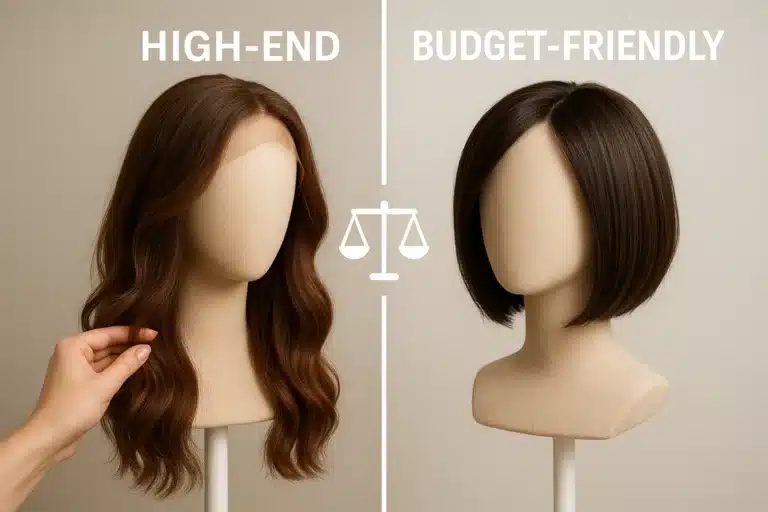
Investing in a premium human hair wig with bleached knots pre-plucked by professional ventilators completely removes the risk of ruining a high-quality unit. You get the flawless, scalp-like appearance straight out of the box, preserving both your peace of mind and the structural integrity of the lace.
Frequently Asked Questions (FAQ)
Can I bleach the knots on a synthetic wig?
No. Synthetic wig fibers are manufactured from plastics like polyester or acrylic, not keratin protein. Because they lack natural melanin pigment, chemical bleach will do absolutely nothing to lighten them. In fact, the harsh chemicals may permanently melt or distort the plastic fibers. To hide knots on a synthetic wig, use a lace tint spray or seamlessly dab cosmetic concealer onto the parting space.
How long does bleach need to sit on the knots before it lifts?
There is no universal timer because processing time depends on the density of the hair, its natural color level, and the volume of developer used. Generally, it takes between 15 and 40 minutes. The key is to visually check the progress every 10 minutes. Flip the lace over, gently peel back a tiny bit of bleach, and observe the color. Wash it off the moment the knots reach a light honey-brown or brassy-blonde stage.
Why do my wig knots look like little black dots?
When hand-tying a lace wig, hairs are individually looped and tied onto the sheer mesh base. If the hair is naturally dark brown or black, that tiny, tightly wound knot condenses the dark pigment into a visible speck against your skin. Bleaching simply lightens that specific tension point, creating the illusion that the hair is growing organically out of your scalp.
Will bleaching the knots make my wig shed faster?
Any chemical alteration slightly weakens the hair’s structural integrity. However, if you follow proper protocols—using a lower volume developer, mixing a thick consistency, utilizing a neutralizing shampoo, and applying a knot sealer—the shedding will be incredibly minimal and won’t affect the lifespan of your unit.
***
Wig customization is a journey of patience, precision, and continuous learning. By understanding the chemistry behind the process, you not only protect your investment but empower yourself to create truly customized, breathtaking looks with confidence.