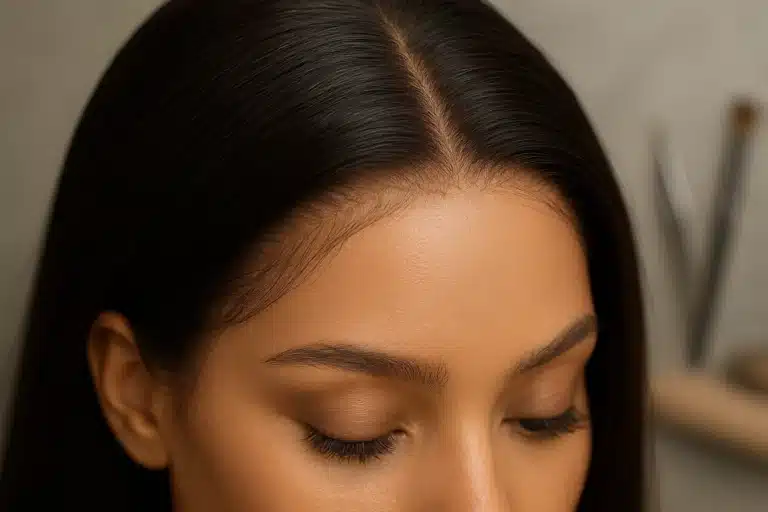
Have you ever looked closely at a high-end wig and wondered how it achieves that seemingly impossible illusion of hair growing directly from the scalp? Most of us start our wig journey looking at the big picture—the color, the cut, and the styling. But the secret to true realism doesn’t lie in the styling tools; it hides in the microscopic details at the very root of the hair. It’s all about the knots.
When you begin to explore the anatomy of a perfect wig, mastering hairline density and texture becomes the first step in understanding what separates an obvious hairpiece from a flawless, undetectable solution. However, once you understand the macro elements of density, you have to zoom in even further. The micro-mechanics of how each individual strand of hair is tied to a lace foundation—a process known as per-strand ventilation—dictates not just how natural your part line looks, but how long your wig will actually last.
Let’s demystify the complex engineering behind wig knotting, transforming industry jargon into practical knowledge so you can make informed, confident choices about your hair.
The Physics of Realism: Why Knots Matter
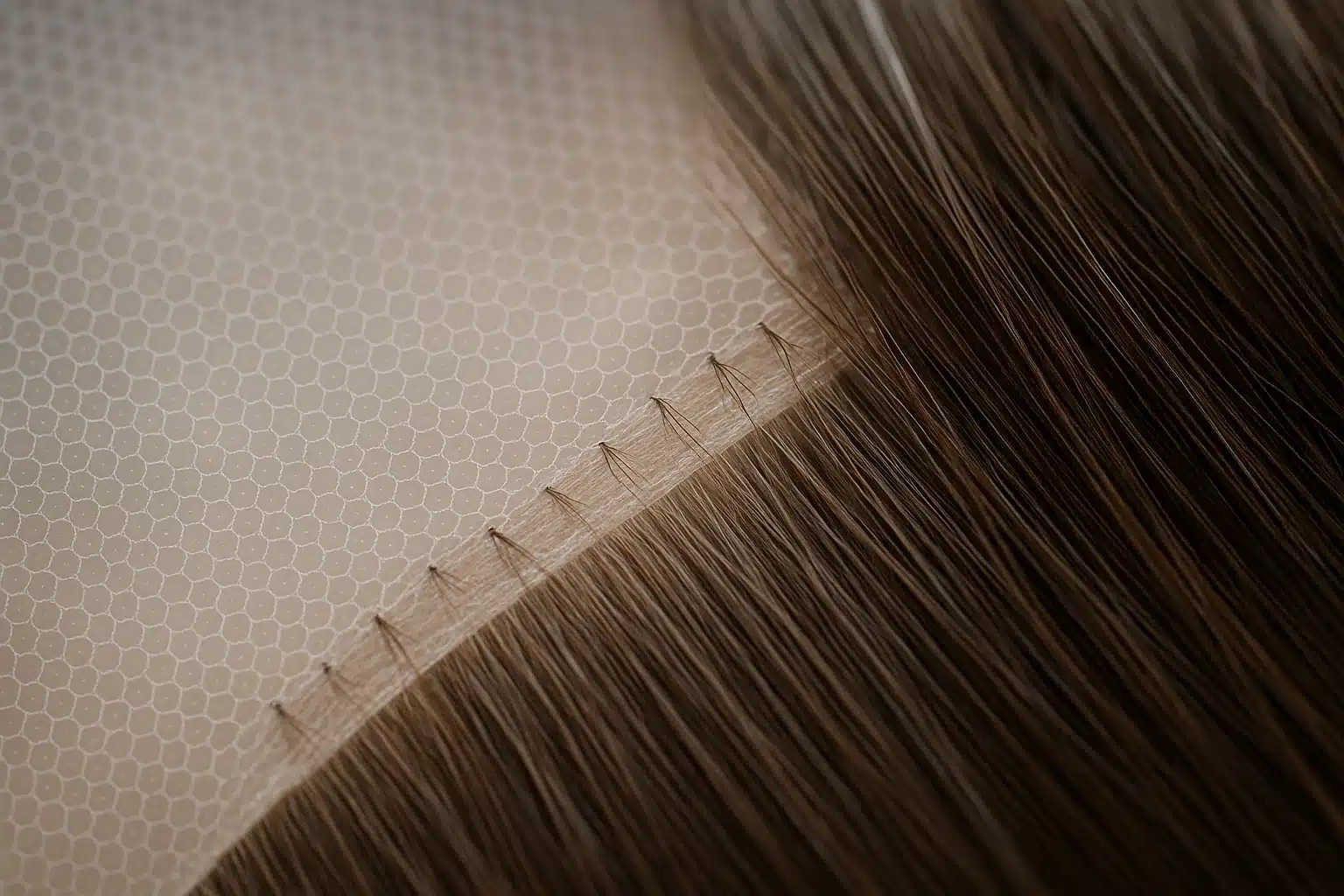
Creating a flawless hairline is an engineering challenge, not just an aesthetic one. When you look closely at premium HD or Swiss lace, you’ll notice it isn’t just a flat fabric; it’s a delicate hexagonal nylon mesh grid, much like a microscopic honeycomb lattice.
Wig ventilation is the painstaking art of using a tiny hooked needle to pull individual hairs through this hexagonal grid and tie them securely. If the wrong knot is used, or if too many hairs are tied to a single hexagon, the structural integrity of the lace is compromised. Poor wig knotting choices lead to the dreaded “doll hair” effect—where hair stands up unnaturally—or rapid shedding that ruins your investment.
By understanding how ventilation vectors (the angle at which the hair is tied) interact with the lace grid, you begin to see why some wigs look seamlessly natural while others look artificial.
Foundational Anatomy: A Guide to Wig Knotting Taxonomy
Not all knots are created equal. Custom wig makers use a calculated mix of knot types to balance invincibility with invisibility. Let’s look at the knot diameter scale to understand how different techniques affect your wig.
1. Single Flat Knots (The Invisible Edge)
- Size: ~0.05mm
- The Mechanics: A single hair is pulled through the lace and tied once. Because it lays entirely flat against the lace, it allows the hair to point in one specific direction.
- Best For: Temple areas and slicked-back styles where the hair needs to lay flat against the scalp.
- The Trade-off: While ultra-realistic, single flat knots are highly fragile and prone to slippage over time.
2. Single Split Knots (The Realistic Mover)
- Size: ~0.12mm
- The Mechanics: A single strand of hair is hooked through the lace, but it is split so that both ends of the hair fan out from the knot. This creates bidirectional movement.
- Best For: Creating a dynamic, natural hairline lace wig where you want the hair to move freely.
- The Trade-off: Offers a beautiful balance of high realism and moderate durability, reducing root density while maintaining a natural appearance.
3. Double Knots (The Structural Anchors)
- Size: ~0.25mm
- The Mechanics: Hair is tied twice around the lace.
- Best For: The crown and back of the wig where maximum volume and extreme durability are needed.
- The Trade-off: They are highly visible (appearing as little black dots on the scalp) and completely ruin the illusion of a natural frontal hairline.
4. Double Split Knots (The Ultimate Balance)
- Size: ~0.25mm
- The Mechanics: Similar to the double knot, but the hair is split to allow for multidirectional styling.
- Best For: The top sections of the wig behind the hairline, providing incredible durability and lift.
5. V-Looping & Injected PU (The Knotless Alternatives)
For wigs utilizing a polyurethane (PU) skin base instead of lace, hair can be injected or looped in a “V” shape without a knot at all. This creates the ultimate illusion of natural growth, though these systems often have a shorter overall lifespan due to the lack of a tied anchor.
The Per-Strand Calculus: 1-Hair vs. Multi-Hair Ventilation
Why do some wigs have those tell-tale “black dots” at the roots? It comes down to per-strand calculus.
Single-strand ventilation—where only one hair is tied to the lace at a time—is incredibly labor-intensive. It creates a beautiful, natural illusion. However, to save time and reduce costs, commercial manufacturers often default to multi-hair knots, tying 3 to 4 hairs in a single loop.
While multi-hair knots act like incredibly strong structural anchors, they create dark, visible carbon-like deposits on the scalp. A premium wig will almost always feature 1-hair ventilation at the crucial front and part areas, transitioning to multi-hair knots only where they can be hidden by the hair’s volume.
Engineering the Perfect Transitional Hairline Grid
A truly undetectable natural hairline wig install doesn’t rely on one single type of knot. It requires a carefully mapped density gradient—a transitional hairline grid. If you are customizing a unit or evaluating a high-end purchase, here is the blueprint of how a masterfully ventilated wig is built:
- Rows 1–3 (The Soft Edge): Using only 1-hair single flat knots with scattered spacing. This mimics the fine, sparse baby hairs at the very edge of a human hairline.
- Rows 4–10 (The Density Gradient): Utilizing 1-hair single split knots at medium density. This builds gradual volume while allowing the hair to move naturally in the breeze.
- Rows 11+ (The Core Base): Transitioning to 2-hair double split knots. Placed safely behind the hairline, these provide the structural density and volume needed to hide the wefts or cap beneath.
This gradient is especially critical when designing a natural hair u part wig. Because a u-part wig requires you to blend your own natural leave-out hair with the wig, the ventilated edges of the wig must seamlessly match the density of your natural roots.
Practical Troubleshooting: Slippage, Shedding, and Bleaching
Understanding wig construction is the best way to protect your investment. Let’s look at the common challenges of wig maintenance through the lens of micro-mechanics.
The Problem with “Bleached Knots”
In an effort to hide the dark knots of multi-hair ventilation, many wearers chemically bleach the knots. While this creates a stunning visual effect, it is a double-edged sword. The sodium hydroxide in bleach chemically breaks down the hair cuticle at the knot site, causing localized tensile strength loss.
Furthermore, you should never attempt to bleach the knots on a natural hairline synthetic wig. Synthetic fibers are made of plastics (nylon or polyester) that do not react to hair bleach; the chemicals will simply degrade the lace and ruin the unit.
The Alternative (The Chemical Decoy Protocol): Instead of chemical degradation, try physical concealment. Using specialized knot sealers, silicone-based sprays, or lightly pressing customized foundation powder or scar tape underneath the lace can render knots invisible without sacrificing the wig’s lifespan.
Diagnosing Shedding: Slippage vs. Breakage
If your wig is shedding, you need to diagnose the cause. Is the hair breaking off, or are the knots slipping?During the ventilation process, there is a critical step called the “turnover.” When a hair is folded and knotted, the short tail of the folded hair must be maintained at a minimum of 2 inches. If the manufacturer cuts this return hair too short, friction from brushing and washing will cause the knot to slip undone.
To prevent knot slippage on your delicate single-strand hairlines, always detangle gently from the ends upward, and periodically apply a liquid knot sealer to the inside of the lace cap to lock the delicate loops in place.
Frequently Asked Questions (FAQ)
What are the “black dots” on my lace wig, and why do they look unnatural?
Those dots are the actual hair knots tied to the lace. They look unnatural and dark when manufacturers tie multiple hairs (3-4 strands) into a single, bulky double knot at the front of the hairline, rather than using delicate single-strand knots.
Why does my lace wig shed so rapidly after bleaching the knots?
Bleaching is a harsh chemical process. When applied directly to the root, it compromises the hair’s structural integrity, causing the hair to snap off right at the knot under minimal tension from brushing or washing.
How do you perform a natural hairline wig install without exposing the knots?
The secret is a combination of choosing a wig with a transitional hairline grid (single knots at the front), using a high-quality lace melt spray or adhesive that matches your skin’s undertone, and utilizing physical concealers like lace tint or powder rather than over-bleaching.
Can single knots be made as durable as double knots?
Inherently, no. Because a single flat knot has less physical surface area holding onto the lace strand, it is more fragile. However, you can significantly extend their lifespan by routinely using silicone-based knot sealers and utilizing proper, gentle detangling techniques.
Continuing Your Educational Journey
At Wig Superstore, with nearly two decades of experience helping individuals navigate hair loss, we believe that education is empowerment. Understanding the deep, granular mechanics of how your hairpiece is constructed—from the hexagonal nylon mesh grid to the delicate single-strand flat-knotting—allows you to make choices that bring you true confidence.
You no longer have to settle for the doll-hair effect or rapid shedding. By seeking out transitional hairline grids and treating delicate ventilation with compassionate care, your wig can serve as a seamless, beautiful extension of yourself.
Ready to dive deeper into making your wig look as realistic as possible? Explore our resources on proper installation techniques, cap construction, and caring for delicate lace to ensure your hair always looks flawlessly natural.