Imagine buying a heavy wool coat and trying to wear it to a beach picnic in July. It would be uncomfortable, you would overheat, and the coat would likely get ruined by sand and humidity. Yet, this is exactly what happens when we try to make a single wig work for every day of the year. While budgeting for your perfect wig often starts with the idea of a “one-and-done” purchase, savvy wearers quickly learn that comfort—and financial wisdom—comes from strategic diversity.
The “one wig fits all” myth is a common misconception that often leads to frustration and wasted money. A high-density human hair wig might look stunning, but in high humidity, it can become frizzy and unmanageably hot. Conversely, a lightweight, open-wefted synthetic piece might feel breezy in summer but leave you shivering when the winter winds pick up. By shifting your mindset from buying a single replacement to building a small, seasonal rotation, you actually extend the lifespan of your hairpieces and save money over time.
The “Cost Per Wear” Philosophy
Before diving into specific styles, it is helpful to look at the math behind a wig wardrobe. It’s easy to suffer from “sticker shock” when considering buying two wigs instead of one. However, the “Cost Per Wear” (CPW) model reveals a different story.
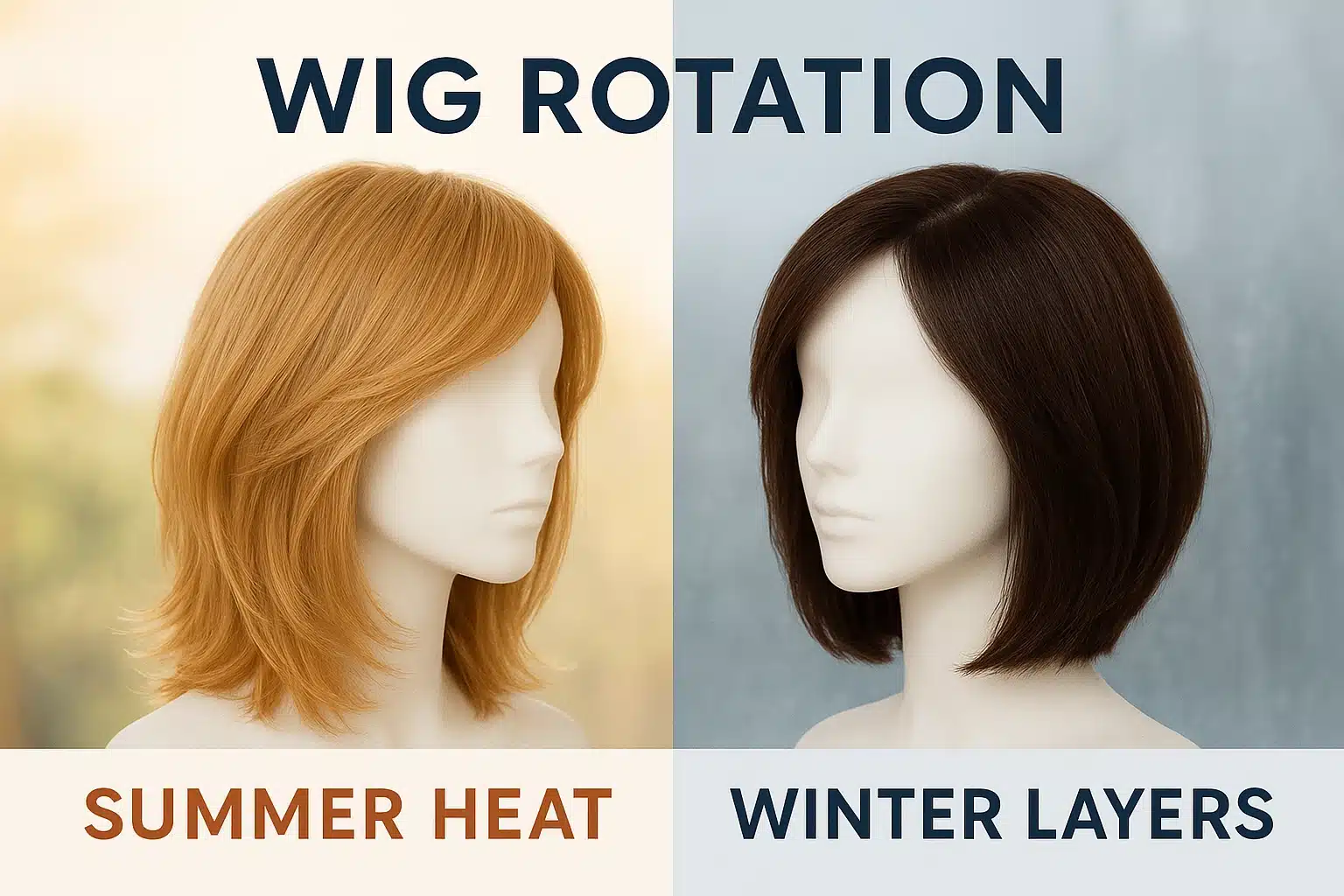
If you wear a single $400 wig every day for a year, it endures 365 days of friction, sweat, UV rays, and washing. It will likely degrade within 4–6 months, requiring a replacement. However, if you rotate between a “Summer Unit” and a “Winter Unit,” each wig rests for half the year. Furthermore, because you are wearing the correct fiber for the weather, the hair suffers less environmental damage.
- Summer Reality: Synthetic fibers “remember” their style in humidity, meaning less heat styling and less damage.
- Winter Reality: Heavier caps provide warmth, reducing the need for hats that cause friction.\
The Summer Strategy: Beating the Heat on a Budget
When the temperature rises, your priority shifts to breathability and humidity resistance. This is where budget-friendly options actually outperform their expensive counterparts.
1. The Fiber Choice Pivot
Many beginners assume human hair is always superior. However, in high humidity, human hair reacts just like biological hair—it frizzes, falls flat, and absorbs moisture. High-quality synthetic fibers are hydrophobic; they do not absorb moisture. This means your style stays locked in, rain or shine. For summer, a high-quality synthetic wig is not just a budget saver; it is a performance upgrade.
2. Cap Construction Matters
You don’t always need a hand-tied cap (the most expensive option) for summer. In fact, “Basic” or “Capless” constructions are often superior for heat. These caps are designed with open wefting—rows of hair sewn together with spaces in between. This architecture allows air to flow directly to your scalp.
If you are looking for specific wig cap construction options designed for airflow, look for “open cap” descriptions. These allow heat to escape, keeping you cooler than a fully enclosed monofilament top would.
The Winter Defense: Warmth and Protection
Winter presents a different set of financial enemies: dry air, static electricity, and friction from scarves and coats. This is the season where investing in density and durability pays off.
1. The “Scarf Friction” Factor
The number one killer of wigs in winter is the friction caused by collars, scarves, and heavy coats rubbing against the nape of the neck. This friction causes the fibers to matte and tangle, shortening the wig’s life.
- Budget Tip: Consider a shorter style (a bob or pixie) for your winter rotation. If the hair doesn’t touch your collar, it can’t be damaged by friction.
2. Insulation and Fiber
Winter is the ideal time for human hair or heat-friendly synthetic blends. These fibers are generally heavier and denser, providing a “hat-like” warmth that is welcome in January but unbearable in July. If you do choose human hair, remember that the dry winter air requires extra hydration. Knowing how to take care of a human hair wig during these dry months—using deep conditioners and oils—is essential to protecting that higher financial investment.
The “3-Wig Rotation” Blueprint
You don’t need a closet full of hair to be covered. A practical, budget-conscious wardrobe can be built on just three strategic pieces. This rotation ensures you always have a backup and that no single wig is being worn to death.
1. The Daily Driver (Summer/Active)
- Type: Synthetic, Open Weft/Capless.
- Budget: Low to Mid-range.
- Why: It’s durable, cool, and easy to wash. This is your workhorse for grocery runs, gardening, and hot days.
- Resource: If you are new to this, exploring best wigs for beginners can help you find affordable synthetic options that look natural without breaking the bank.
2. The Occasion Piece (Year-Round)
- Type: Monofilament or Lace Front (Synthetic or Human Hair).
- Budget: Investment piece.
- Why: This is for dates, events, or days when you want to feel your absolute best. By only wearing it occasionally, you extend its life by years.
3. The Weather Warrior (Winter/Adverse Conditions)
- Type: Shorter style or protective density.
- Budget: Mid-range.
- Why: A shorter style avoids collar friction. This is your go-to when you need a toupee accessory for windy conditions or a style that won’t get tangled in a snowstorm.
Smart Maintenance: Protecting Your Investment
Building the collection is only step one; maintaining it is how you maximize your ROI (Return on Investment). Seasonal maintenance looks different depending on the climate.
- Summer Care: Sweat and oils build up faster on the cap. You will need to wash your summer unit more frequently. Focus on removing residue from the inside of the cap to prevent fiber breakdown.
- Winter Care: Static is the enemy. Keep a travel-size detangler spray in your bag. Avoid plastic combs, which generate static; use metal wide-tooth combs instead.
Additionally, pay attention to ventilation. Wigs with superior ventilation not only keep you cool but also trap less sweat and bacteria, meaning you don’t have to wash them as harshly or as often, further extending their lifespan.
Frequently Asked Questions
Is it really cheaper to buy two wigs at once?
While the upfront cost is higher, the long-term cost is often lower. Alternating wigs gives the elastic and fibers time to “rest” and return to their shape. It also prevents the panic-buying of a replacement when your only wig suddenly fails.
Can I wear a synthetic wig in the winter?
Absolutely. Synthetic wigs are great for winter. However, long synthetic wigs are prone to “friction frizz” against winter coats. If you wear synthetic in winter, consider using a protectant spray or choosing a style that sits above the collar.
How do I store my “off-season” wig?
Clean it thoroughly, ensuring it is completely dry. Store it in a silk bag or a shoebox away from direct sunlight and dust. Do not store it on a styrofoam head for months, as this can sometimes stretch the cap over long periods.
What is the best cap for hot flashes?
Look for “Capless,” “Open Weft,” or “Traditional” caps. These have open spaces between the rows of hair, allowing maximum air circulation to the scalp.
Next Steps
Building a versatile wig wardrobe doesn’t have to happen overnight. Start by identifying your current biggest pain point—is it summer heat or winter static?—and choose your next piece to solve that specific problem. By thinking strategically about the weather and your lifestyle, you transform your wig usage from a daily necessity into a comfortable, curated experience.