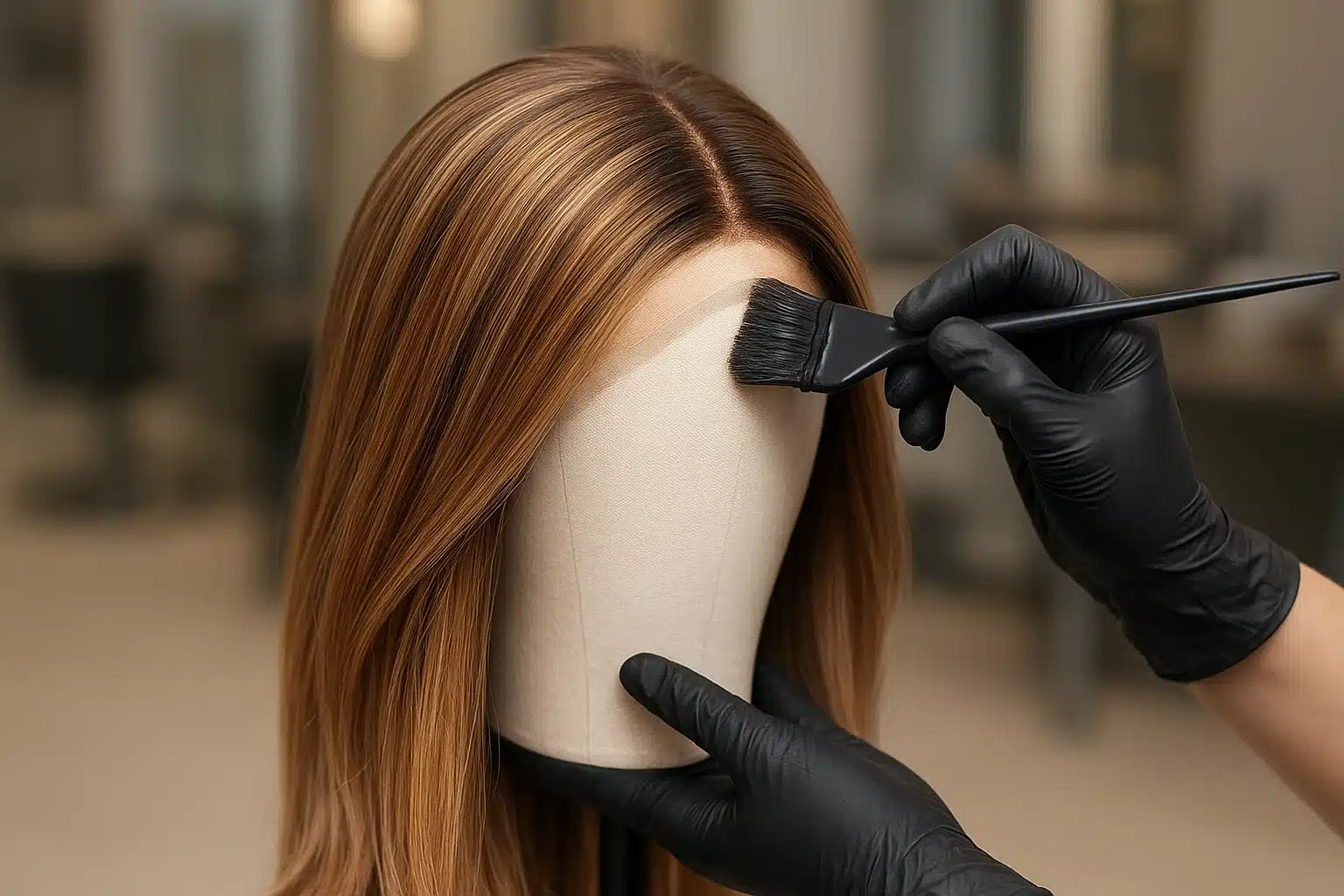
Imagine finally finding the perfect human hair wig. The length is gorgeous, the texture is incredibly soft, but the color is just slightly… off.
Perhaps it’s a bit too ashy for your skin tone, or maybe you’re a medical hair loss patient trying to replicate the exact multi-tonal brunette shade of your natural hair before chemotherapy. The logical next step seems simple: take it to your regular hair stylist, or perhaps try a DIY box-dye tutorial at home.
Unfortunately, this is often a $1,000 mistake.
Countless people have watched in horror as expensive lace hairlines develop permanent orange stains, or as luxurious hair turns gummy and snaps off after a standard color processing. Why does this happen? Because coloring a wig is entirely different from coloring the hair growing out of your scalp.
If you’re looking for a custom hair wig boutique in chicago that can safely transform your piece, you need to know exactly what goes into the process. Let’s demystify the fascinating science of alternative hair chemistry and explore how to navigate Chicago’s specialized in-house coloring services.
The Science of Coloring Alternative Human Hair
When you take a wig to a specialized colorist, they aren’t just applying dye; they are navigating a complex intersection of chemistry, physics, and thermodynamics. Here is why alternative hair behaves so differently than living hair.
Thermodynamics: Coloring Without Scalp Heat
When you get traditional highlights at a salon, your scalp naturally emits a body heat of 98.6°F. This radiant heat accelerates the chemical oxidation of the hair dye or lightener at the root zone.
A wig, however, sits on a canvas blockhead in a standard 68–72°F salon room. Without that biological heat, the processing chemistry completely changes. If a stylist applies standard developer volumes to a wig, the roots will often under-process, leaving a blotchy, uneven finish. Certified wig colorists know how to adjust developer volumes (for instance, swapping a 20-volume for a 30-volume) or use thermal processing incubators to compensate for the missing body heat.
Cuticle Integrity: Virgin European vs. Processed Remy Hair
Not all human hair wigs are created equal, and their origins dictate exactly what a colorist can and cannot do.
Roughly 90% of factory human hair wigs (often Asian or Indian Remy hair) undergo intense industrial processing, including acid baths to strip cuticles and silicone coatings for shine. If a stylist attempts to bleach or “lift” this pre-processed hair, the structural integrity of the fiber shatters, resulting in hair that feels like rubber and breaks instantly. For these wigs, colorists are strictly limited to deposit-only coloring, like adding lowlights or glosses.
Conversely, virgin European hair—which has never been chemically altered—can be lifted, highlighted, and balayaged much like natural hair.
The Knot & Lace Danger Zone
One of the greatest risks of coloring hand tied wigs is lace staining. The delicate Swiss or HD lace that creates those beautiful, invisible hairlines acts just like a sponge.
If thin, runny hair color or bleach seeps through the monofilament mesh and touches the meticulously tied base knots, it will permanently dye the lace. This creates an unnatural, highly visible orange or dark brown stain against your forehead. Professional in-house wig colorists use physical barriers—such as styling wax sticks, heavy freeze sprays, or specially thickened bleach consistencies—to mask the lace and protect your investment.
The Chicago Salon Color Menu (What to Ask For)
When you walk into a specialty salon in Chicago, the service menu will look a bit different from a standard hair salon. Here are the most common customization requests:
- Root Melts & Shadow Roots: Many off-the-shelf wigs feature a solid, uniform color from root to tip, which can look unnatural. A shadow root involves depositing a slightly darker, demi-permanent color at the base to mimic natural hair growth and create depth.
- Toning Glosses: Chicago humidity and summer sun can cause wigs to oxidize and turn “brassy” over time. Ammonia-free acidic toning glosses neutralize unwanted orange and red undertones while smoothing the cuticle.
- Medical Color Matching: For oncology or alopecia patients, local specialists use specialized directional daylight lamps and base-level matrices to replicate the exact 3D tones of biological hair samples taken prior to hair loss.
Navigating Chicago’s In-House Wig Coloring Scene
The Chicago metropolitan area is home to a diverse ecosystem of specialized wig salons, each catering to specific community needs:
Medical-Grade Matching Specialists (Elmhurst & Near North)
For those seeking custom hair pieces for hair loss in chicago, these clinical boutiques offer deeply empathetic environments. Specialists here focus on matching biological hair swatches and often assist with cranial prosthesis insurance coding.
Luxury Customization & Balayage Studios (West Loop & Wicker Park)
Fashion enthusiasts and those looking for high-end customization flock to these trendy neighborhoods. Salons here excel in modern techniques, seamlessly blending root melts and high-lift balayage on virgin hair units to create incredibly natural, dimensional looks.
Sheitel & Kosher European Hair Salons (Skokie & North Shore)
Catering extensively to Orthodox Jewish women, these specialized salons understand the intricate nuances of maintaining kosher-certified sheitels. They operate with private consultation rooms and are master technicians in preserving the longevity of delicate, ultra-premium European hair.
Protective Styling & Texture Color Bars (Bronzeville & the South Side)
These studios specialize in raw virgin bundles, closures, and custom coloring for multi-textured wigs (such as 4B-4C curl patterns). They excel at bold blonding, vibrant fashion colors, and protective lace front applications.
The Client Service Blueprint: Step-by-Step
If you’re bringing a piece in for custom color, here is what the professional process typically entails:
- In-Person Consultation: You will discuss your goals, bring in biological hair swatches or reference photos, and the stylist will examine the wig’s origin and hair quality.
- The Nape Strand Test: Before any major chemical service, a responsible colorist will perform a porosity and elasticity check on a hidden section of hair near the nape of the neck to ensure the fiber can withstand the process.
- Lace Masking: The colorist will apply thick barriers to the lace cap to prevent any chemical bleed-through.
- Processing and pH Sealing: Because wig hair doesn’t receive natural, moisturizing sebum from a scalp, colorists must finish the service with low-pH acid-balanced conditioning sealers (pH 4.5–5.5) to lock the cuticle down and restore softness.
Post-Color Preservation & Longevity
Once you’ve invested in a beautifully colored custom piece, maintenance is crucial. A standard rule of thumb for colored human hair wigs is the “10-to-15 wear rule” for washing. Over-washing strips the deposited color much faster than natural hair.
Because professional coloring is an investment, it’s wise to consider how to budget for wigs primary and backup maintenance. Rotating between two units can significantly extend the life of your custom color. Furthermore, always use sulfate-free, UV-protective styling products to guard against color fade during sunny Chicago summers.
Frequently Asked Questions About Custom Wig Coloring
Can I dye my human hair wig with standard drugstore box dye?
It is highly discouraged. Box dyes contain aggressive developers meant to blast open the cuticles of living hair. Applying this to a factory-processed wig will almost certainly cause irreversible structural damage, severe tangling, and lace staining.
How much does custom wig coloring cost in Chicago?
Pricing varies significantly based on the service and hair type. A simple deposit-only gloss or shadow root might range from $75 to $150. Complex, multi-stage lightening, dimensional balayage, or biological swatch-matching can range from $300 to $600+, independent of the cost of the wig itself.
Can synthetic wigs or heat-friendly fibers be custom dyed?
Standard hair dye will not work on synthetic fibers; they require specialized fabric dyes (like acrylic dyes). Most professional salons strictly refuse to dye synthetic wigs due to unpredictable results and the inability to lift or lighten the color. It is almost always better to purchase a synthetic wig in the exact color you desire.
How long does a custom coloring service take?
Unlike a standard salon appointment where you wait in the chair, wig coloring is typically a drop-off service. Expect a turnaround time of 3 to 7 business days to allow for proper strand testing, careful chemical processing, deep restorative masking, and gentle air-drying.
Your Next Steps Toward the Perfect Shade
Understanding the delicate science behind wig coloring transforms how you view alternative hair. It isn’t just a product; it’s a highly customizable canvas that requires specialized expertise to perfect.
Whether you are navigating medical hair loss and searching for a piece of your old self, or you simply want a stunning balayage without damaging your natural hair, Chicago offers a wealth of talented specialists ready to help. Start by requesting consultations at local specialty salons, and don’t be afraid to ask them directly about their lace protection protocols and experience with your specific type of human hair wig. Armed with this knowledge, you are ready to find the exact shade that makes you feel uniquely, beautifully you.