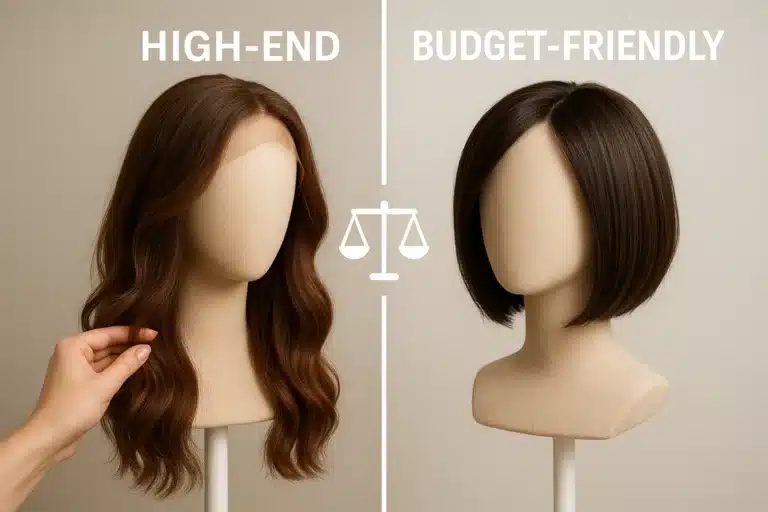
We have all heard the horror stories—or perhaps lived through one. You see a photograph of a stunning, voluminous hairpiece online, click “buy” with high hopes, and receive something that looks shiny, stiff, and nothing like the image. In the wig industry, where “catfishing” has unfortunately become a common grievance, trust is the most valuable currency.
For many, the journey begins with a search engine and a map. However, simply looking for the store with the most stars can sometimes lead to disappointment. Whether you are browsing strictly online or are in the process of finding your perfect wig in a bustling metro area like New York, Los Angeles, or Houston, the challenge isn’t just about style—it’s about verifying that the business behind the hair is legitimate. To truly protect your investment and your confidence, you need to move beyond basic review reading and adopt a “reputation shield” mindset.
The Psychology of the Search: Why 5 Stars Isn’t Enough
When we are vulnerable—and experiencing hair loss often makes us feel that way—we naturally look for validation. We want to believe the glowing testimonials on a boutique’s homepage. However, true due diligence requires a shift in perspective. Instead of looking for reasons to buy, the smartest shoppers look for reasons to pause.
The current digital landscape creates a “Reputation Gap.” On one side, you have reputable, compassionate retailers who have spent decades sourcing ethical human hair and high-quality synthetics. On the other, you have “pop-up” shops that utilize stolen images and aggressive social media ads. To navigate this, you need to become a bit of a digital detective.
Digital Forensics: Reading Reviews Like a Pro
Most people scan Google or Yelp for the overall rating (4.5 or 5 stars) and leave it at that. To truly understand a store’s culture, you need to dig deeper.
The “Search Mirror” Technique
Never rely solely on the testimonials published on a store’s own website, as these are curated. instead, use the “Search Mirror” technique:
- Open your search engine.
- Type the store or brand name followed by “Reddit,” “Trustpilot,” or “Complaints.”
- Look for third-party discussions.
You are not just looking for angry customers; you are looking for patterns. If a store has a 5-star rating on their site but a 1.5-star rating on independent forums, that is a major discrepancy that warrants caution.
Spotting the “Incentivized” Rating
Be wary of local shops that have hundreds of generic, one-sentence 5-star reviews (e.g., “Great place, love the hair”). In some cities, less scrupulous vendors offer discounts at the register in exchange for an immediate 5-star Google review.
- What to look for: Authentic reviews often tell a story. They mention specific stylists by name, describe a problem that was solved, or detail the atmosphere of the shop. A review that says, “I was nervous about my alopecia, but Sarah took me to a private room and explained cap construction,” is worth ten reviews that just say, “Good store.”
The “Mathematical Impossibility” Check
One of the most powerful tools in your reputation arsenal is simple math. This is particularly true when evaluating online retailers or “factory direct” shops claiming to sell premium hair.
There is a global market price for raw human hair. Procurement, processing, and ethical labor costs set a hard floor on pricing.
- The Rule: If you see a “100% Virgin Human Hair” wig (especially long lengths) priced under $100, you are likely looking at a mathematical impossibility.
- The Reality: These items are often synthetic blends masked as human hair, or they are ethically compromised.
Understanding this pricing floor immediately protects you from about 80% of the scam sites and “too good to be true” local deals.
Navigating Local Options: What to Look For In-Store
If you decide to visit a physical location in your city, your research shouldn’t stop at the door. The physical environment tells you volumes about the retailer’s reputation.
Atmosphere and Privacy
A reputable wig salon understands that hair replacement is sensitive.
- Boutique/Medical Salons: Usually offer private fitting areas, consultations by appointment, and a compassionate, quiet atmosphere.
- Beauty Supply Stores: Often high-traffic with wigs displayed openly on shelves. While good for quick fashion changes, they may lack the privacy and specialized knowledge required for medical hair loss.
The Physical Verification Tests
When you are holding a wig in a store, you can verify the quality instantly with two simple checks:
- The “Sniff” Test: High-quality human hair should smell like hair or neutral. A strong, chemical, corn-chip-like odor often indicates harsh acid processing used to strip low-quality hair of its cuticles.
- The “Shed” Test: Gently run your fingers through the hair from root to tip. A reputable piece should have minimal shedding. If you come away with a handful of strands, the construction (ventilation) is likely poor.
The Wig Store Reputation Scorecard
To simplify your search, use this checklist to distinguish between a “Red Flag” retailer and a “Green Flag” partner.
| Feature | Green Flag (Trustworthy) | Red Flag (Proceed with Caution) |
|---|---|---|
| Contact Info | clearly listed physical address, phone number, and email. | Only a “Contact Us” form; no address or phone number. |
| Photos | High-resolution images showing texture; mix of model and product shots. | Pixelated images, photos of celebrities, or watermarks from other brands. |
| Return Policy | Clear, detailed policy acknowledging the nature of the product. | “All Sales Final” with no exceptions, or a hidden restocking fee over 30%. |
| Education | Blog posts, videos, or guides on care and fiber types. | Heavy use of “Buy Now” urgency timers and “Going out of Business” sales. |
| Consultation | Offers help via phone, email, or in-person appointment. | No way to speak to a human being before purchasing. |
Frequently Asked Questions
Why do some stores have a “No Returns” policy?
Due to hygiene regulations, many wig stores have strict return policies. However, a reputable store will usually offer a window for returns on unaltered items or store credit. Total lack of a return policy, especially online, is a risk.
How can I verify if a store is an authorized dealer?
Many major manufacturers (like Jon Renau or Raquel Welch) list authorized retailers on their websites. Checking these lists is a great way to ensure you are buying authentic goods.
Is “European Hair” always better?
“European Hair” is a premium label that is often misused. True European hair is fine and rare. If a store is selling “European Hair” at a budget price point, it is likely Asian or Indian hair that has been processed to feel thinner. Trustworthy stores explain the origin of their hair transparently.
What should I ask a stylist before booking?
Ask: “Do you specialize in medical hair loss?” and “Can you customize or trim the wig for me?” A “yes” to these questions indicates a service-oriented business rather than just a retail outlet.
Investing in Peace of Mind
Finding the right wig store is about more than inventory; it is about finding a partner in your journey. Whether you are navigating the streets of a major city or browsing from the comfort of your home, equipping yourself with these research tools ensures that you aren’t just buying hair—you’re buying confidence, quality, and care.
Take your time, ask the hard questions, and remember that a reputable company will always be happy to provide the answers.