Experiencing hair loss—whether from chemotherapy, alopecia, or progressive thinning—is a deeply personal and often emotional journey. The thought of walking into a brightly lit retail store, navigating crowded aisles, and trying on hairpieces in front of strangers can feel incredibly overwhelming. You aren’t just looking for a physical product; you are looking for a safe, empathetic environment where you can comfortably reclaim your identity.
Fortunately, Central Ohio is home to a unique community of compassionate professionals who understand this vulnerability. If you are beginning your search for the best wig stores in Columbus Ohio, the most critical factor isn’t just the inventory on the shelves—it’s finding a boutique that offers private, high-discretion consultation rooms designed specifically for medical hair loss needs.
Let’s explore how to navigate this transition, what to look for in a medical-grade wig, and where you can find the most supportive, private spaces in Columbus.
The Emotional and Physical Transition of Hair Loss
When hair loss begins, many people enter what experts call the “panic phase.” Questions flood in, and the urgency to find a solution can overshadow the need for careful consideration.
It is vital to understand that medical hair loss physically changes your scalp. Without hair to act as a buffer, your scalp becomes highly sensitive to temperature fluctuations, friction, and tenderness. Entering a dedicated private space for a wig fitting is not a luxury—it is a medical and emotional necessity. In a private consultation room, you have the freedom to express your emotions, ask vulnerable questions, and test sensitive cap designs without the anxiety of onlookers.
Medical-Grade Wigs vs. Standard Retail Wigs
One of the biggest “aha moments” for those new to alternative hair is learning the difference between a standard fashion wig and a medical-grade piece.
In the medical community, a wig designed specifically for a patient is called a cranial prosthesis. Unlike a $50 fashion wig from a local beauty supply store, which is built for volume and occasional wear over natural hair, a cranial prosthesis is engineered for a bare, sensitive scalp.
If you place a standard fashion wig directly onto a bald scalp, the stiff materials will likely cause severe friction, redness, and physical pain. Furthermore, high-density fashion wigs often look artificial on individuals dealing with medical hair loss. Medical-grade wigs utilize a “Cap Density Matrix,” focusing on lower, realistic densities (usually 80% to 100% density) that perfectly mimic natural hair growth.
The Anatomy of a Sensitive Cap Design
Understanding cap construction is the key to all-day comfort. Here is how they compare:
- Standard Wefted Caps: These feature open tracks of hair sewn together. They are great for breathability and volume, but the exposed seams can be highly irritating to bare skin.
- Monofilament (Mono-Top) Caps: These feature a soft, sheer, breathable mesh at the crown. Because the mesh is transparent, your natural scalp color shows through, and the hair can pivot naturally in any direction, creating a highly realistic part.
- 100% Hand-Tied Caps: The holy grail for total hair loss. Every single hair is hand-knotted onto a soft, silk-like cap that stretches four ways. It conforms to the shape of your head without any rigid pressure points, eliminating friction sores entirely.
Directory of Discreet Columbus Boutiques
Columbus offers several specialized environments depending on your specific aesthetic needs and medical circumstances. Here are some of the premier destinations offering private consultation spaces:
Over My Head Cancer Boutique
Located inside the OhioHealth Bing Cancer Center & Dublin Cancer CenterThis boutique is an undisputed leader for clinical hair loss in Central Ohio. Because they are integrated directly into major regional cancer hospitals, they offer a highly clinical, deeply supportive environment. They specialize in 60-minute, one-on-one fittings with certified mastectomy and wig fitters in private, clinical-adjacent rooms. They are also incredibly valuable for their ability to directly bill Medicare and private insurance.
Stephanie’s Salon
Located in ClintonvilleFor those looking for a stylist-driven, highly practical approach, Stephanie’s Salon operates from a highly private salon suite. Stephanie is certified in advanced cap alterations (Jon Renau CORE I & II), meaning she understands that a wig straight out of the box always requires custom thinning, shaping, and personalization to look natural.
Luxe Hair Solutions
Located on Sawmill Road, PowellUnder the guidance of hair loss expert Corey Rinehart, Luxe presents a high-end, non-clinical private studio aesthetic. This space is perfect for women experiencing progressive thinning who need discreet hair toppers and volume restoration rather than full wigs, offering luxury integration away from the traditional clinical cancer center vibe.
Hope’s Boutique
Located at the James Cancer Hospital (OSU)Offering one of Central Ohio’s largest selections of medical hair alternatives, Hope’s Boutique provides a safe haven complete with certified oncology fitters who understand the nuances of treatment-related hair loss.
Brenda’s Hair to Wear
Located in WestervilleA licensed private salon designed specifically from the ground up for hair loss patients, offering completely private styling rooms and personalized, gentle care.
Financial Navigation: Getting Your Wig Covered in Ohio
Many first-time buyers are unaware that they do not have to shoulder the financial burden of a medical wig alone. Under the Women’s Health and Cancer Rights Act of 1998, reconstructive options—which include cranial prostheses—are federally mandated for cancer patients.
However, navigating the insurance roadmap requires a very specific approach.
The Prescription Protocol
The most crucial piece of advice to remember: The word “wig” must never appear on your medical prescription. Insurance companies categorize “wigs” as cosmetic.
To ensure your claim is not immediately denied, your doctor’s prescription must state: “Cranial prosthesis for medical hair loss due to [Insert Diagnosis Code/ICD-10].” Furthermore, the billing department or your boutique will need to use HCPCS Code A9282 (the exact medical billing code for a cranial prosthesis) when filing your claim.
Post-Fitting Care & Navigating Bio-Hair Regrowth
Finding the perfect piece is just the beginning. As you wear your cranial prosthesis, or as your natural hair begins to grow back post-treatment, you’ll encounter new questions.
- The Four-Finger Rule: A simple visual trick to ensure you are wearing your wig correctly. The distance from your eyebrow to the front hairline of the wig should be roughly the width of four of your fingers. If it’s sitting lower or higher, it will look unnatural.
- Wig Care: Never use standard drugstore hair products on a synthetic medical wig. Normal shampoos will strip and destroy synthetic fibers, and static electricity can ruin friction-prone areas like the nape of the neck.
- The Transition Phase: As your natural “bio-hair” begins to grow back, the fit of your wig will change. You may need cap resizings to accommodate the new hair, or you might transition to using a soft silicone wig grip to keep the wig secure without pulling on your fragile new baby hairs.
Frequently Asked Questions
When does hair typically fall out after starting chemotherapy?
For most patients, hair loss begins approximately 14 to 16 days after their first chemotherapy treatment. Knowing this timeline can help you schedule your private consultation proactively before the hair loss becomes severe.
Why do some Columbus boutiques charge a consultation fee?
Many specialized boutiques charge a booking fee (often around $40). This secures a 45-to-60-minute block of a certified professional’s time in a private room. In almost all cases, this fee is applied directly toward the final purchase price of your hairpiece.
How do I secure a wig to my head if I have absolutely no hair?
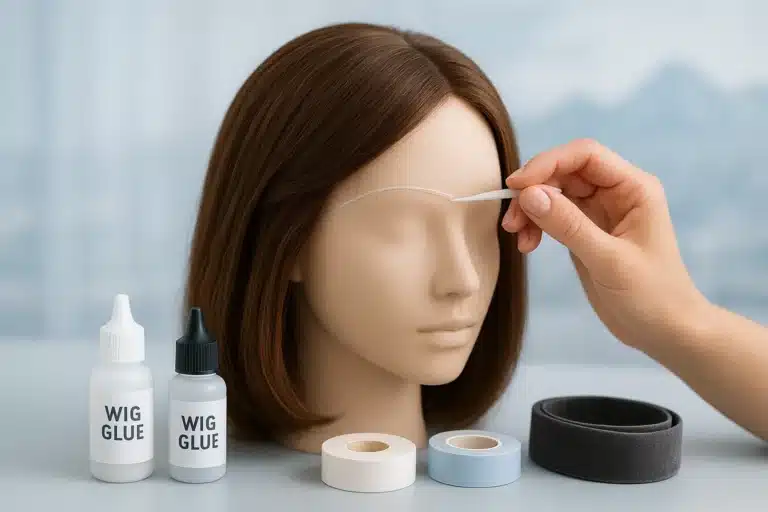
Beginners often struggle with this. If you are completely bald, standard bobby pins and combs won’t work (and will hurt). The best methods are double-sided medical wig tape (if your cap has polyurethane tabs) or a soft silicone wig grip band, which wraps around your head and holds the wig securely in place via gentle friction.
Taking Your Next Steps
Navigating hair loss is challenging, but you do not have to do it alone, and you certainly don’t have to do it in the middle of a crowded retail store. By seeking out dedicated, private spaces with empathetic professionals, you are taking a powerful step toward reclaiming your comfort and confidence.
At Wig Superstore, we believe in empowering you with the knowledge and high-quality solutions you need during this transition. Whether you are exploring different cap constructions to protect a sensitive scalp or looking for the perfect human hair piece to match your natural style, we are here to support your journey with compassionate care and industry-leading expertise. Take your time, ask questions, and know that beautiful, comfortable solutions are well within your reach.