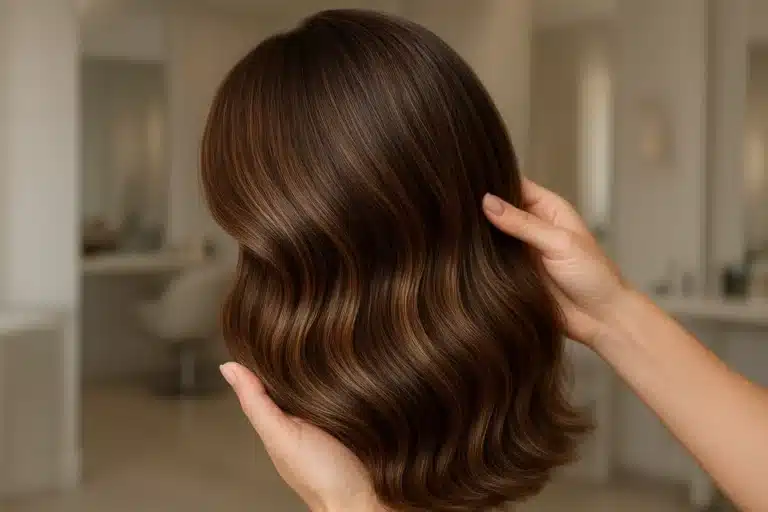
Picture this: You’ve just purchased a beautiful new wig. You take it out of the box, gently shake it out, and place it on your head. You look in the mirror, waiting for that rush of confidence—but instead, you pause. Something just looks slightly off. Maybe the hair feels a bit too full around the cheeks, the color falls flat against your complexion, or the hairline simply screams “I’m wearing a wig.”
If you’ve ever experienced this, you are not alone. It’s a common frustration that leads many first-time wearers to tuck their new hairpiece into the back of the closet. But here is the industry secret that changes everything: an off-the-rack wig is not a finished product; it is a canvas.
Whether you are navigating medical hair loss, adhering to religious traditions, or simply looking to elevate your everyday style, finding the right customized piece can feel overwhelming. In this guide, we are going to pull back the curtain on custom wig styling, color matching, and how to navigate the diverse landscape of wig shops in Baltimore.
The Transformation Gap: Why Off-the-Rack Looks “Wiggy”
Most people assume that when you buy a premium wig, it should look perfect the second you put it on. In reality, manufacturers build wigs with 20% to 30% more hair density than a biological human head.
Why? Because these pieces have to survive industrial shipping, and it’s always easier for a stylist to take hair away than to add it back. True customization is the art of subtraction. The telltale signs of a “wiggy” appearance—excessive bulk at the crown, a harsh hairline, and a lack of dimensional color—are easily remedied by a master wig stylist who knows how to thin the density, pluck the knots along the lace, and texturize the ends so the hair moves naturally.
Fiber Science 101: The Chemistry of Wig Color Matching
One of the most frequent questions we hear is, “Can I just dye this wig myself?” The answer heavily depends on the fiber science of your piece.
Human Hair vs. Synthetic Fibers
When it comes to synthetic wigs, standard boxed hair dye is a recipe for disaster. Biological hair dye uses an oxidative process (developer and ammonia) to lift the hair cuticle and deposit color. Because synthetic fibers are essentially finely crafted micro-plastics, oxidative dye will either bead up and slide right off, or worse, melt and irreversibly damage the fibers.
Even with 100% human hair wigs, chemical rules still apply:
- Virgin European Hair: Can generally be lifted (bleached) and toned, much like biological hair.
- Processed Remy Hair: Has typically already been color-treated in a factory. It can safely take deposit-only colors (going darker), but attempting to bleach it often results in severe structural breakage.
Finding Your True Undertone
Matching a wig to your skin tone goes far beyond picking “blonde” or “brunette.” It requires undertone alignment. A bespoke wig colorist will look at your skin’s undertones (cool, warm, or neutral) to formulate the perfect shade.
- The Vein Test: Look at the veins on the inside of your wrist. If they appear blue/purple, you have cool undertones (ashy blondes and cool browns work best). If they look green, you have warm undertones (golden, honey, and copper shades will make your skin glow). If they are a mix, you are neutral.
- Dimensional Realism: Natural hair is rarely one solid color. Techniques like root shadowing (making the roots slightly darker than the ends), hand-painted balayage, and lace tinting to match your scalp color are what transform a flat, manufactured color into incredibly realistic hair.
The Art of Precision Wig Cutting & Shaping
The “Cosmetologist vs. Wig Master” Fallacy
It’s incredibly tempting to take your new wig to your long-time, trusted hairdresser. However, cutting wig hair and cutting biological hair are two entirely different sciences.
Biological hair has natural elasticity; it shrinks when it dries and grows back if a mistake is made. Wig hair has zero elasticity, fixed knot directions, and it will never grow back. If a traditional stylist uses standard thinning techniques, they risk exposing the underlying wefts or the monofilament cap mesh.
The Nuance of Pixie Cut Wig Styling
Short styles, particularly pixie cuts, represent one of the hardest challenges in wig crafting. A skilled wig master will use specialized razors and texturizing shears to de-bulk the heavy “permatease” at the crown. They must meticulously taper the hairline around the ears and nape to ensure the structural lace edges remain completely invisible.
The Four-Finger Rule
Even the best cut and color can look unnatural if the wig is placed incorrectly on your head. The golden rule for realistic placement is the Four-Finger Rule. Simply place four of your fingers horizontally flat against your forehead, with your pinky resting just above your brow bone. Where your index finger lands is exactly where your natural hairline begins. Placing a wig any lower can compress your face, while placing it higher elongates the forehead unnaturally.
Navigating the Baltimore Custom Wig Ecosystem
Baltimore’s geography hosts a rich, diverse array of micro-markets, each with highly specialized wig and hairpiece needs. Understanding this ecosystem will help you know exactly what kind of specialist to look for.
Medical Hair Loss & Cranial Prostheses
For individuals undergoing chemotherapy at Johns Hopkins or the University of Maryland medical centers, or those dealing with alopecia, the wig-buying journey is deeply personal. High-end specialists in the Baltimore area understand the emotional weight of medical hair loss. They offer private consultation rooms and create “cranial prostheses,” navigating medical insurance documentation while focusing on ultra-soft cap constructions for sensitive scalps.
The Sheitel Community in Pikesville
Baltimore County, particularly Pikesville and North Baltimore, is home to a robust Orthodox Jewish community. Women in this community require “sheitels” (wigs worn for religious modesty) that meet strict Rabbinic guidelines. Custom sheitel stylists specialize in luxurious, virgin human hair, focusing on undetectable lace fronts and long-term structural maintenance.
Everyday Fashion & Protective Styling
Downtown Baltimore boasts a thriving market for high-fashion lace-fronts, non-surgical hair restoration, and protective styling. Here, the focus is often on seamless lace melting, edge control, and vibrant, custom hand-painted colors.
The First-Time Wearer’s Action Playbook
Ready to step into a salon? Here is a simple four-step roadmap to ensure you get the most out of your bespoke appointment.
- The Consultation & Prep: Gather photos of your biological hair in natural daylight (if you want to match your original look) or inspirational photos of styles you love. When you book a proper wig fitting, expect the stylist to ask about your lifestyle, climate, and styling habits.
- Cap Molding & Sizing: A beautiful wig that gives you a headache is useless. Your stylist will measure your head circumference, ear-to-ear dimensions, and front-to-nape length. Knowing your wig head sizes ensures the cap can be customized to lay flat without shifting or buckling.
- Cut & Color: This is where the magic happens. Your stylist will thin the piece to match natural density, trim the lace, and perform any root-shadowing or glossing required. Ensure they cut the face-framing layers while the wig is on your head, not just on a mannequin block.
- Care & Maintenance Routine: Before you leave, a true specialist will educate you on how to wash your piece, which products are safe, and how often you should return for professional maintenance (usually every 4 to 8 weeks depending on wear).
Frequently Asked Questions (FAQ)
What is the difference between an off-the-rack wig and a custom cut/colored wig?
An off-the-rack wig comes straight from the factory with standard sizing, uniform density, and flat color. A custom wig has been tailored specifically to your head shape, thinned out to match natural hair density, and uniquely colored to complement your skin’s undertones.
Can I take a wig to my regular hair stylist to cut and dye?
It is highly recommended that you take your wig only to a certified wig specialist. Traditional cosmetologists are trained on growing, biological hair. Because wigs have unique cap constructions, fixed hair knots, and do not grow back if cut too short, specialized wig-cutting techniques are required to avoid exposing the cap underneath.
Can synthetic wigs be dyed, or do custom color wigs require human hair?
Standard synthetic wigs cannot be dyed using traditional hair color, as the oxidative chemicals will ruin the micro-plastic fibers. If you want a truly customized color—such as hand-painted balayage or root shadowing—you will need a 100% human hair wig.
Why does my wig look “wiggy” and unnatural?
Usually, this is due to excessive hair density (too much bulk), a hairline that sits too low on the forehead, or hair that is too shiny. A professional thinning, a lace trim, and applying the “Four-Finger Rule” for placement can instantly resolve these issues.
***
Your hair journey should be empowering, not exhausting. By understanding the science of color matching and the artistry behind precision cutting, you can move past the limitations of the box and discover a piece that feels uniquely, undeniably you.