Imagine walking into a bustling beauty supply store. The fluorescent lights are humming, music is blaring, and the aisles are crowded. You spot a wig that looks promising, but to try it on, you have to stand in front of a mirror right in the middle of the shop floor. For a fashionista looking to change their look for a Friday night, this might be fine. But for someone experiencing hair loss due to alopecia, chemotherapy, or thinning, this environment can feel incredibly vulnerable, even overwhelming.
Your journey to finding hair replacement should never feel like a public spectacle. It should be a moment of reclamation—a safe space where you can ask questions without judgment and explore your identity on your own terms. Fortunately, the landscape of hair replacement has evolved. When you begin your search for the best wig store in Los Angeles, you aren’t limited to retail racks; you have access to a hidden world of private consultations and compassionate experts who understand that this purchase is about much more than just hair.
The “Discretion Spectrum”: What to Expect
Not all wig shops are created equal, especially when it comes to privacy. In a city like Los Angeles, the market is bifurcated between high-volume fashion retailers and specialized, high-privacy boutiques. Understanding where a shop falls on the “Discretion Spectrum” can save you emotional energy and ensure you get the support you need.
The highest tier of service—often referred to as a “concierge” or “salon” experience—differs significantly from standard retail in three key ways:
- The Environment: Instead of a sales floor, these businesses operate out of private suites. There is often a separate entrance or a discreet waiting area to ensure you don’t run into neighbors or colleagues.
- The Personnel: You aren’t working with a cashier; you are working with a hair replacement specialist or a trichologist. Many of these professionals are “alopecia warriors” themselves or have extensive training in working with medical hair loss clients.
- The Pace: These appointments are rarely rushed. They are designed to be educational deep dives, allowing you to learn about cap construction and maintenance without the pressure to “buy and fly.”
Decoding the Vocabulary of Realism
One of the primary fears for first-time buyers is the “detectability” factor. The question “Will people know?” is almost universal. In a private consultation setting, you have the freedom to ask technical questions that ensure your peace of mind.
To make the most of your consultation, it helps to speak the language of the experts. Here are the concepts that separate a “wiggy” look from a seamless integration:
The “Melted Lace” Effect
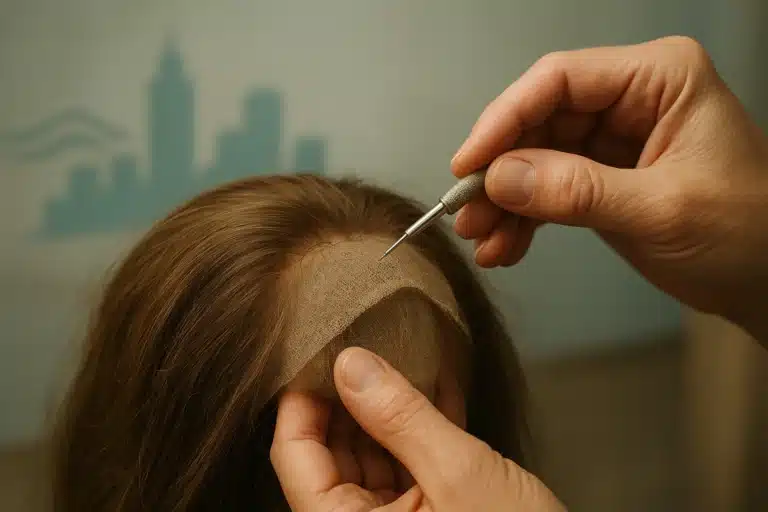
You may hear stylists talk about a “melted” look. This refers to the technique where the lace front of the wig is virtually invisible against the skin. Achieving this requires high-quality Swiss or HD lace and often a specific foundation for lace wig application that matches your skin tone perfectly. In a private setting, a stylist can demonstrate exactly how to achieve this at home, ensuring the hairline looks like it’s growing directly from your scalp.
Cap Construction Hierarchy
- Monofilament: This feature allows each hair to be tied individually to a sheer mesh section of the cap. The result? You can part the hair in any direction, and it looks like scalp is showing through.
- Silk Top: Considered the gold standard for realism, a silk top conceals the knots entirely, offering the most natural “scalp” appearance available.
- Hand-Tied: This refers to the entire cap being hand-knotted. It moves more naturally and is incredibly soft against sensitive scalps—a crucial factor for those undergoing chemotherapy.
The Financial “Aha!” Moment: Cranial Prostheses
A significant advantage of visiting a medically-oriented salon rather than a fashion retailer is their understanding of insurance protocols. Many newcomers are unaware that their insurance policy may cover a portion of their wig cost.
However, insurance companies rarely reimburse for a “wig.” They reimburse for a “Cranial Prosthesis.”
High-end, discreet salons in Los Angeles are often well-versed in this terminology. They can provide you with an invoice that uses the correct medical coding (typically HCPCS codes like L8000-L8020) required for claims. This simple shift in vocabulary—viewing your purchase as a medical necessity rather than a cosmetic accessory—can make a substantial financial difference.
Curating Your Experience: Top Tiers of Privacy in LA
While we always recommend doing your own research, several Los Angeles establishments have set the standard for privacy and empathy.
- The Compassionate Expert: Places like The Wig Fairy in Beverly Hills have mastered the emotional arc of the visit. Their “reveal” process is designed to be a tear-jerking, joyous moment of self-discovery. They excel at normalizing the experience, making you feel like you are visiting a supportive friend rather than a clinic.
- The Warrior’s Perspective: CreatedHair by Amy Gibson offers a unique layer of trust. As an alopecia warrior herself, Gibson has built a “concierge” service that addresses the lifestyle fears of wearing hair—swimming, dating, and living actively. Her approach bridges the gap between medical necessity and high-fashion living.
- The Luxury Salon: For those seeking a high-end European hair experience, TNT by Tallie offers a discrete environment that feels less like a medical appointment and more like an exclusive salon visit. This is ideal for those who want to maintain the ritual of “getting their hair done” in a private setting.
Actionable Advice: Preparing for Your Appointment
When you are ready to explore wig shops in Los Angeles, a little preparation goes a long way.
- Bring a “Comfort Buddy”: Most private suites welcome you to bring one trusted friend or family member. This person acts as a second set of eyes and emotional support.
- Ask About Scalp Health: If you are undergoing treatment, ask about wig liners (often bamboo or cotton) that sit between your scalp and the wig cap to prevent irritation.
- Discuss Maintenance Realistically: Be honest about your lifestyle. If you are low-maintenance, a high-grade synthetic might be better than human hair. Ask your consultant to show you the difference in care—specifically how to use a wide tooth comb to detangle without stretching fibers, versus the heat styling required for human hair.
Frequently Asked Questions
Q: What is the difference between a wig and a cranial prosthesis?
A: Technically, they can be the same item. The difference lies in the purpose and the paperwork. A cranial prosthesis is a medical term used for insurance purposes when hair loss is due to a medical condition.
Q: Can I live an active lifestyle in a wig?
A: Absolutely. Many best human hair wigs Los Angeles retailers offer specialized “active” lines or gripping bands (like wig grips) that secure the piece during yoga, hiking, or even swimming. Be sure to ask your consultant about “medical grade adhesives” if you need extra security for sports.
Q: Are there discreet options for children?
A: Yes. While less common, children’s lace wigs are available and designed with smaller cap sizes and more durable materials for play. Specialized boutiques often handle these consultations with extra sensitivity to make the child feel special, not “different.”
Q: Why do private consultations often charge a booking fee?
A: Unlike a walk-in retail store, a private consultation reserves a block of time (usually 45-60 minutes) with a specialist. This fee is often applied toward the purchase of a wig. It ensures that the stylist can dedicate their undivided attention to your education and fitting.
Finding the right hair replacement solution is a journey, not a transaction. By seeking out establishments that value your privacy and prioritize education, you transform a potentially stressful situation into an empowering act of self-care. Take your time, ask the hard questions, and remember: you deserve to feel comfortable every step of the way.