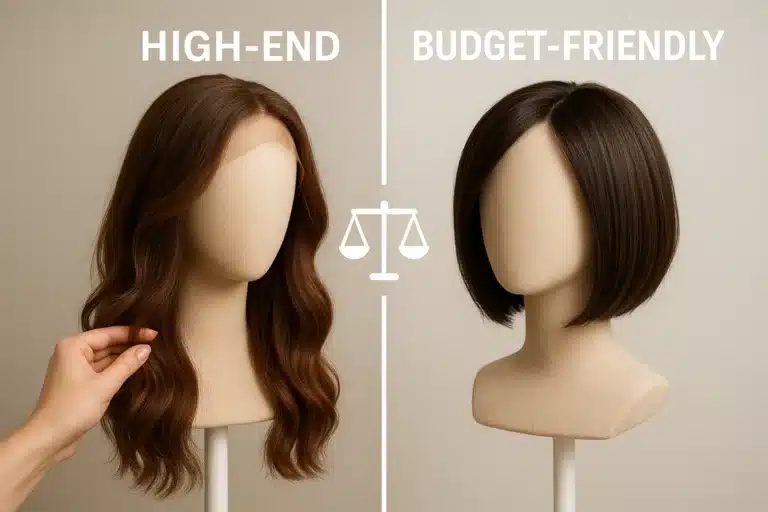
Walking into a wig shop for the first time can feel a lot like walking into a complex department store without a map. You are surrounded by walls of mannequin heads, varying textures, and price tags that range from affordable to significant investments. For many in Atlanta—a city widely considered the hair capital of the South—the sheer volume of options can be paralyzed rather than liberating. You aren’t just looking for a product; you are looking for confidence, comfort, and a reflection of your best self.
The secret to navigating this experience isn’t just knowing where to drive; it’s knowing how to look once you arrive. Whether you are seeking a solution for medical hair loss or exploring a new aesthetic, evaluating quality requires a specific set of skills. By understanding the technical details of wig construction—like lace clarity and hair integrity—you can distinguish the best wig stores in Atlanta from the rest, ensuring that you leave with a piece that feels as authentic as it looks.
Preparation: The Work Starts Before You Enter
Many first-time shoppers make the mistake of walking into a boutique unprepared, which can lead to inaccurate fittings and frustration. To evaluate a store’s inventory effectively, you need to set yourself up for a successful try-on session.
The “Flat Hair” Foundation
You cannot accurately judge the fit of a wig if your natural hair is adding bulk underneath. Before heading to a wig store in Atlanta, prep your hair by braiding it flat against your scalp or securing it in a very low, tight bun. If possible, bring a nylon wig cap with you. This ensures that when you try on a unit, you are feeling the true circumference of the cap against your head, rather than the volume of your bio hair.
The “No-Makeup” Etiquette
While you want to see how the hair complements your face, heavy makeup can be a liability during a shopping trip. Foundation and bronzer can transfer onto the lace of the wigs you try on, damaging the merchandise. Experienced boutique owners appreciate customers who arrive with a fresh face or minimal makeup, as it shows respect for the high-quality inventory.
The Atlanta Landscape: Boutique vs. Beauty Depot
Not all retail environments are created equal. In Atlanta, you will generally encounter two types of physical locations, and knowing the difference helps manage your expectations.
- The Beauty Depot: These are large, warehouse-style stores. They often have hundreds of units on display. While the variety is vast, the staff may not have specialized training in medical hair loss or high-end construction. These are great for browsing styles, but you may have to rely heavily on your own knowledge to assess quality.
- The Specialized Boutique: These locations often operate by appointment or offer private consultation areas. Here, the focus is on quality over quantity. The staff often includes licensed cosmetologists who understand the nuances of cap construction and customization.
The Pro-Buyer’s Inspection Checklist
Once you have a wig in your hands, how do you know it’s worth the investment? Move beyond just looking at the style and start inspecting the engineering. Use this 5-point technical check to evaluate the unit like a professional.
1. The Forearm Lace Test
Lace transparency is the key to a realistic hairline. A common mistake is holding the lace up to the light. Instead, perform the Forearm Test. Place the lace against the inner side of your forearm (which is usually lighter and closer to your scalp tone).
- What to look for: The lace should seem to “disappear” or melt against your skin. If it looks like a distinct grid or mesh, it is likely a lower-grade lace that will require significant makeup or tinting to look natural.
- Swiss vs. HD: Ask the associate if the unit uses Swiss Lace (durable, soft) or HD Lace (ultra-thin, invisible). HD lace offers the most realistic look but is more fragile—an important trade-off to consider for daily wear.
2. Inspecting the Knots
Look closely at the hairline where the hair is tied to the lace.
- Single vs. Double Knots: The most realistic wigs use “single knots” (one strand per hole) at the very front hairline, graduating to “double knots” further back for durability. If the knots at the very front look like tiny black poppy seeds, they are likely double knots, which can look artificial.
- Bleached Knots: Ask if the knots have been bleached. Bleaching removes the dark pigment from the knot, making it look like the hair is growing out of a scalp rather than being tied to a grid.
3. The Cuticle Feel Test
To determine if a human hair wig is truly high quality (Remy hair), you need to feel the cuticle.
- The Maneuver: Run your fingers down a section of hair from root to tip. It should feel smooth. Now, slide your fingers up the shaft from tip to root. You should feel a slight resistance or friction.
- Why it matters: If it feels perfectly smooth in both directions, the hair has likely been stripped of its cuticle and coated in silicone. This coating will eventually wash off, leading to severe tangling. If it tangles immediately when you rub it, the cuticles are misaligned (Non-Remy).
4. Density and the “Track Check”
Atlanta’s humidity can make heavy, high-density wigs feel hot and uncomfortable.
- Part the Hair: Use a comb or your fingers to part the hair in various places, specifically the back crown. If you can easily see the “wefts” or “tracks” (the stitched rows of hair) without trying, the density is too low.
- The “Short Hair” Check: Look at the top of the wig near the part. frequent short hairs sticking up (often called the “beard” or “return”) can indicate cheaper construction where fillers were used.
5. The Cap Stretch
A secure fit is non-negotiable. Hold the wig by the ear tabs and gently stretch the cap. It should have a comfortable elasticity—rebounding quickly to its shape. If the cap feels stiff or makes a “crunchy” sound, the materials may be low quality and uncomfortable for all-day wear.
The “Aha” Moments: Fit and Realism
Sometimes, a wig doesn’t look right simply because it is positioned incorrectly. Before you judge a store’s inventory, ensure you are wearing the test unit correctly.
The Four-Finger RuleA common error for beginners is pulling the wig too far forward, shrinking the forehead. Place four fingers flat on your forehead, resting your pinky against your eyebrows. The hairline of the wig should start where your index finger lands. This establishes a natural balance to your face.
Questions to Ask the Stylist
To ensure you aren’t just being sold a product, but are being guided to a solution, ask these specific questions. Their answers will reveal their level of expertise.
- “Can you explain the origin of this hair?” (You are looking for transparency—whether it is Chinese, Indian, or European hair affects texture and pricing.)
- “Is this wig ‘ready-to-wear’ or does it require professional customization?” (Many “Instagram-perfect” wigs require plucking and bleaching that isn’t done out of the box.)
- “What is the return or exchange policy if I take this home and it doesn’t fit?” (Hygiene laws often restrict returns, so be clear on this before purchasing.)
Frequently Asked Questions
Q: How do I know what size wig I need?
A: Most adults fit an “Average” cap size (roughly 21.5 to 22.5 inches circumference). However, you should measure your head with a flexible tape measure, tracing the hairline around the nape of the neck. If you are shopping at a reputable wig store Atlanta has to offer, the staff should offer to measure you professionally.
Q: Should I choose Synthetic or Human Hair?
A: This depends on your lifestyle. Synthetic hair is “shake-and-go,” retaining its style even in humidity, making it low maintenance. Human hair offers the most natural movement and styling versatility but requires the same upkeep as your own bio hair.
Q: Why do some wigs look like a “helmet”?
A: This is usually due to high density at the hairline or a cap that is too small. Look for wigs with a “graduated density” hairline, which is thinner at the front and gets thicker toward the back.
Q: Can I sleep in my wig?
A: While possible with certain installation methods (like gluing), it is generally recommended to remove your wig at night to preserve the lace and the hair’s lifespan, as well as to let your scalp breathe.
Taking the Next Step
Evaluating wig stores in person is about more than just browsing; it is about investigating. By paying attention to the texture of the hair, the transparency of the lace, and the knowledge of the staff, you shift from being a passive shopper to an empowered decision-maker.
Remember, the goal is to find a piece that makes you forget you are wearing it. Take your time, ask the hard questions, and trust your hands as much as your eyes. When you find a store that welcomes your curiosity and passes your inspection, you’ve found more than a shop—you’ve found a partner in your journey.