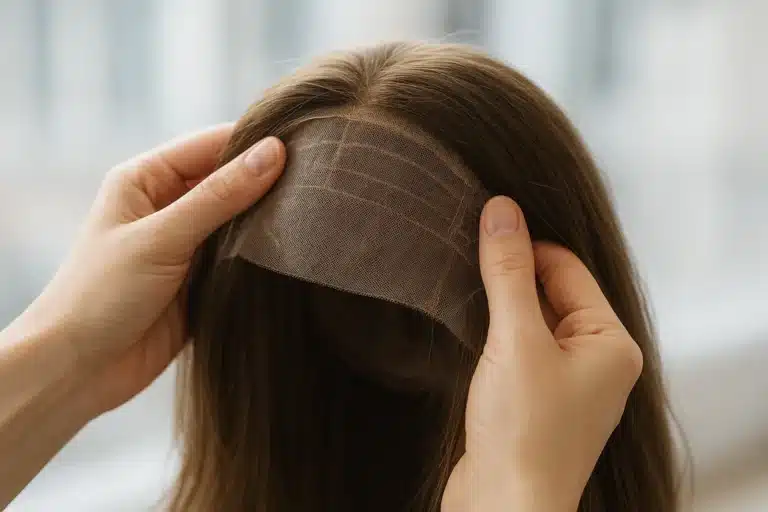
We’ve all experienced that fleeting moment of panic. A sudden, strong gust of wind catches you off guard, or an old friend pulls you in for a tight, unexpected hug. If you wear wigs, your first instinctive thought is often: Is my hair going to slip?
For decades, the standard answer to that anxiety was to reach for the strongest liquid adhesives available. But the landscape of modern wig security: adhesives, tapes, and glueless methods has evolved remarkably. Today, you don’t need to choose between the safety of your edges and the security of your hair. Glueless wig applications have transformed from temporary, delicate solutions into highly engineered, multi-point security systems that can withstand everything from a busy day at the office to a high-impact cardio session.
If you are ready to ditch the drying time and protect your sensitive scalp, this guide will walk you through the fascinating physics of glueless security, how to choose the right grip for your lifestyle, and how to finally say goodbye to the dreaded “wig headache.”
The Myth of the “Insecure” Wig
A common misconception among beginners is that a glueless wig relies entirely on luck and a single, flimsy elastic band to stay in place. In reality, modern glueless security is a comprehensive system that relies on friction, tension, and structure.
When you understand how a wig’s internal framework interacts with tools like bands and grips, you cross the threshold from constant anxiety to total confidence. Let’s break down exactly how this security works.
The Physics of Friction: How Glueless Security Actually Works
Saying “it just grips” doesn’t quite explain the magic behind a flawlessly secured unit. Your choice of grip should actually be dictated by your unique scalp type (oily vs. dry) and whether you have biological hair underneath.
Velvet Grips and the “Pet the Cat” Rule
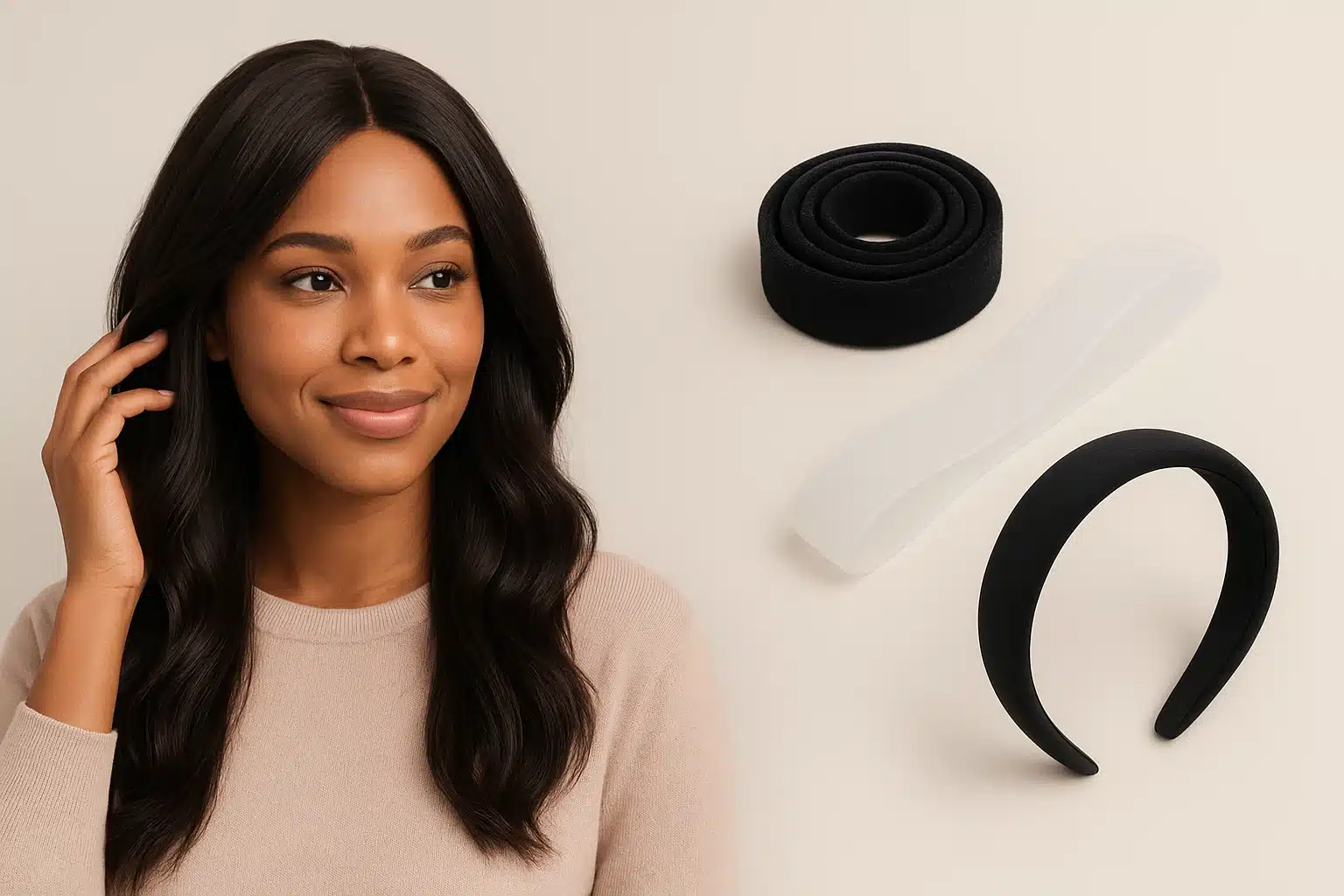
If you have fine hair, a sensitive scalp, or dry skin, a velvet wig grip is your best friend. But velvet doesn’t just create friction—it creates directional friction.
Think of a velvet band like a cat’s fur. If you pet the cat from head to tail, the fur lies flat and smooth. If you pet the cat backward, the fur stands up and feels rough. When placing a velvet grip around your hairline, you must apply the “Pet the Cat” rule. As you slide your hand backward from your forehead toward your crown, the velvet should feel rough. This one-way friction acts as microscopic hooks, instantly catching the lace or cap of your wig if it tries to slide backward, locking it firmly in place.
The Silicone Suction Effect
For those with complete hair loss, highly active lifestyles, or oilier scalps, velvet might eventually slip if you break a sweat. This is where the physics of silicone comes into play.
A suction silicone wig cap works on a completely different principle: micro-suction and weight distribution. Medical-grade silicone responds to your body heat, gently adhering to a bald or closely cropped scalp without feeling sticky. Because silicone repels moisture, it forms a natural barrier during your workout, ensuring that sweat rolls off without compromising the suction of the band.
The Anatomy of a Headband Wig: Your Glueless “Gateway”
If you are intimidated by lace cutting, melting, or baby hair styling, the headband wig is your ultimate “gateway” into the glueless lifestyle.
Headband wigs drastically reduce the threshold of effort required to look put-together. Instead of a delicate lace front, the front perimeter of the wig cap features a soft, durable headband that sits just behind your natural hairline. This allows you to blend your own edges (if you choose) while the attached combs and adjustable velcro straps do the heavy lifting. From everyday synthetic styles to premium human hair choices like sunber wigs, these units offer an inherent, built-in security that practically eliminates the learning curve for beginners.
The 3-Step Security Protocol for Flawless Wear
Achieving an all-day, worry-free hold without adhesives comes down to three fundamental steps: Prep, Placement, and Tension.
1. Prep: The Flat Foundation
Friction cannot happen on an uneven surface. If you have biological hair, your foundation must be as flat as possible. Straight-back cornrows or a flat wrap around the head ensure your grip band lays flush against your skin. Any bumps will create air pockets, significantly reducing the effectiveness of your grip.
2. Placement: The Front-to-Back Pivot
Never pull a glueless wig straight down over your head like a winter beanie. Instead, use the Front-to-Back Pivot. Align the front edge of the wig with your hairline (or just in front of your grip band), press down firmly with your thumbs, and pivot the back of the wig down over the nape of your neck. This stretches the internal cap, engaging the elastic straps to create a custom, snug fit.
3. Tension: The Two-Finger Rule
Beginners often over-tighten their internal adjustable straps out of fear, leading directly to vascular compression and throbbing headaches. To prevent this, always use the Two-Finger Tension Test. Once your wig and grip are secured, you should be able to slide two fingers comfortably between the band and your temples. If you can’t, it’s too tight. Security comes from surface-area friction, not tourniquet-level pressure.
Mastery & Troubleshooting: Preventing the “Wig Headache”
Even with the Two-Finger Rule, you might still experience discomfort if your tension is distributed poorly. Welcome to the Headache Scale:
- Temple Tension: Causes immediate throbbing. Fix this by adjusting your ear tabs slightly upward or switching to a grip with a sheer lace front that reduces bulk at the temples.
- Nape Tension: Causes a dull ache at the base of the skull. This means your adjustable straps are hooked too tightly.
DIY “On-Head” Construction
If your standard glueless wig still shifts, you may have a unique head shape. A brilliant hack is “On-Head” construction. Put your wig on inside-out (over a wig cap). Feel where the gaps are—usually right behind the ears or at the crown. Use a needle and thread to sew an extra piece of elastic band directly into those loose spots while the wig is tailored to your exact head shape.
The Universal Security Scale: Matching Method to Activity
Not every day requires maximum lockdown. Here is how to scale your glueless security based on your agenda:
- Level 1: The Office Worker (Low Impact)
- Method: Standard velvet grip + internal adjustable wig straps.
- Result: Perfect for computer work, running errands, and light socializing.
- Level 2: The Windy Commute (Medium Impact)
- Method: Velvet grip + sewn-in elastic “piano” band + nape combs engaged.
- Result: Withstands brisk walks, sudden breezes, and standard daily movement.
- Level 3: The Gym Goer (High Impact)
- Method: Silicone grip band + a light spritz of water-soluble holding spray at the ear tabs.
- Note: While glueless systems are incredible, some extreme athletes or performers may still wonder how to use wig tape or require a hypoallergenic wig glue for absolute peace of mind during rigorous activities. However, for 95% of lifestyle needs, Level 3 glueless techniques are more than sufficient.
The 7-Day Glueless Lifestyle Transition
Transitioning away from glue trauma doesn’t have to happen overnight. Try this 7-day approach:
- Days 1-2: Wear a headband wig around the house to get used to the feeling of weight resting on the nape of your neck rather than glued to your forehead.
- Days 3-4: Apply your regular lace wig using only a velvet grip. Wear it on quick errands to build trust in the friction.
- Days 5-7: Integrate the “Two-Finger Rule” and test your unit during a light workout. Experience the joy of taking your hair off at night in under three seconds!
Frequently Asked Questions (FAQ)
Will my glueless wig fall off if I bend over?
No. If you have utilized the correct velvet grain direction and engaged the internal adjustable straps properly, gravity alone is not enough to break the friction barrier. Try the “shake test” at home to build your confidence!
Do I need glue to lay the lace flat on a glueless wig?
Not necessarily! You can achieve a melted lace look using a glueless holding spray or mousse tied down with a silk melt band for 10 minutes. It provides a flush look without the sticky, pore-clogging residue of actual adhesive.
Silicone vs. Velvet: Which is better for sweat?
Silicone is vastly superior for heavy sweating. Velvet absorbs moisture, which can eventually cause it to stretch and slip during a heavy workout. Silicone repels moisture and maintains its micro-suction grip regardless of how much you perspire.
Your Next Steps Toward Hair Freedom
Understanding the mechanics of glueless security is the first step toward a healthier scalp, protected edges, and a more comfortable daily routine. By respecting the physics of friction and utilizing tools like velvet bands, silicone grips, and headband wigs, you empower yourself to wear your hair with absolute confidence.
Ready to dive deeper into protecting your natural hair while wearing wigs? Explore our comprehensive guides on scalp care and cap construction to continue your journey toward mastering the perfect, comfortable fit.