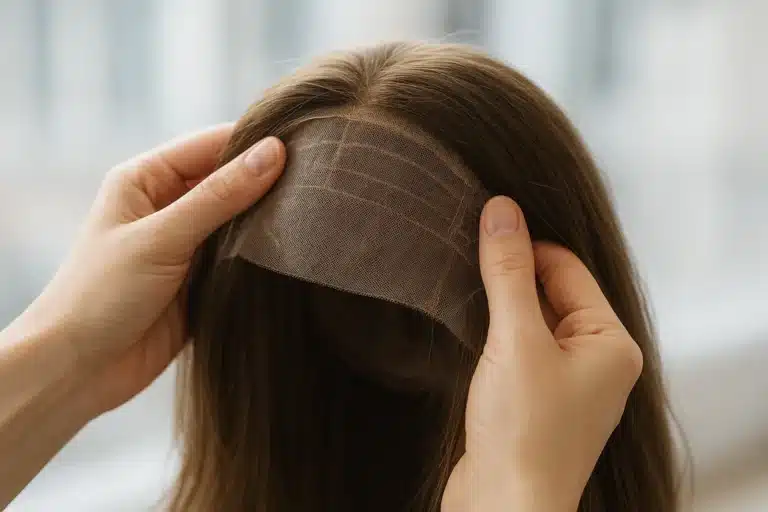
There is a moment many wig wearers know all too well. You look in the mirror, and your hair looks flawless—the hairline is undetectable, the style is perfect. But underneath that confidence, your scalp is signaling an SOS. The itch starts as a whisper and grows into a distraction that no amount of tapping can soothe. It’s the hidden dilemma of hair replacement: we want a secure hold that withstands our busy lives, but often at the cost of our skin’s health.
For those navigating alopecia, chemotherapy, or sensitive skin conditions like psoriasis, the world of adhesives can feel like a minefield. The search for a secure attachment often leads to stronger, harsher chemicals, creating a cycle of irritation that can damage the very skin we are trying to protect. Finding a safe hold is just as critical as the style itself, a concept we explore in depth in The Ultimate Guide to Wig Adhesives: Finding Your Perfect Hold. However, understanding the chemistry of that hold is the first step toward reclaiming your comfort.
The Biology of Occlusion: Why Your Scalp Needs to Breathe
To understand why reactions happen, we first need to look at the biology of the scalp. Your skin is a living organ that is constantly regenerating. On average, the human body sheds between 30,000 and 40,000 skin cells every minute. Under normal circumstances, these cells flake away unnoticed.
When you apply a liquid adhesive or strong tape, you are creating a state of occlusion. You are effectively sealing the skin, trapping those shedding cells, sweat, and natural oils against the surface.
This warm, moist environment is the perfect breeding ground for bacteria. Often, what wearers assume is an allergic reaction to glue is actually maceration—the skin becoming over-hydrated and breaking down because it cannot “breathe.” This is why distinguishing between an allergy and environmental irritation is crucial for effective wig rash treatment.
Chemical vs. Mechanical: Diagnosing Your Discomfort
Before throwing out your current adhesive, it is vital to identify the source of the pain. Dermatologists generally categorize scalp irritation into two buckets: Chemical and Mechanical.
Chemical Irritation (Contact Dermatitis)
This is an immune response to a specific ingredient. Signs include:
- Timing: Reaction usually occurs 24-48 hours after application.
- Sensation: Intense itching, heat, or burning.
- Appearance: Redness, swelling, or blisters that match the exact shape of where the glue was applied.
Mechanical Irritation (Trauma)
This is caused by physical stress on the skin, usually during the removal process or from the weight of the wig pulling on the skin. Signs include:
- Timing: Pain occurs immediately during or after removal.
- Sensation: Soreness, stinging, or tenderness to the touch.
- Appearance: Raw skin or abrasions.
If you are experiencing stinging upon removal, you may not need a hypoallergenic hair glue; you may simply need a gentler removal protocol (more on that below).
The “Chemical Red List”: Ingredients to Watch
If you suspect a chemical allergy, you need to become an ingredient detective. Many “standard” glues rely on industrial-strength chemicals to achieve those promised 4-week holds. Here are the “Big Four” allergens to watch out for:
- Latex: A natural rubber that provides great flexibility but is a high-risk allergen for many people.
- Acrylics/Acrylates: The most common ingredient in synthetic adhesives. Even “latex-free” glues are often acrylic-based.
- Formaldehyde: Often hidden in preservatives. It offers a strong hold but is a known carcinogen and severe irritant.
- Propylene Glycol: A common solvent used to keep liquids from drying out, but a frequent cause of contact dermatitis.
The “Water-Based” Myth
A common misconception is that water based wig glue is automatically safe. While water-based formulas are generally gentler and lack harsh solvents, they still require preservatives to prevent bacteria growth in the bottle. These preservatives can trigger reactions in ultra-sensitive users. Always check the label, even if it says “gentle.”
The 7-Day Safety Standard
Marketing in the wig industry often touts “4-week hold” as the gold standard. However, from a medical skin safety perspective, leaving an adhesive on for a month is risky for sensitive scalps.
We recommend adopting the 7-Day Safety Standard.
Medical wound dressings—which use similar adhesive technology—are rarely designed to stay on skin longer than seven days. By removing, cleaning, and resting your scalp every week, you allow the skin to exfoliate naturally, prevent bacterial buildup, and monitor your scalp health. If you are prone to irritation, sacrificing longevity for hygiene is a trade-off that will save your skin in the long run.
The “Danger Zone”: DIY Disasters to Avoid
In moments of desperation, when a wig won’t stay put, some wearers turn to the internet for “hacks.” We must issue a stern warning regarding two dangerous trends appearing in search results:
- HST-4 / Super T / Cyanoacrylate: These are essentially industrial super glues. They are not designed for human skin. They can cause chemical burns and permanent damage to hair follicles, preventing any future natural growth.
- Hot Glue: Please never use hot glue on your scalp. The heat causes immediate thermal burns, and the adhesive is not flexible, leading to severe mechanical tearing upon removal.
The Protocol: Patch Testing and Safe Application
If you are ready to try a new hair glue for sensitive skin, do not apply it to your entire hairline immediately. Follow this safety protocol:
1. The 72-Hour Patch Test
Most people wait 24 hours, but delayed hypersensitivity can take up to 3 days to appear.
- Place a small drop of adhesive behind your ear or on your inner wrist.
- Cover it with a bandage (to simulate occlusion).
- Wait 72 hours. If there is no redness, itching, or bumps, it is likely safe for your scalp.
2. Use a Scalp Protector
Think of a scalp protector as a primer. It forms a microscopic barrier between your skin and the adhesive. For many users, the glue isn’t the problem—the direct contact is. A protector can prevent the adhesive from seeping into the pores.
3. Safe Removal Strategy
Never peel a wig off a dry scalp. Use a release spray or solvent and let it sit. You should not have to pull; the wig should slide off. If you have to scrub, you are causing mechanical trauma that will make your scalp sensitive to the next application.
When Adhesives Aren’t the Answer
For some, specifically those undergoing aggressive chemotherapy or with severe eczema, even the most gentle medical-grade adhesives are too much. In these cases, it is time to look at friction-based security.
Suction silicone wig caps and velvet wig grips offer a secure hold without any chemical bonding. These rely on the natural contours of your head and gentle friction to stay in place, completely eliminating the risk of chemical burns.
Frequently Asked Questions
Can I find a sweat-proof glue that is also hypoallergenic?
This is the “Holy Grail” of adhesives. Generally, the stronger the “sweat-proof” claim, the stronger the chemicals required. However, some medical-grade acrylic adhesives offer water resistance while being formulated for skin safety. If you are swimming, look specifically for the best waterproof wig glue for swimming that also lists “medical grade” on the bottle, and strictly limit your wear time to prevent trapping chlorine or salt against the skin.
Is “Medical Grade” the same as “Hypoallergenic”?
Not always. “Medical Grade” usually means the facility and ingredients meet safety standards for contact with skin (like band-aids). “Hypoallergenic” means it is formulated to minimize allergic reactions (usually by removing latex). Always look for both designations.
How do I treat a wig rash on my forehead?
If you develop a wig rash on forehead, stop using adhesive immediately. Clean the area with mild soap and water. Apply hydrocortisone cream if the skin is unbroken, or a soothing aloe gel. Do not apply a wig over the rash until it is completely healed.
Continued Learning
Your scalp health is the foundation of your wig-wearing experience. By moving away from industrial holds and embracing a “skin-first” routine, you can enjoy your hair without the distraction of discomfort. Start with a proper patch test, and don’t be afraid to experiment until you find the method that lets you—and your skin—breathe easy.