There is a distinct feeling of magic when you first unbox a Hairdo wig. The fibers are silky, the movement is natural, and the shine is perfectly balanced. It represents more than just hair; it represents a fresh start and a boost of self-assurance. However, for many wearers, that “new hair” feeling can fade into confusion when the nape starts to tangle or the fibers lose their lackluster.
Understanding how to care for your investment is just as important as the purchase itself. To fully master your look, you first need to ensure you are choosing your perfect style with confidence before applying advanced maintenance techniques. Once you have the right piece, the secret to longevity isn’t just about washing—it is about understanding the science behind the fiber.
Many people approach synthetic hair with a “fear of damage” mindset, avoiding heat and manipulation at all costs. But to truly extend the life of a modern heat-friendly wig, we need to shift to a “technical mastery” mindset. This guide will walk you through the professional techniques that keep Hairdo wigs looking salon-fresh for months.
Understanding the “DNA” of Tru2Life Fibers
Before diving into the “how-to,” it is vital to understand what you are working with. Hairdo wigs are largely crafted from Tru2Life heat-friendly synthetic fibers. Unlike traditional synthetic hair, which is essentially a static plastic monofilament, Tru2Life fibers are engineered polymers designed to react to heat similarly to biological hair—up to a point.
These fibers are “smart.” They have a memory. This means that once they are styled and cooled, they will hold that shape through rain, humidity, and washing until heat is applied again. However, this technology requires specific maintenance rules that differ from both human hair and standard synthetics.
The Daily 60-Second Reset
Maintenance doesn’t always mean a heavy wash day. The most critical care happens in the sixty seconds after you take your wig off for the day.
The Detangling Hierarchy
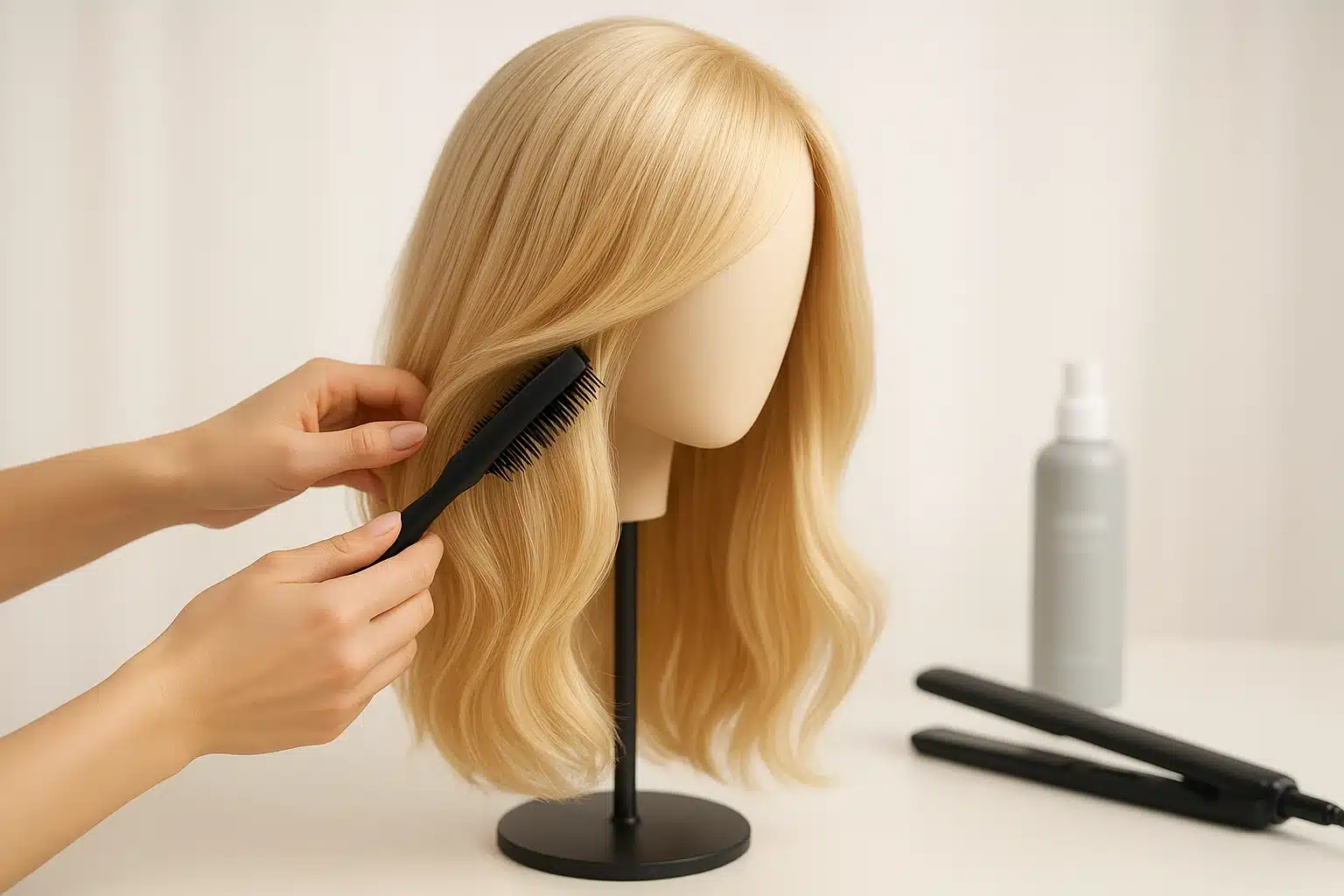
Never brush a wig from the roots down. This drags tangles into tighter knots and can stretch the fibers, leading to permanent “crinkling.”
- Start at the Ends: gently work out knots at the bottom 2 inches.
- Move Up: Gradually work your way up to the mid-lengths.
- The Root: Only brush near the cap once the lengths are completely free.
The Tool Matter: Always use a wide-tooth comb or a brush specifically designed for wigs. Standard hairbrushes often have little balls on the tips of the bristles (epoxy tips) that can snag on the fiber or, worse, scrape the microscopic silicone coating off the synthetic strands, leading to premature frizz.
The Wash Day Protocol: “Dip & Swish” vs. Running Water
One of the most common questions is how often to wash. The general rule is every 6-8 wears, but this varies based on lifestyle. When it is time to cleanse, technique is everything.
Method 1: The Dip & Swish (For Deep Cleaning)
Use this method when there is buildup from styling products or sweat.
- Fill a basin with cool water (never hot) and a capful of synthetic-safe shampoo.
- Turn the wig inside out to expose the cap (where oils accumulate).
- Submerge and gently swirl. Let it soak for 5-10 minutes.
- Rinse with cool water.
Method 2: The Running Water Method (For Refreshing)
This is preferred by many experts to prevent the cap from stretching.
- Hold the wig by the front hairline under a cool tap.
- Let the water run in the direction of the hair fall (roots to ends).
- Apply shampoo in a downward motion—never scrub or bunch the hair like laundry.
The “Dish Soap” Truth: You may hear advice about using dish soap on wigs. While dish soap is excellent at stripping grease, it is harsh. It should only be used in “emergency” situations where heavy oils or silicone sprays have built up significantly, and it must be followed by a deep conditioning treatment specifically for synthetics.
The Nape Crisis: Turning Heat into a Healer
The most common frustration with medium-to-long wigs is the “crunchy” texture that develops at the nape of the neck.
The “Aha” Moment
Most wearers assume this is caused by dryness or dirt. In reality, this is friction frizz. As you move your head, the fibers rub against your clothing and body heat. This friction creates microscopic kinks in the fiber.
Here is the counterintuitive secret: You need heat to fix it.
While we are taught that heat damages synthetic hair, Tru2Life fibers actually require controlled heat to smooth those friction kinks back out. This is a refurbishment process.
The Frizz Reversal Protocol
- Detangle the wig completely.
- Protect the fiber with a heat-protectant spray designed for synthetics.
- Set your flat iron to the “Longevity Zone” (275°F – 300°F). While the fiber can handle up to 350°F, the lower range is safer for repeated maintenance.
- Tension and Glide: Take small sections of the frizzy area. Run a fine-tooth heat-resistant comb through the hair, followed immediately by the flat iron. The tension of the comb pulls the fiber straight, and the heat sets it.
The Science of Cooling: Baking the Style
If you are styling your Hairdo wig (curling or straightening), remember this physics rule: Synthetic hair sets during the cooling phase, not the heating phase.
If you curl a strand with a curling iron and immediately drop it, it will fall straight. You must:
- Heat the curl.
- Pin it or hold it in the curled shape in your hand.
- Wait for the fiber to cool completely.
Think of it like baking cookies; they are soft when they come out of the oven but harden as they cool. This is how you lock in a style that lasts for weeks.
Troubleshooting Common Issues
Why does my wig look “poofy”?
If your wig looks unnaturally voluminous or dry, it likely lacks the “slip” of a new wig. Synthetic fibers don’t have natural oils. Using a specialized silicone spray (often generically available as detanglers like Simply Stylin’ or brand-specific sprays) can restore that sleek, heavy drape that mimics biological hair.
Can I use regular hairspray?
Avoid standard drugstore hairsprays. They contain alcohols and lacquers that can degrade the synthetic fiber and leave a white, gummy residue that is difficult to wash out. Always opt for water-soluble sprays formulated for wigs.
Storage: Stand vs. Box
While the box is great for shipping, it is terrible for daily storage. Storing a wig in a box can crush the “memory” of the style and trap odors. A wig stand or mannequin head allows the cap to breathe and helps the fibers maintain their intended direction and volume.
Frequently Asked Questions
How long should my Hairdo wig last?
With daily wear, a heat-friendly synthetic wig typically lasts 3 to 6 months before showing significant wear. However, using the “Frizz Reversal Protocol” with a flat iron can significantly extend this lifespan, sometimes doubling the usable life of the piece.
Can I dye my Hairdo wig?
No. Synthetic fibers are non-porous and acts like a plastic; they cannot absorb hair dye. Attempting to dye them will likely stain the lace cap and ruin the fibers.
What is the safest temperature for styling?
While Tru2Life fibers are rated up to 350°F, we recommend staying between 275°F and 300°F. This provides enough heat to reshape the fiber without risking the structural integrity of the hair over time.
continued Learning
Caring for your wig is a journey of getting to know the product. By mastering friction management and understanding the thermal properties of the fiber, you stop being a passive wearer and become an expert in your own style. As you become more comfortable with these techniques, you’ll find that your wigs not only last longer but look more realistic every day you wear them.