Imagine finding a hairstyle that looks absolutely perfect in a photograph. The color captures the light beautifully, the length frames the face just right, and the texture seems soft to the touch. You order it, excited for the transformation. But three days later, you find yourself constantly adjusting the hairline during a meeting, or feeling uncomfortably warm during your evening walk. The hair looks great, but the experience feels wrong.
This is the most common hurdle for newcomers to the world of alternative hair. It isn’t usually a quality issue; it’s a lifestyle mismatch. A piece designed for a high-glamour evening gala often possesses entirely different structural mechanics than one engineered for daily wear in a humid climate. Understanding the nuances of cap construction, fiber durability, and securement methods is where the guidance from a professional consultation becomes invaluable. By moving beyond aesthetics and analyzing your daily routine, you ensure your hair choice supports your life rather than complicating it.
The Stylist’s Toolkit: Components of a Perfect Match
Before a stylist looks at face shapes or color trends, they look at mechanics. To the untrained eye, two wigs might look identical, but their internal architecture dictates how they perform in the real world. Professionals evaluate three core “pillars” when matching a client to a hairpiece:
1. The Fiber Physics
The choice between human hair and synthetic fiber is rarely just about price—it’s about time management.
- Synthetic Hair: These fibers have “style memory.” They return to their original shape after washing and air drying. They are excellent for those who want to “shake and go” without spending time styling every morning.
- Human Hair: This offers the ultimate natural movement and longevity but requires the same upkeep as biological hair. For those seeking the most realistic texture and styling versatility, browsing the best human hair wigs is often the starting point.
2. The Foundation (Cap Construction)
Think of the cap as the fabric of a garment. Just as you wouldn’t wear wool to the gym or silk to do yard work, the cap material must match your activity level.
- Basic Caps: Durable and often have open wefting for airflow, but less styling versatility.
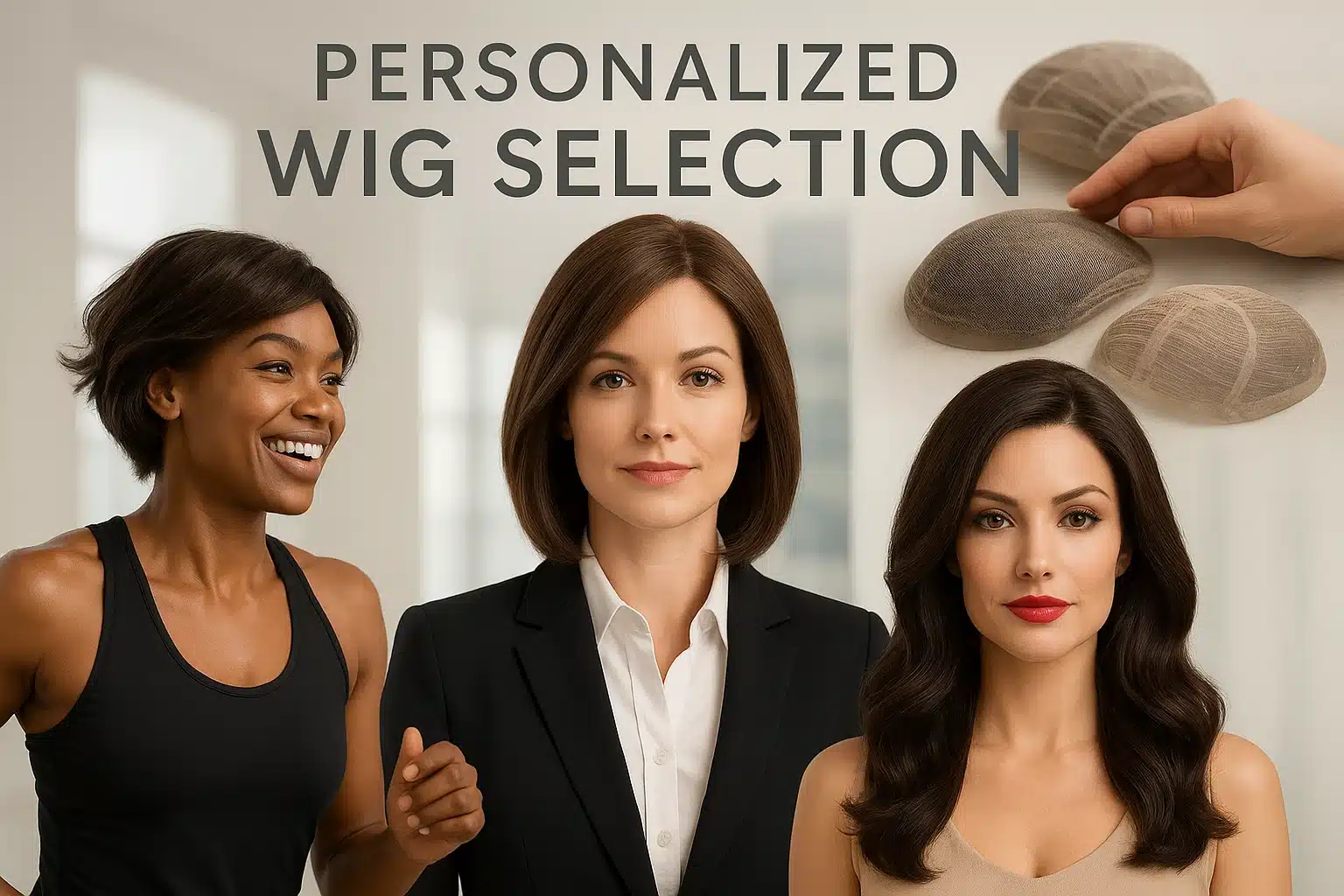
- Monofilament: Features a sheer mesh that allows scalp color to show through, creating the illusion of natural growth.
- Hand-Tied: This is the pinnacle of comfort. In hand tied wigs, every single hair is knotted individually into the cap. This creates the most natural movement and is incredibly soft against sensitive skin, making it a favorite for those with total hair loss.
3. Securement Mechanics
How the wig stays on is just as important as how it looks. From velvet grip bands to pressure-sensitive clips and medical-grade adhesives, the method of attachment changes based on how much you move during the day.
Matches Made in Reality: 3 Lifestyle Archetypes
When you speak with an expert, they are mentally categorizing your needs into specific lifestyle archetypes. Here is how those professional insights translate into specific recommendations.
The Active Individual
The Challenge: Sweat, movement, and heat.If your day involves yoga, running after children, or gardening, your primary enemy is friction and heat. A heavy, high-density wig can trap heat, causing discomfort and slipping.
The Professional Recommendation:Stylists often steer active clients toward heat-friendly synthetic fibers or shorter styles that stay off the neck.
- Cap Choice: An open-wefted cap for maximum air circulation.
- Securement: A wig grip band is essential here. It acts like a velvet headband that creates friction, preventing the wig from slipping even during vigorous movement, eliminating the need for adhesives that can loosen with sweat.
The Corporate Professional
The Challenge: Harsh lighting, long hours, and close proximity.In an office setting or on high-definition video calls, the top of the head is often the focal point. Overhead fluorescent lighting can be unforgiving, instantly revealing a thick or unnatural hairline.
The Professional Recommendation:Comfort for 8+ hours is key, as is the realism of the part line.
- Cap Choice: A monofilament top is virtually non-negotiable here. It allows you to part the hair in any direction and ensures that under bright boardroom lights, it looks like hair growing directly from your scalp.
- Fiber: High-quality human hair or premium synthetic is preferred to avoid the “shine” sometimes associated with lower-quality fibers.
The Social Butterfly
The Challenge: Versatility and changing aesthetics.If your calendar is full of dinners, events, and photos, you likely don’t want to look the same every single day. You need hair that can be curled one night, straightened the next, and pinned up on the weekend.
The Professional Recommendation:
- Cap Choice: A lace front is critical here. It creates an invisible hairline, allowing you to sweep the hair back off your face—essential for formal updos.
- Fiber: 100% Remy human hair is the standard. It withstands heat styling tools, allowing you to change your look as often as you change your outfit.
Myth-Busting: What Experts Want You to Know
A major part of the educational journey is unlearning misconceptions that internet forums often perpetuate.
Myth: “Wigs will damage my biological hair.”Truth: When worn correctly with a proper cap liner, wigs are actually protective. They shield your biological hair from sun damage, over-styling, and environmental pollutants. The damage usually comes from improper removal of adhesives, not the wig itself.
Myth: “Everyone will know I’m wearing one.”Truth: You likely pass people wearing wigs every day without realizing it. The “wiggy” look usually comes from excessive hair density (too much hair) or a cap that sits too low on the forehead. Proper sizing is the antidote to detection.
Myth: “I can’t wear a wig because my head is too small/large.”Truth: Just like clothing, wigs come in Petite, Average, and Large sizes. Furthermore, many high-quality caps have adjustable straps at the nape that allow for up to an inch of variance.
Preparing for Your Selection Journey
Whether you are browsing online or planning to chat with a customer care expert, preparation ensures you get the right advice. Before you start looking at colors, audit your life.
- Define Your “Time Budget”: Be honest—do you have 20 minutes to style your hair in the morning, or do you have 2?
- Assess Your Environment: Are you mostly indoors with climate control, or outdoors in the elements?
- Analyze Your Face Shape: While lifestyle dictates the cap, your bone structure dictates the style. Reading a wig styling face shape guide can help you understand which cuts will balance your features naturally.
Frequently Asked Questions
Can I sleep in my wig?
While it is physically possible, experts generally advise against it for daily wearers. Friction against the pillow can cause tangling and breakage, significantly shortening the lifespan of the piece. If you must sleep in it, use a silk pillowcase and a loose braid.
How often do I really need to wash it?
Unlike growing hair, wigs do not receive oils from the scalp. Therefore, they need washing much less frequently—typically every 6 to 8 wears. Over-washing is a common mistake that dries out the fibers.
What is the most comfortable wig for sensitive scalps?
If you are undergoing chemotherapy or have alopecia, your scalp may be sensitive. A 100% hand-tied cap is the gold standard for comfort. It lacks the rows of wefting (seams) found in basic caps, offering a smooth, seamless surface against the skin.
Is human hair always better than synthetic?
Not necessarily. It depends on your needs. Human hair offers realism and longevity but requires work. Synthetic hair offers convenience and color retention but has a shorter lifespan. The “best” option is the one that fits your lifestyle.
The Next Step in Your Journey
Selecting a wig is not merely a transaction; it is an investment in your confidence and daily comfort. By understanding the intersection of mechanics and lifestyle, you move from a passive shopper to an informed decision-maker.
Remember, the goal isn’t just to find hair that looks good in the mirror—it’s to find hair that feels like you while you’re living your life. Whether you are running a marathon or running a meeting, there is a construction designed to support you. Take your time, assess your needs, and trust the process of finding your perfect fit.