Imagine standing in front of a mirror in a boutique just south of the Texas Medical Center. The wig looks perfect under the showroom lights—silky, shiny, and voluminous. You make the investment, hoping this is the solution to your hair loss journey. But three weeks later, after just a few days of Houston’s notorious 90% humidity, that silky hair has transformed into a matted, frizzy tangle at the nape of the neck.
This is the “expensive mistake” thousands of buyers make every year.
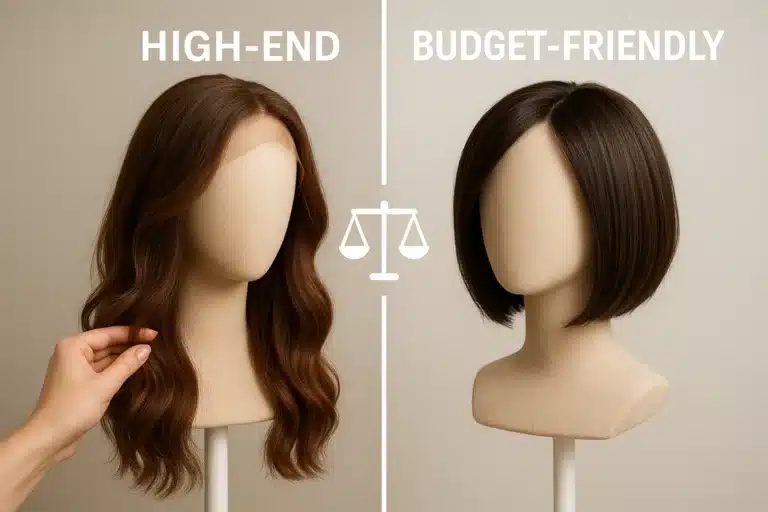
Finding human hair wigs in Houston isn’t difficult; the city is filled with beauty supply stores and boutiques. The real challenge is finding quality hair that can withstand the local climate and look natural longer than a month. Because the wig industry is largely unregulated, the difference between a $400 wig and a $3,000 wig isn’t always visible to the naked eye—until you wash it.
This guide acts as your objective consultant, stripping away the marketing jargon to help you navigate the Houston market with confidence.
The “Ponytail” Distinction: Understanding Hair Source
Before you drive to a shop in Sugar Land or the Museum District, you need to understand what you are actually looking for. The most common question we hear is, “Why is European hair so expensive compared to the hair I see in beauty supply stores?”
The answer lies in the collection method.
The “Floor Hair” Trap vs. Cuticle Alignment
High-quality human hair is collected in a ponytail from a single donor. This ensures that the cuticles (the microscopic protective scales on the hair shaft) all run in the same direction, from root to tip. This is what the industry calls Remy hair. Because the cuticles are aligned, the hair glides against itself naturally without tangling.
In contrast, much of the “100% Human Hair” found in lower-tier markets is what insiders call “floor hair.” This is fallen hair swept up from salons or temples. Because the cuticles are facing every direction, they act like Velcro, locking together and matting instantly.
To hide this, manufacturers dip the hair in an acid bath to strip off the cuticle entirely, then coat it in thick silicone to make it shine. It looks beautiful in the box. But once you wash that silicone off? You are left with brittle, unprotected hair that reacts poorly to moisture.
The Houston Humidity Factor
In a dry climate, you might get away with lower-grade human hair. In Houston, however, the environment is unforgiving.
Humidity causes hair to swell. If you have purchased hair that has been chemically stripped (non-Remy), it acts like a sponge, absorbing moisture from the air instantly. This leads to the “poodle effect” or severe matting at the neck area where heat gets trapped.
When shopping for lace front wigs in Houston, specifically ask for Virgin or high-quality Remy hair. Virgin hair has never been chemically processed (dyed or permed), leaving the cuticle intact and healthy. This acts as a natural shield against the humid Texas air, allowing the style to hold longer and the fiber to remain smooth.
Decoding the “Grade” Scam
If you walk into a shop and the salesperson starts boasting about “10A” or “12A” grade hair, pause.
There is no governing body regulating wig hair grades. Unlike diamonds, which have a universal grading scale, hair grades are arbitrary numbers created by factories for marketing purposes. One factory’s “8A” might be another factory’s “12A.”
Instead of looking for a grade on a package, rely on the touch test and the reputation of the manufacturer. True quality isn’t a number; it’s about the sourcing ethics and the integrity of the hair fiber.
Navigating the Houston Landscape
Houston offers a fragmented market. Understanding the types of vendors helps you choose the right destination for your needs.
1. The Compassionate Care Specialists
Located often near the Texas Medical Center or in quiet suburban pockets like Sugar Land, shops like Wigs by Andre or New Beginnings focus heavily on the medical hair loss experience. These are not “fashion first” shops; they are “service first.”
- Best for: First-time wearers, chemotherapy patients, and those needing privacy.
- What to expect: Private fitting rooms and compassionate staff who understand the emotional weight of hair loss.
2. The Luxury Customizers
For those seeking European Virgin hair—the gold standard for texture and longevity—boutique salons offer customization. Here, you aren’t just buying a product; you are buying a service.
- Best for: Long-term alopecia clients looking for the most undetectable hairline.
- What to expect: Higher price points and wait times for customization, including cutting and layering to frame the face perfectly.
3. The Digital Educators
While physical stores offer the benefit of trying things on, many Houstonians turn to established online resources to research brands like Jon Renau or Raquel Welch before buying. This hybrid approach—researching online to understand fiber comparison and specs, then seeking professional fitting—often yields the best results.
The Quality Lab: How to Test Hair On-Site
You don’t need a microscope to spot bad hair. When you are browsing straight hair wigs or exploring volume options, perform these three tests:
- The Shine Test: Does the hair look like plastic? High-quality human hair has a soft, diffused luster. If it reflects light like a mirror, it is likely coated in heavy silicone.
- The Touch Test: Run your fingers through the ends. If it feels dry, “crunchy,” or snaggy right out of the box, the cuticle is likely damaged.
- The Tangle Test: Shake the wig gently. Does the hair settle back into place freely, or does it clump together? Clumping indicates poor cuticle alignment.
Protecting Your Investment
Once you have found the perfect piece, the journey isn’t over. Maintaining human hair in a hot, humid climate requires a specific routine.
Because the hair is no longer attached to a scalp, it does not receive natural oils. You must manually hydrate it. Utilizing the best wig care products designed specifically for treated human hair is non-negotiable. Avoid drugstore shampoos containing sulfates and parabens, as these will strip the color and moisture from the hair, leading to oxidation (where the color turns brassy or orange under the Texas sun).
Consistent wig maintenance includes washing the piece on a block head rather than submerging it in a sink, which can cause tangling inside the cap.
Frequently Asked Questions
What is the difference between Remy and Virgin hair?
Remy refers to the alignment of the cuticle (root to tip), which prevents tangling. Virgin hair is Remy hair that has never been chemically processed (dyed, bleached, or permed). All Virgin hair is Remy, but not all Remy hair is Virgin.
How long does a human hair wig last?
With proper care, a high-quality human hair wig can last 1 to 3 years. However, daily wear in high humidity without proper rotation may shorten this lifespan to about a year.
Can I use heat tools on human hair wigs?
Yes, human hair can be styled with curling irons and flat irons. However, just like biological hair, it requires heat protectant spray to prevent damage.
Why does my human hair wig get frizzy in Houston?
Human hair is porous. If the hair lacks moisture, it reaches out into the atmosphere to absorb humidity, causing the cuticle to lift and frizz. keeping the hair hydrated with leave-in conditioners is essential.
The Next Step in Your Journey
Knowledge is your best defense against a poor investment. Whether you are browsing locally in Houston or researching from home, understanding the anatomy of high-quality hair ensures you end up with a look that makes you feel confident and beautiful.
If you are ready to explore the differences between various hair origins and cap constructions, continue your research into wig care and styling to prepare for your new look.