Wigs represent a deeply personal and significant investment. Whether you rely on a cranial prosthesis as a medical hair-loss solution during chemotherapy, or you simply love the versatility of luxury daily wear, your wig becomes an extension of your identity. However, like any cherished garment or accessory, daily wear takes a toll. When a wig begins to exhibit frizz at the nape, fraying lace, or unexplained shedding, it is easy to assume it has simply reached the end of its life.
But throwing away a $500 to $3,000 investment is often entirely unnecessary. Before you begin the journey of finding the best wig stores in Louisville, KY to purchase a brand new replacement, it’s worth exploring the incredible world of wig restoration. With the right routine maintenance and timely professional interventions, you can easily multiply your wig’s functional lifespan by two to four times. Let’s explore the science of wig restoration, when to leave it to the professionals, and where to find the best wig repair specialists right here in Louisville.
The Anatomy of Wig Breakdown: What Actually Goes Wrong?
To understand how to fix a wig, it helps to understand why they break down in the first place. Whether you wear synthetic fibers or 100% human hair, your wig faces a daily battle against the elements—especially in the Ohio Valley climate, where Louisville’s seasonal humidity shifts and hard water can wreak havoc on hairpieces.
Here are the three primary culprits of wig degradation:
- Friction and Nape Matting: If you’ve ever noticed the hair at the back of your neck turning into a bird’s nest, you are experiencing friction wear. Constant rubbing against coat collars, scarves, and even your own shoulders causes microscopic abrasions on the fiber ends, leading to tangles and structural damage.
- Lace Degradation and Structural Wear: The delicate Swiss lace that gives your wig its seamless, natural hairline is incredibly fragile. Over time, adhesive buildup can pull hand-tied knots loose. Furthermore, using T-pins aggressively during styling can cause microscopic tears that stretch and distort the cap foundation.
- Dryness and Oxidation: Human hair wigs lack a connection to the scalp, meaning they do not receive natural sebum (oils) to stay hydrated. Without this moisture, they become brittle. Synthetic wigs, on the other hand, face UV oxidation, where sunlight slowly breaks down and discolors their synthetic pigments.
The Mechanics of Professional Restoration: Repair vs. Replace
The internet is full of DIY wig hacks, but professional wig restoration is more akin to structural engineering and chemistry. When you take a damaged wig to a professional, they aren’t just giving it a wash—they are performing advanced surgical and cosmetic fixes.
Lace Patching and Invisibility Stitching
When a lace frontal tears, beginners often try to sew it back together, leaving a thick, visible scar across the hairline. Professionals use specialized backing mesh and medical-grade bonding techniques to meticulously patch lace tears, restoring the structural integrity of the cap without leaving visible seams.
Strand-by-Strand Re-Ventilation
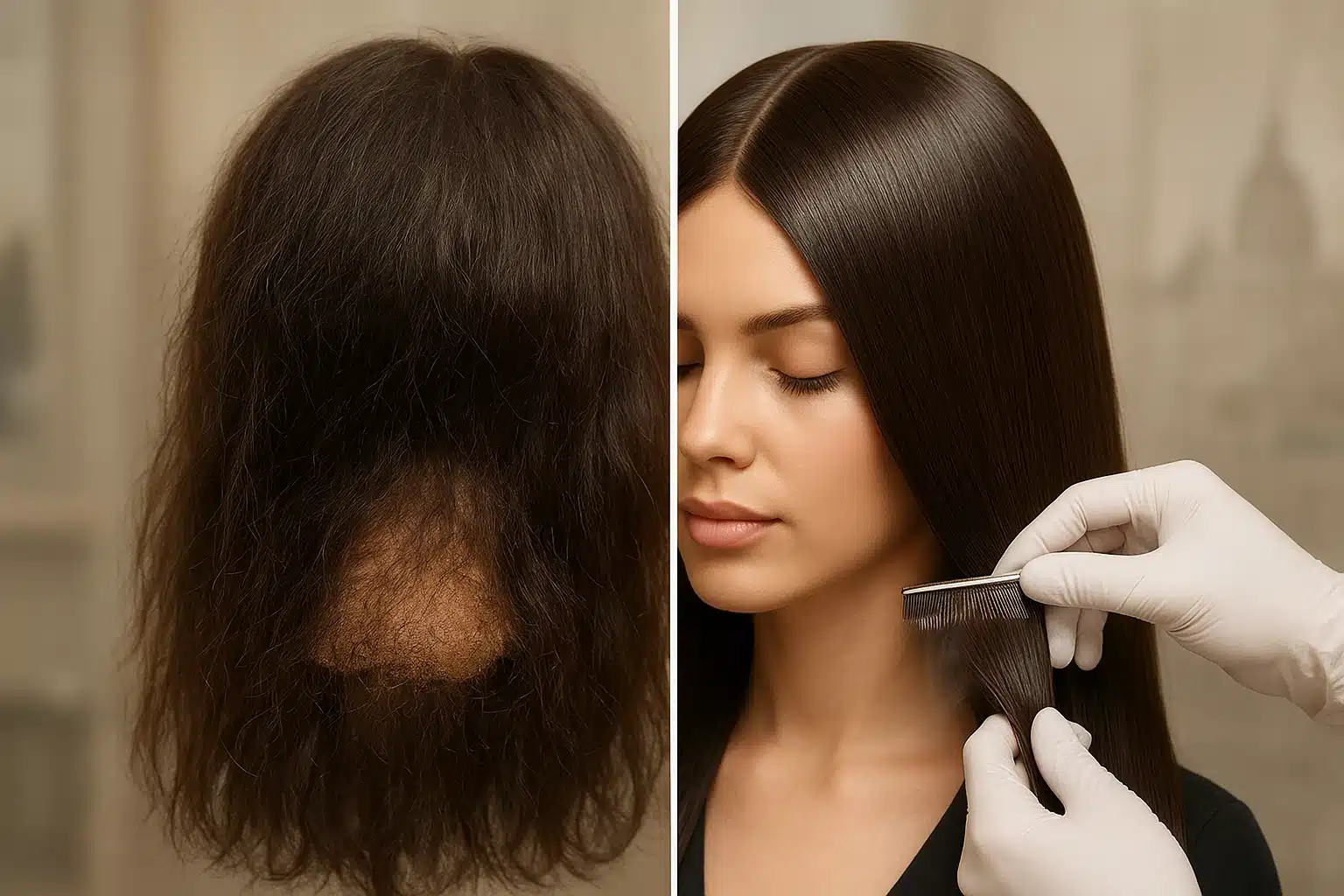
A common mistake beginners make is over-plucking a part line to make it look natural, eventually leading to bald spots on the wig. Instead of discarding the piece, professionals use a technique called re-ventilation. Using specialized ventilating needles, they hand-tie new single and double-split knots back into the lace base, replacing lost density strand by strand.
Thermal Steaming and Synthetic Thermodynamics
Most standard advice says to keep synthetic wigs far away from heat. However, controlled heat is actually the only way to save a damaged synthetic wig. Professionals use low-temperature indirect steam (usually between 160°F and 180°F) to reset the plastic memory of synthetic fibers. This realigns the strands and completely eliminates frizz without scorching the material.
Silicone Conditioning Baths
When synthetic wigs lose their factory “slip,” they tangle instantly. Professionals use cosmetic-grade dimethicone and cyclomethicone emulsions to re-coat the synthetic monofilaments. This microscopic silicone shield restores the hair’s silky texture without attracting dust and dirt the way household remedies do.
Louisville, KY Wig Repair and Restoration Directory
When you need specialized care—like re-ventilation, custom cap alterations, or a synthetic steam reset—Louisville is home to several highly qualified professionals. Here are some of the top local destinations to trust with your wig maintenance:
The Wig Shoppe
Location: 12003 Shelbyville Rd #106, Louisville, KY 40243A premier destination for comprehensive wig care, The Wig Shoppe is renowned for its private consultations. They offer deep-cleaning maintenance for both synthetic and human hair pieces, professional styling, and precise fitting adjustments to ensure your stretched caps feel snug and secure again.
Beauty Personified Custom Wig & Hair Loss Clinic
Location: 3046 Breckenridge Ln, Louisville, KY 40220Operating with deep empathy for those experiencing medical hair loss, this clinic specializes in custom cranial prosthesis care. They are experts in medical wig maintenance, intricate lace alterations, and hairline revitalization, ensuring pieces look incredibly natural and feel comfortable on sensitive scalps.
Delinda’s Hair Renewal & Reclaim My Hair Studio
Specializing in both in-home and salon solutions, Delinda’s is an excellent resource for heavy-duty structural repairs. Their capabilities include expert cap reinforcement, closure and strap replacements, and specialized care for chemotherapy wigs that require gentle, non-toxic maintenance.
DIY Maintenance vs. Professional Intervention
How do you know when you can fix a problem at home and when you need to call a Louisville specialist? Use this Triage Decision Matrix to guide your next steps.
| Problem | Potential Cause | DIY Fix (At-Home) | Professional Fix (Salon) |
|---|---|---|---|
| Light Tangles & Dryness | Daily wear, wind, lack of brushing. | Detangle with a wide-tooth loop brush; use a leave-in hydrating spray. | N/A |
| Heavy Nape Matting | Friction from collars; product buildup. | Avoid regular brushing, which snaps fibers. | Ultrasonic clarification and deep-steaming fiber realignment. |
| Frizzy / Crunchy Synthetics | Loss of factory silicone coating. | Stop! Do not apply flat irons. | Professional dimethicone bath and controlled vapor steaming. |
| Torn Lace or Bald Spots | T-pin stretching; adhesive pulling; over-plucking. | Stop! At-home sewing creates visible, bulky seams. | Invisibility stitching and strand-by-strand re-ventilation. |
| Loose, Slipping Cap | Worn out elastic bands over time. | Avoid pinning the cap tighter, as it tears the base. | Cap resizing, elastic replacement, and structural reconstruction. |
Myth-Busting: Dangerous Viral Wig Hacks
Before you attempt to repair a wig at home, beware of these damaging internet myths:
- Myth 1: Fabric softener makes synthetic wigs soft again.
- The Reality: Fabric softener coats synthetic fibers in a toxic chemical wax. It might feel soft for a day, but this residue acts as a magnet for dust, dirt, and sweat, rapidly accelerating fiber brittleness.
- Myth 2: Use dish soap to degrease lace and remove glue.
- The Reality: Dish detergents strip critical moisture barriers. Worse, they can chemically rot and degrade the delicate Swiss lace filaments, causing irreversible tearing.
- Myth 3: Flat-ironing dry synthetic wigs gets rid of frizz.
- The Reality: Unless your piece is specifically labeled as “heat defiant,” applying direct dry heat to frizzy synthetic ends will permanently melt the plastics into brittle, unbrushable beads.
The Ultimate Wig Longevity Playbook
Want to maximize the time between your professional restoration visits? Follow these five golden rules for daily care:
- Use a Wide-Tooth Loop Brush: Traditional hairbrushes have little balls at the end of the bristles that catch and rip wig knots. Loop brushes glide through fibers safely.
- Invest in Satin: Swap cotton pillowcases for satin, or store your wig in a satin bag. Cotton draws out moisture and creates friction.
- Choose the Right Chemistry: Always use sulfate-free, pH-balanced formulas designed specifically for alternative hair.
- Airflow is Everything: Store your piece on an open-air wig stand rather than a solid styrofoam head (which can stretch the cap and trap sweat/odors).
- Set a Maintenance Cadence: Wash human hair wigs every 7–10 wears, and synthetic wigs every 10–15 wears.
Frequently Asked Questions (FAQs)
Can a damaged, dry, or frizzy synthetic wig really be fixed?
Yes! While most people throw them away, professional low-temperature steaming can reset the synthetic fibers’ plastic memory, smoothing out frizz completely. Combined with a silicone bath, a professional can make a frizzy synthetic wig look brand new.
How much does professional wig restoration cost compared to replacement?
While prices vary by salon and damage level, a full professional reconditioning usually ranges from $40 to $150. Considering high-quality human hair wigs can cost thousands, and premium synthetics cost hundreds, restoration is a highly cost-effective alternative to replacement.
What is the difference between washing human hair vs. synthetic wigs at home?
Human hair requires deep, molecular moisture replacement (like deep conditioning and natural oil soaking) to stay soft. Synthetic wigs do not absorb moisture; they simply need gentle cleansing to remove surface dirt and static-reducing sprays to maintain their protective coating.
How often should I take my wig to a professional in Louisville?
If you wear your wig daily, plan for professional maintenance every 3 to 4 months. They can perform deep clarification, reset the fibers, and catch small lace tears before they become unrepairable.
Your Next Steps for Wig Care
Understanding how your wig is constructed—and knowing that professional repair is a viable, affordable option—empowers you to make the most out of your investment. You no longer have to panic at the first sign of a torn lace or a frizzy nape.
By practicing safe DIY maintenance and utilizing the incredible local restoration services available in Louisville, you can confidently wear your favorite pieces for years to come. Whenever you do decide you are ready to expand your collection, remember that educating yourself on proper care is just as important as selecting a beautiful style.