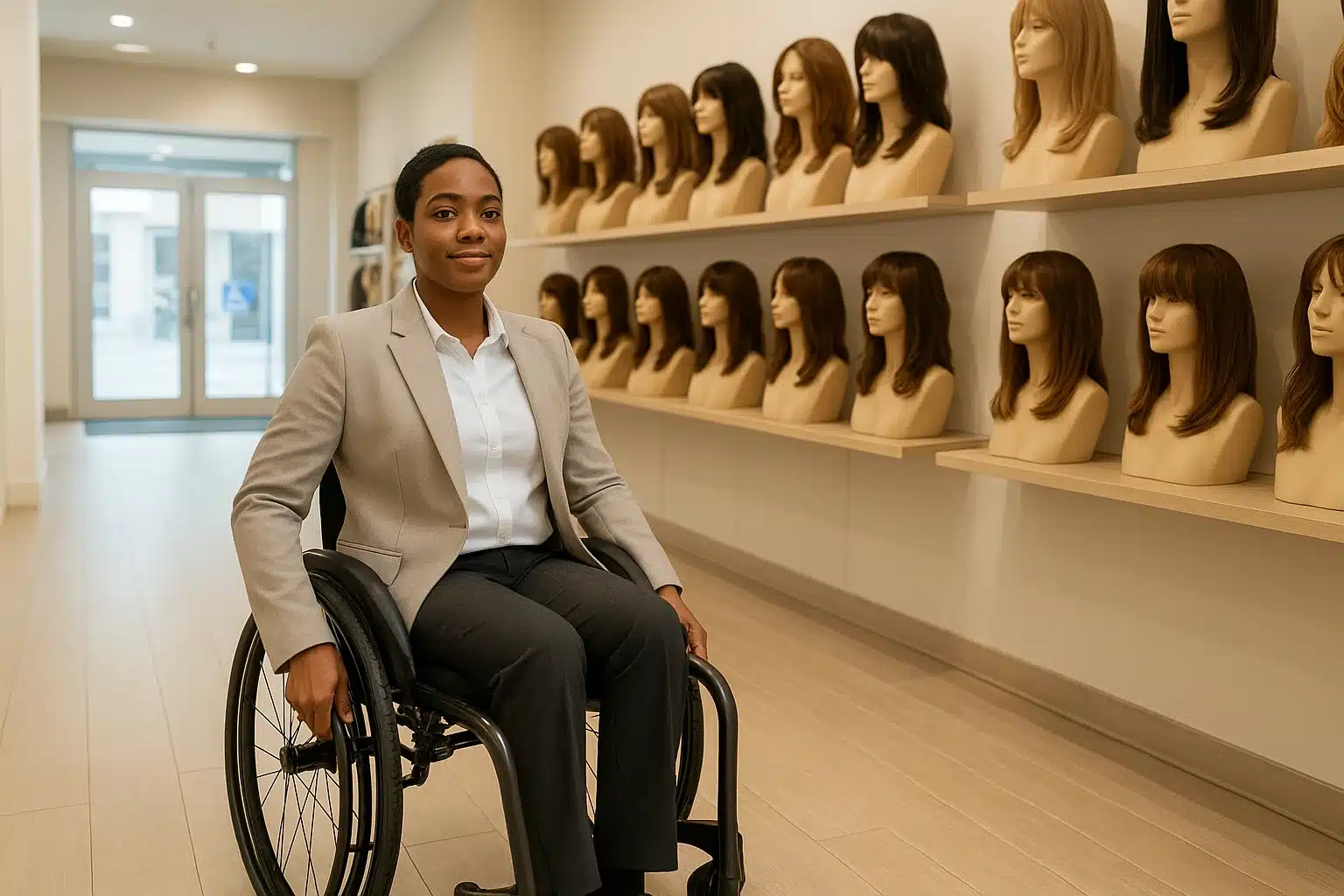
Shopping for a new wig should be an empowering, transformative experience. However, if you are navigating mobility challenges, recovering from medical treatments, or managing conditions like alopecia, the physical logistics of visiting a retail store can quickly turn an exciting trip into a stressful obstacle course. You shouldn’t have to wonder if a boutique’s entrance has a hidden step, if a wheelchair can fit between display racks, or if the fitting room is large enough for a safe transfer.
At Wig Superstore, we believe that finding your perfect hairpiece should be a seamless, dignified process from the moment you park to the moment you look in the mirror. To help you navigate the East Bay retail landscape with confidence, we created this resource to complement our ultimate Oakland wig store shopping guide. By breaking down everything from municipal parking rules to in-store architectural realities, we want to equip you with the knowledge you need to plan a safe and comfortable shopping trip.
Legal Standards vs. Retail Reality: Knowing Your Rights
Many local business directories feature simple “Wheelchair Accessible: Yes/No” tags, but these binary labels often fail to capture the reality of navigating a space. True accessibility is defined by precise measurements established by the Americans with Disabilities Act (ADA) and the incredibly strict Title 24 California Building Standards Code (CBC).
Debunking the “Grandfathering” Myth
One of the most common misconceptions in retail—often repeated by well-meaning shop owners—is that older buildings are “grandfathered in” and exempt from accessibility laws. The reality is that the ADA does not contain a blanket grandfather clause for commercial facilities. Under Title III of the ADA and California Title 24, retail spaces are legally obligated to engage in “readily achievable barrier removal.” This means stores must make efforts to clear pathways, ramp small steps, and widen aisles.
The “36/60” Rule for Retail Maneuverability
When exploring wig boutiques, keep the “36/60” rule in mind. These are the two most important numbers for your comfort and safety:
- 36 Inches for Aisles: While a doorway only needs to offer 32 inches of clear width, the continuous route between retail product displays (like revolving spinner racks and mannequin pedestals) must be at least 36 inches wide.
- 60 Inches for Fitting Rooms: A truly accessible consultation room requires a 60-inch clear diameter turning circle (or a 36-inch T-shaped turning space) so that a mobility device can completely turn around without backing out.
Pre-Trip Logistics: Navigating Oakland Parking and Transit
Getting to the store safely is often half the battle. Oakland’s bustling commercial corridors, like Telegraph Avenue and Grand Avenue, have specific regulations and infrastructure realities you should know before you go.
Maximizing Your Disabled Person (DP) Placard
If you hold a valid California DP placard or DP license plate, the City of Oakland offers significant accommodations. You can park at any metered space along Oakland’s commercial corridors completely free of charge and for an unlimited amount of time.
However, restrictions still apply to peak-hour tow-away zones and red curbs. Importantly, never park in the blue-striped crosshatch areas adjacent to accessible stalls. This space is not extra parking; it is the vital 60-to-96-inch clearance zone required for wheelchair lift ramps to deploy safely.
Public Transit and Sidewalk Realities
If you are utilizing public transit, not all stations are created equal for mobility needs:
- BART Nuances: If your destination is downtown, be aware that the 19th St. Oakland BART station has zero station-owned parking. By contrast, the Fruitvale BART station provides dedicated ADA multi-level garage stalls and excellent elevator redundancy.
- The Last 100 Feet: Older Oakland retail corridors often feature uneven pavement, steep curb cuts, and tree-root lifting. Coordinating a Bay Area Paratransit curbside drop-off directly in front of the store is often the safest bet for bypassing challenging urban sidewalks.
Inside the Store: What to Look For During Your Visit
Once you cross the threshold (which legally should have a maximum height of half an inch, properly beveled), the layout of the wig store plays a massive role in your experience.
Clear Routes vs. Pinch Points
Many shops claim they are accessible because their front door is ground-level. But inside, floor displays and inventory boxes can quickly pinch a 36-inch aisle down to an impassable gap. A great wig retailer will prioritize an open floor plan over a cluttered showroom.
The Medical Fitting Room Dynamics
Trying on wigs—especially medical cranial prostheses—requires privacy and space. A standard retail dressing room with just a bench and a mirror is rarely sufficient. You need an adjustable-height hydraulic styling chair for safe, level transfers from a wheelchair, along with low-glare, eye-level mirrors designed for seated clients.
Whether you are consulting about insurance coverage or getting a tutorial on daily wig maintenance, you deserve to be seated comfortably in a space that accommodates you and your mobility aids, not the other way around.
Bridging Medical Needs and Physical Space
For individuals experiencing medical hair loss, a wig is not just an accessory; it is a cranial prosthesis. Organizations like the National Alopecia Areata Foundation (NAAF) outline specific steps for insurance reimbursement (often using HCPCS code A9282 and ICD-10 medical codes).
Discussing these private medical codes and processing specialized invoices requires a secure, quiet environment. The physical accessibility of a shop’s consultation room directly impacts your ability to advocate for your medical needs and secure the proper documentation for your insurance provider.
The Empowered Shopper’s Call-Ahead Checklist
To prevent wasted trips and ensure a smooth experience, we highly recommend calling a wig store before visiting. Use this quick verification checklist to assess a store’s true readiness:
- “Is your main entrance step-free, or do you have an ADA-compliant ramp available?”
- “Are the aisles between your display racks at least 36 inches wide to accommodate my mobility device?”
- “Do you have a private consultation room with a 60-inch turning radius?”
- “Are the chairs in your fitting area adjustable in height for safe transfers, or can they be moved so I can remain in my wheelchair?”
- “Where is the closest designated accessible parking or safe paratransit drop-off zone to your front door?”
Frequently Asked Questions (FAQ)
Can an older wig shop deny me access due to a “grandfather clause”?
No. While older buildings face different architectural challenges, the ADA mandates “readily achievable barrier removal” for all public accommodations. A store cannot completely deny access simply because the building is old; they must make reasonable accommodations, such as providing a temporary ramp or offering curbside service.
Does my blue California DP placard give me free parking everywhere in Oakland?
Your placard allows you to park for free at any metered street parking space in Oakland with no time limit. It also allows parking in green zones with no time limits. However, it does not allow you to park in red zones, yellow commercial loading zones during active hours, or the blue-striped access aisles next to disabled parking spots.
What is a cranial prosthesis, and why does it matter for my store visit?
A cranial prosthesis is the medical term for a custom hairpiece prescribed for patients experiencing disease-related or treatment-related hair loss. Because it is a medical item, purchasing one involves processing insurance claims (like HCPCS code A9282). This requires accessible, private consultation rooms where you can comfortably handle medical documentation with a specialist.
What should I do if a store’s displays block my wheelchair?
You have the right to request reasonable accommodations. You can politely ask the store staff to clear the pathway or bring specific wigs directly to you in an accessible, open area of the store. A compassionate retailer will be more than happy to adjust their space to serve you.
Your Next Steps Toward the Perfect Fit
Understanding the intersection of accessibility standards and urban logistics allows you to plan your wig shopping experience with confidence and peace of mind. You deserve a retail environment that respects your time, your comfort, and your physical needs.
As you prepare for your journey, we encourage you to use our call-ahead checklist and trust your instincts. The right wig store won’t just offer beautiful, high-quality hairpieces—they will offer the compassionate care and accessible environment you deserve from the moment you arrive.